350x97.png)
350x97.png)
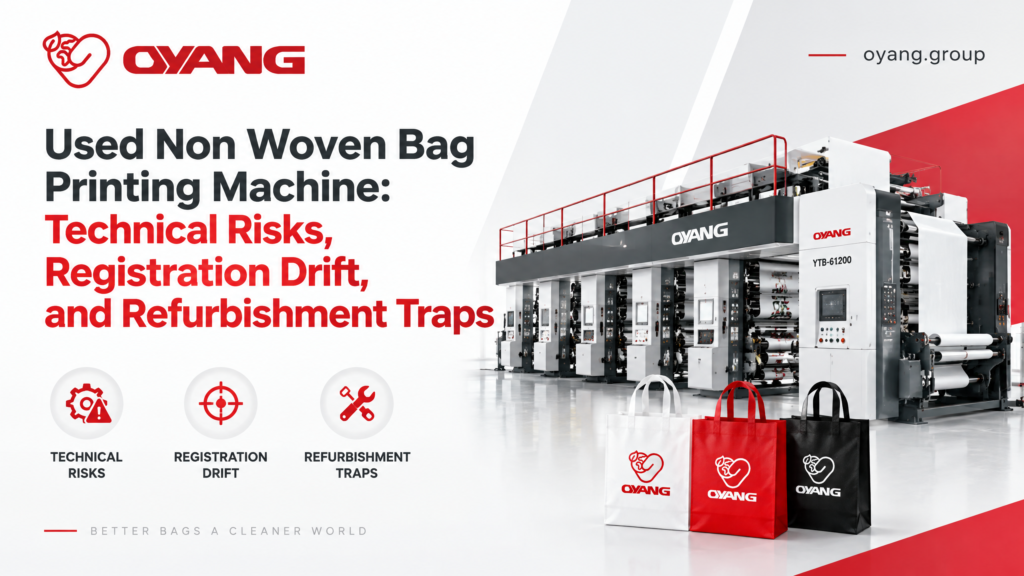
Used Non Woven Bag Printing Machine: Technical Risks, Registration Drift, and Refurbishment Traps
Browsing listings for a used non woven bag printing machine often reveals attractive low price tags ($6,000 to $16,000). However, converting audits show that unvetted second hand printing equipment frequently suffers from chronic mechanical defects: drive gear backlash causing horizontal chatter marks, dried ink calcification inside microscopic anilox cells, and inaccurate drying tunnels that thermally shrink synthetic PP webs. Understanding these technical risks prevents costly secondary investments in unserviceable machinery.
1. The 3 Fatal Engineering Failures Common to Second-Hand Bag Printing Presses
Printing on uncalendered polypropylene non-woven fabric requires rigid web tension and micrometric nip control. When purchasing a second hand non woven bag printing machine or inspecting a pp bag printing machine second hand from a liquidation sale, plant engineers must watch for three critical mechanical failure points that are nearly impossible to resolve without factory remanufacturing:

Figure 1: High-precision factory roll-to-roll stack flexographic press engineered to maintain register stability across high-speed web runs.
A. Drive Gear Backlash & Horizontal Gear Mark Banding
In conventional gear-driven stack flexo presses, the plate cylinder and impression cylinder synchronize through precision spur or helical gear trains. Over 5 to 8 years of continuous operation, tooth-flank wear enlarges the gear backlash clearance from the original design spec (≤ 0.02mm) to upwards of 0.08mm–0.15mm.
The Defect: During printing nip engagement, this backlash allows the printing cylinder to flutter microscopically against the web. This mechanical vibration imprints visible horizontal light-and-dark lines across solid ink zones, an uncorrectable defect known as “gear banding.” Replacing complete gear sets on an obsolete used printing press often requires custom hobbing that costs $3,000 to $5,000.
B. Ceramic Anilox Cell Volume Degradation and Clogging
The ceramic anilox roller is the mechanical metering heart of any flexographic bag press. In a used press, poor operator maintenance frequently results in water-based resin binders drying inside the micro-cavities (cells) of 200–400 LPI anilox sleeves.
Dried ink calcification reduces the theoretical ink volume (BCM – Billion Cubic Microns per square inch) by 35% to 50%. The machine can no longer transfer enough ink to saturate the rough, fibrous peaks of spunbond non-woven fabric. Logos appear faded and uneven. Chemical ultrasonic tank cleaning can strip degraded ceramic coatings, forcing full roller re-engraving at $1,200 to $2,000 per color station.
C. Drying Box Thermostat Failure and Fabric Thermal Shrinkage
Polypropylene non-woven fabric is thermally sensitive: it loses dimensional stability at temperatures above 65°C and undergoes irreversible transverse shrinkage at 80°C–90°C.
In an aged used non woven bag printing machine, old electrical heating elements, uncalibrated thermocouples, and degraded air blower blowers create uncontrolled hot spots inside the inter-color drying tunnels. If hot air spikes to 75°C, the web contracts unevenly across its width. The subsequent color station will print out of register by 1.5mm to 3.0mm, ruining multi-color alignment and rendering the rolls unconvertible on automatic bag makers.
2. Unmasking Secondary Listings: Cosmetic Overhauls vs. Structural Integrity
Third-party machinery trading portals frequently list used non woven bag printing machine for sale options described as “fully refurbished” or “reconditioned.” Factory engineers advise buyers to look beneath the fresh paint:
| Inspected Machine Component | Common Cosmetic “Refurbishment” Mask | Actual Engineering Concealment |
|---|---|---|
| Cast Iron / Steel Side Walls | High-gloss external spray painting | Conceals hairline weld repairs and fatigue stress cracks around cylinder journal bores |
| Servo Drives & Motion Controls | Rewired terminal blocks and generic displays | Original servo systems replaced with budget stepper motors or unbranded open-loop inverters |
| Web Guiding System (EPC) | Cleaned ultrasonic/optical sensor housing | Worn actuator linear guide ballscrews that stick under load, causing web edge wandering > 2mm |
| Tension Control Powder Brakes | Refilled magnetic iron powder | Internal rotor grooving that causes erratic braking torque spikes, snapping thin non-woven webs |

Figure 2: Automatic roll-to-roll screen printing system with closed-loop tension regulation to prevent fabric stretch.
If your production focuses on bold opaque logos or metallic pastes on dark substrates, compare rotary limitations with automated screen options in our dedicated analysis of non woven bag screen printing machine: roll-to-roll vs flatbed.
3. Economic Breakdown: The Hidden Costs of Refurbishing Second-Hand Presses
Acquiring a used non woven bag printing machine often appears to cut setup expenditure in half. However, bringing a decommissioned press back to commercial tolerances requires significant mechanical and electrical reconditioning. The table below presents real-world factory retrofitting expenses:
| Cost Category | Second-Hand Press (Typical Resale) | OYANG New Industrial Press | Technical Variance Explanation |
|---|---|---|---|
| Base Equipment Price | $9,500 – $14,000 | Direct Factory Tier | Used machine offers lower upfront purchase price |
| Anilox & Plate Cylinder Replacement | +$3,600 – $6,000 | Included (Laser-engraved) | Used anilox rolls are almost universally plugged or chipped |
| Register System & Web Alignment | Manual adjust (±0.35mm drift) | ≤ ±0.05mm Closed-Loop | Precision multi-color registration on continuous webs |
| Commissioning Downtime & Scrap | 3–5 weeks (~$4,200 scrap) | Turnkey (Immediate yield) | Calibrating mismatched used gear trains wastes significant roll material |
| Warranty & Technical Support | None (Sold “As-Is”) | Full OEM Factory Warranty | OYANG remote diagnostic telemetry and original parts support |
To evaluate how printing machinery fits into complete production line investment, consult our comprehensive analysis on non-woven bag making machine price and landed costs. If reviewing commercial sheet-fed litho printing alternatives, review non-woven offset printing machine limitations.
4. The Sustainable Route: Precision CNC Manufacturing from OYANG
Rather than inheriting the mechanical fatigue and unrecorded operating hours of secondary machinery, packaging converters secure predictable performance by sourcing factory-direct equipment.
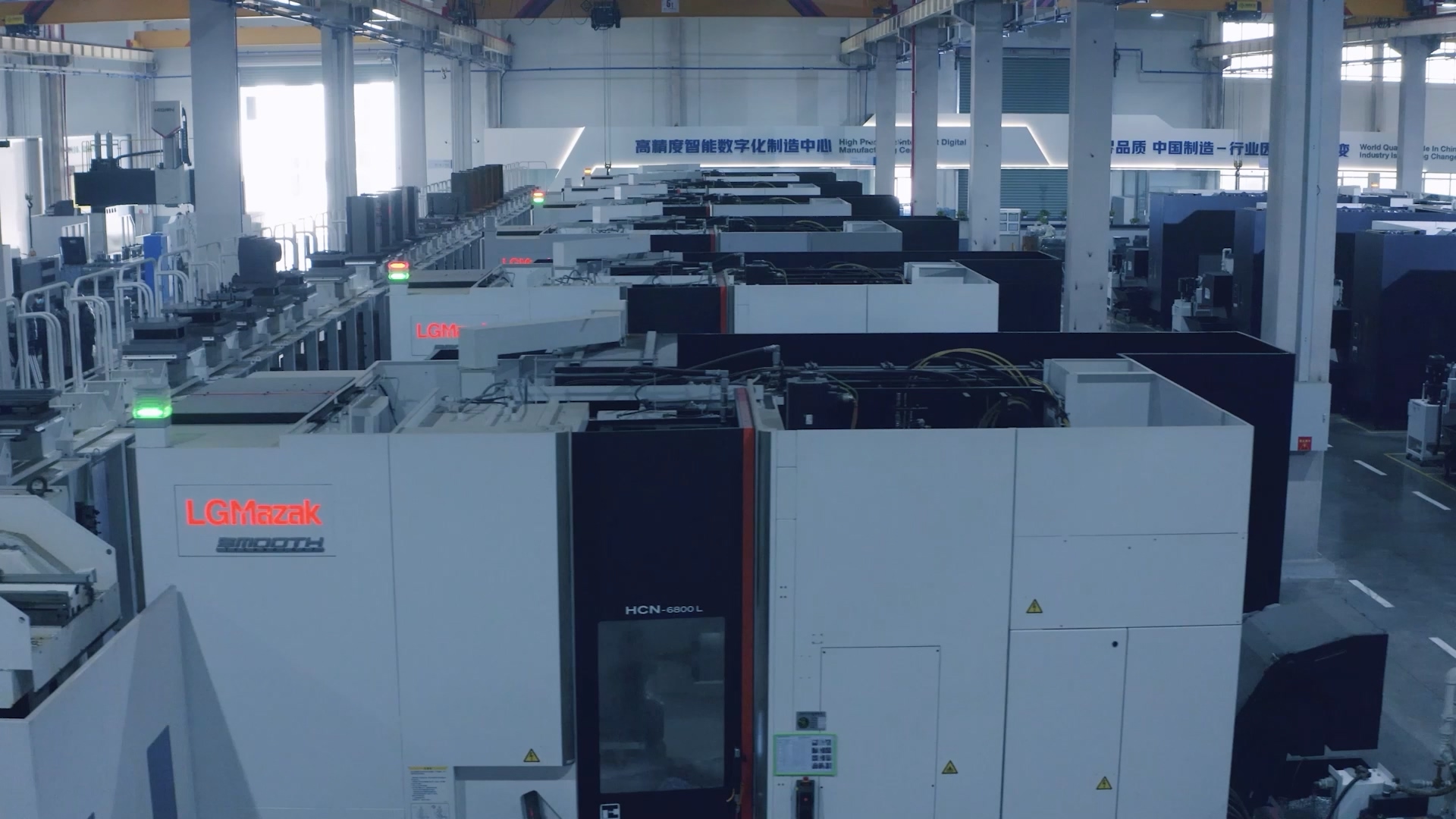
Figure 3: Side panels and printing cylinder bearing houses machined on 5-axis Japanese MAZAK CNC centers at OYANG.
Across OYANG’s 130,000 m² production complex, all printing frame side-walls (45mm–50mm solid alloy steel) are milled on Japanese MAZAK & OKUMA CNC systems to an engineering flatness tolerance of ≤ 0.012mm. Every impression cylinder, ceramic anilox core, and guide roller is dynamically balanced in two planes at 1.5x nominal running speed to guarantee zero harmonic deflection.
Whether selecting our continuous roll-to-roll flexo systems (YTB/YTC series) or automated roll-to-roll screen lines, OYANG equipment features electronic line-shaft (ELS) servo architecture, intelligent low-temperature IR/UV curing arrays, and closed-loop web tension. This ensures clean, vibration-free printing down to 8pt type and photographic halftones without web stretching.
Live Printing Demonstrations & Machinery Catalogues
Observe live video demonstrations of continuous multi-color roll flexo and automatic screen printing operations:
Related Engineering Guides & Technical Resources
Expand your converting plant technical knowledge with detailed analyses from OYANG:
- Continuous Flexo Architecture: CI central drum vs stack-type configurations → Non-Woven Flexo Printing Machine: CI vs Stack Analysis.
- Inline Production Systems: Synchronizing flexo printing inline with automated bag makers → Non-Woven Bag Making Machine with Printing: D-Cut & W-Cut Guide.
- Handle Sealing Automation: Manual attachment bottlenecks vs ultrasonic loop sealers → Non-Woven Bag Handle Sealing Machine: Manual vs Auto Comparison.
- Ultrasonic Fusion Dynamics: Tooling metallurgy and seam tensile strength → Ultrasonic Non-Woven Bag Sealing Machine vs Heat Seal Guide.
5. Frequently Asked Questions (FAQ)
What causes horizontal line banding on a used non woven bag printing machine?
Horizontal gear banding is caused by tooth flank wear in the cylinder drive gears. When gear backlash exceeds 0.08mm, mechanical flutter occurs during plate-to-web contact, producing visible light and dark chatter streaks across solid print areas that cannot be corrected without completely replacing the gear sets.
How does anilox roller degradation affect printing quality on a second-hand press?
Over years of service, dried water-based resin binders calcify inside microscopic anilox cells, reducing carrying volume (BCM) by 35% to 50%. This restricts ink transfer, causing faded colors and starved solids across textured non-woven fabric that require expensive chemical ultrasonic cleaning or complete roller re-engraving.
Why does a used printing machine often cause non-woven fabric to shrink and distort?
Polypropylene spunbond fabric experiences thermal deformation above 65°C. In older used printing presses, degraded heating elements and failing thermocouples create uncontrolled hot zones inside drying tunnels that exceed 75°C, causing the fabric roll to shrink unevenly across its width and creating registration errors of 1.5mm to 3.0mm between color stations.
How does OYANG eliminate registration drift on brand-new printing equipment?
OYANG machines all side walls from 45mm–50mm solid alloy steel on 5-axis Japanese MAZAK and OKUMA CNC centers to a flatness tolerance of ≤ 0.012mm. Paired with electronic line shaft (ELS) multi-axis servo drives, dynamically balanced cylinders, and cold-UV or low-temperature IR drying tunnels, OYANG presses maintain closed-loop registration accuracy within ±0.05mm at operational speeds up to 250 m/min.