350x97.png)
350x97.png)
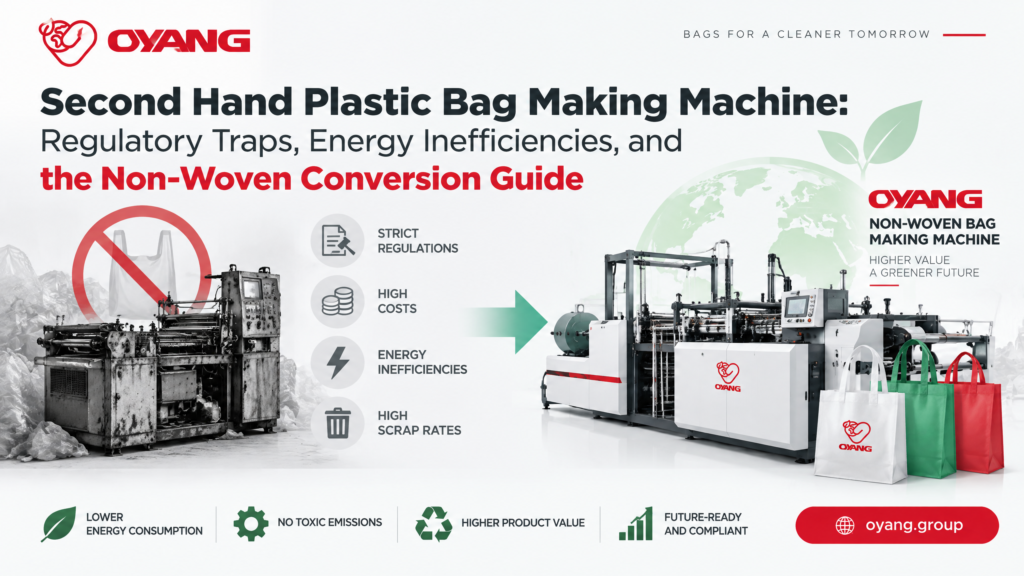
Second Hand Plastic Bag Making Machine: Regulatory Traps, Energy Inefficiencies, and the Non-Woven Conversion Guide
While procuring a second hand plastic bag making machine appears to offer an inexpensive factory setup ($2,500 to $8,000), converting businesses face severe regulatory and financial headwinds. Over 120 nations now enforce strict single-use plastic bans and Extended Producer Responsibility (EPR) penalties. Combined with electrical heat-sealing inefficiencies (consuming 18–25 kW) and resin scorching scrap rates above 8%, secondary plastic lines are rapidly being replaced by ultrasonic non-woven bag making machinery, which cuts sealing power consumption by over 60%.
1. The Secondary Market Trap: Why Decommissioned Plastic Bag Machinery Floods the Market
Across global liquidation portals, thousands of listings promote used equipment such as a second hand bag making machine or a second hand plastic carry bag making machine at heavy discounts. However, industrial buyers must evaluate why these machines are being decommissioned in record numbers:

Figure 1: Fully automated non-woven converting system replacing outdated thermal-cut plastic film machines.
- Global Single-Use Plastic Bans: Governments across Europe, Africa (e.g., Kenya, Rwanda, Nigeria), South Asia (e.g., India, Bangladesh), and Latin America have criminalized the manufacture, sale, and commercial import of polyethylene shopping bags below 50–75 microns. Plants operating a second hand plastic bag making machine face unexpected factory raids, heavy fines, and machinery impoundment.
- EPR (Extended Producer Responsibility) Levies: Retail chains and supermarket brands are legally obligated to trace consumer packaging. Conventional HDPE/LDPE carrier bags incur punitive plastic packaging taxes, forcing retail buyers to reject single-use film bags in favor of multi-use, certified recyclable polypropylene non-woven shopping totes.
- Negative Asset Liquidity: Purchasing a decommissioned plastic film line leaves the converter with zero residual asset value. Banks and industrial leasing firms increasingly refuse to finance single-use polymer machinery due to stranded-asset environmental classifications.
To evaluate how the market evaluates machinery asset lifespan and real resale values, review our comprehensive analysis on used non-woven bag making machine price lists and traps.
2. Mechanical Comparison: Thermal Wire Heat-Sealing vs. Ultrasonic Cold Fusion
The core engineering difference between traditional plastic film converting and modern non-woven bag fabrication lies in how polymer chains are joined. A conventional film bag machine relies on resistance heating wires, whereas an eco-friendly non-woven machine deploys high-frequency acoustic ultrasonics:
| Operational & Physical Factor | Thermal Heat-Seal Plastic Bag Machine | OYANG Ultrasonic Non-Woven Bag Line |
|---|---|---|
| Sealing Principle & Tooling | Continuous nichrome resistance wire (180°C–240°C) | Piezoceramic 20 kHz acoustic horn & patterned anvil |
| Electrical Power Consumption | High: 18.0 – 25.0 kW continuous heating draw | Low: 4.5 – 7.5 kW instant pulsed energy |
| Warm-Up & Temperature Stabilization | Requires 20–30 minutes pre-heating time | Instant start; 0 ms thermal warm-up required |
| Polymer Scorching & Toxic Emissions | High: emits volatile acrolein and plastic smoke | Zero: solid-state molecular acoustic bond, no fumes |
| Start-Up Scrap Rate (Trim & Burn) | 6.5% – 9.0% (melt-burn and cold seal errors) | < 0.8% with closed-loop tension control |
| Product End-Market Selling Price | Commodity pricing: ~$0.012 – $0.020 / bag | Value-added retail: $0.15 – $0.45 / bag |
In an old second hand plastic bag machine, thermal cutting knives collect charred polymer residue. This build-up causes weak seam joints that rupture when loaded with consumer goods. Ultrasonic tooling, by contrast, delivers molecularly fused seams that withstand up to 15–20 kg of mechanical deadweight. For a complete mechanical breakdown of acoustic horns, review our guide on ultrasonic non-woven bag sealing machine vs heat seal.
3. The Factory Conversion Blueprint: Transitioning from Plastic Film to Non-Woven Production
For traditional plastic extruding and bag-cutting plants, migrating to sustainable packaging does not require re-inventing plant infrastructure. Polypropylene non-woven fabric handles similarly to heavy blown film but commands higher gross margins. Below is the recommended industrial migration path:

Figure 2: OYANG 16S High-Speed Non-Woven Box Bag Machine producing fully welded 3D retail bags at 60–80 pcs/min.
Step 1: Replace Blown Film Extruders with Direct Non-Woven Parent Rolls
Plastic bag plants spend substantial capital maintaining melt-extruders and blowing towers that consume vast electrical loads. In a non-woven model, factories eliminate raw resin melting entirely by purchasing pre-spun, certified eco-friendly PP non-woven fabric rolls directly from local or global master winders, saving up to 40% in plant electrical bills.
Step 2: Transition from T-Shirt Punch Presses to Multi-Functional Converting
While a second hand plastic carry bag making machine is locked into producing simple flimsy vest bags, modern non-woven lines (such as the OYANG XB/XC Series) produce 5 distinct bag architectures on a single chassis: flat shopping bags, D-cut punch bags, shoe bags with drawstring cords, loop handle bags, and folded bottom gusset bags.
Step 3: Integrate In-Line Handle Fastening Automation
Traditional plastic bags rely on manual hydraulic punch stations that require secondary labor. OYANG non-woven equipment automates handle loop unwinding, ultrasonic edge-cutting, and 4-point welding in continuous synchronization. For detailed labor savings calculations, consult our technical report on non-woven bag handle sealing machine: manual vs auto comparison.
4. Equipment Reliability: Precision CNC Engineering from OYANG
One of the largest hidden expenses in acquiring older second-hand converting machines is frame vibration and premature bushing seizure.
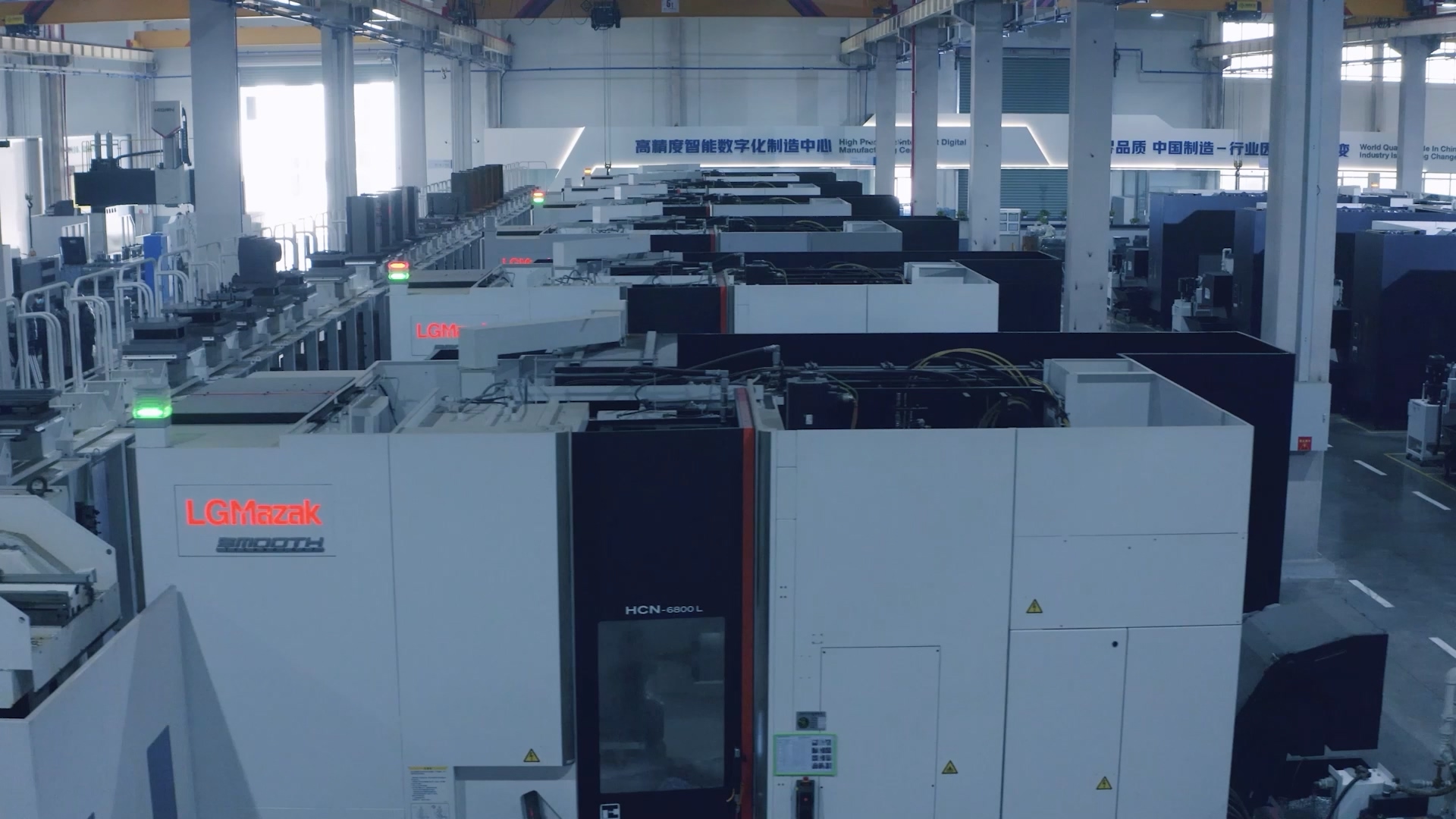
Figure 3: High-precision machining of heavy chassis side frames on Japanese MAZAK CNC lines inside OYANG’s 130,000㎡ campus.
At OYANG’s 130,000 m² production complex, all bag machine wall panels (45mm solid alloy steel) are precision-machined on five-axis Japanese MAZAK & OKUMA CNC systems to an engineering flatness tolerance of ≤ 0.015mm. This eliminates chassis harmonic vibration, ensuring that ultrasonic sonotrodes maintain uniform micro-gap clearances across continuous three-shift industrial operations.
If your converting business also requires inline multi-color branding on non-woven shopping bags, review our machinery guide on non woven bag making machine with printing: D-cut & W-cut guide. If exploring rotary printing alternatives, inspect our comparison on non-woven flexo printing machine: CI vs Stack.
Live Plant Operational Footage & Official Solution Brochures
Watch automated non-woven ultrasonic converting machinery replace conventional plastic film machinery on live factory test lines:
Related Engineering Guides & Technical Resources
Strengthen your industrial packaging conversion roadmaps with complementary engineering articles:
- Second-Hand Machinery Realities: Used non-woven bag making machine price lists, ultrasonic risks, and TCO audits → Used Non-Woven Bag Making Machine Price Guide & Traps.
- Landed Capital Budgeting: Shipping volumes, tariff calculations, and factory electrical load metrics → Non-Woven Bag Making Machine Price & Landed Cost Analysis.
- Rotary Printing Infrastructure: High-speed flexographic presses vs stack-type non-woven web paths → Non-Woven Flexo Printing Machine: CI vs Stack Analysis.
- Ultrasonic Fusion Dynamics: Tooling metallurgy, horn frequency sweeps, and seam tensile test standards → Ultrasonic Non-Woven Bag Sealing Machine vs Heat Seal Guide.
5. Frequently Asked Questions (FAQ)
What are the primary risks of buying a second hand plastic bag making machine?
The primary risks include severe legal liability under expanding global single-use plastic bans (EPR laws), high electrical power draw (18–25 kW for continuous thermal wires), high start-up scrap rates (6.5%–9.0% due to polymer scorching), and near-zero asset resale value as retail chains eliminate plastic carrier bags.
Can a conventional plastic bag machine be converted to run non-woven fabric?
No, conventional plastic film machines cannot run spunbond non-woven fabric effectively. Plastic film machines utilize continuous hot-wire heat sealing, which incinerates and scorches porous non-woven polypropylene fibers without creating a structural weld. Non-woven bag conversion requires 20 kHz ultrasonic horns and patterned anvils to achieve molecular acoustic fusion without burning the material.
How much energy does an ultrasonic non-woven bag making machine save compared to heat-sealing?
An ultrasonic non-woven bag machine consumes between 4.5 kW and 7.5 kW for sealing operations, compared to 18 kW to 25 kW consumed by continuous electrical resistance wires on a plastic film machine. Because ultrasonics only draw power during micro-second welding pulses and require zero warm-up pre-heating, plant electricity costs are reduced by over 60%.
What is the most profitable entry-level bag type when switching from plastic to non-woven?
The most profitable entry point is an automated D-cut or loop-handle shopping bag machine (such as the OYANG XB/XC Series). These multi-functional machines produce reusable carrier bags commanding $0.15 to $0.45 retail value per unit, compared to commodity plastic bags sold for fractions of a cent, offering payback periods between 8 and 14 months.