

Is Rotogravure Still Used Today? Modern Applications, Market Demand & Industrial Examples
The Market Reality: Why Rotogravure Dominates High-Volume Conversion
Converters entering the flexible packaging sector often question: is rotogravure still used? The misconception that gravure is an outdated legacy technology stems from commercial publishing (where newsprint rotogravure has largely collapsed). However, in industrial converting and product packaging, the global rotogravure market is valued at over $31 billion USD and continues to expand in the food, beverage, and medical verticals.
Rotogravure retains three fundamental physics-driven advantages that neither flexography nor web digital printing can replicate at scale:
- Volumetric Ink & Barrier Metering: Electromechanically engraved cylinder cells carry high fluid volumes (up to 12–15 cm³/m²), transferring dense, uniform ink films and functional barrier primers (such as PVDC or EVOH) without the micro-pinholing common in photopolymer relief printing.
- Seamless Continuous Repeat (Zero Plate Gaps): Because rotogravure cylinders are machined as unbroken, seamless 360° steel bodies, they print continuous patterns—such as decorative flooring films, gift wraps, and security foil laminates—without the vertical plate mounting seams or cylinder bounce that limit flexo presses.
- Extreme Tooling Lifespan: A hard-chromed gravure cylinder (8–12μm chrome coating, 950–1050 Vickers) routinely prints between 2,000,000 and 5,000,000 linear meters before requiring stripping and re-chroming. In contrast, flexographic plates suffer dot gain degradation and physical relief wear beyond 400,000 to 600,000 meters.
What is Rotogravure Printing Used For? 10 Real-World Industrial Applications
To answer what are some examples of gravure printing, the table below maps out 10 core industrial applications where rotogravure remains the mandated converting standard across global supply chains:
| Industrial Sector | End-Use Packaging Application | Substrate Architecture | Why Gravure is Irreplaceable |
|---|---|---|---|
| 1. Food Retort Packaging | Sterilizable Ready-to-Eat Pouches | PET / AL / BOPA / CPP (4-ply) | Withstands high-temperature steam sterilization (121°C – 135°C) without ink delamination or gas barrier breakdown. |
| 2. Snack & Confectionery | Nitrogen-Flushed Crisp / Chip Bags | BOPP / Metallized PET / PE | High-speed web feeding (350–400 m/min) with absolute opacity to prevent light-induced lipid oxidation. |
| 3. Pharmaceuticals | Push-Through Blister Lidding Foil | Hard-Tempered Aluminum (20–25μm) | Zero pinholing, ultra-crisp micro-typography for regulatory dosage warnings, and precise heat-seal lacquer metering. |
| 4. Beverage & Dairy | High-Shrink Sleeve Labels | Transverse Shrink PETG / PVC (40–50μm) | Accommodates extreme transverse thermal shrinkage (up to 75%) without graphic cracking, distortion, or color shift. |
| 5. Pet Food Packaging | Heavy-Duty Flat Bottom Quad-Seal Bags | PET / PE / EVOH / PE (High Tear) | High puncture resistance with high-sheen exterior aesthetics for premium consumer shelf impact. |
| 6. Luxury Tobacco | Cigarette Carton Soft Packs & Inner Foil | Virgin SBS Board & Metalized Foil Paper | Inline metallic bronzing, tactile tactile lacquers, and micro-embossed security holography at massive volumes. |
| 7. Decorative Building Surfaces | Woodgrain Vinyl Flooring & Melamine Papers | PVC Film / Decorative Base Paper | Seamless, 360-degree continuous woodgrain patterns with no repeating seam lines or roller bounce bands. |
| 8. Industrial Agricultural Bags | BOPP Laminated Woven Polypropylene Sacks | BOPP Film + PP Woven Fabric Lamination | Reverse-printed BOPP film protects brand graphics from scuffing, mud, and rough handling during 25–50 kg transport. |
| 9. Personal Care & Hygiene | Facial Mask Sachets & Wet Wipe Overwraps | PET / AL / PE & Matte Varnished Laminates | Impermeable moisture barrier containment with contrast matte/gloss spot varnishing. |
| 10. High-Security Packaging | Tax Stamps, Banknote Wraps & Passports | Security Fibered Cotton Paper & Polymer | Micro-engraved intaglio lettering (< 0.1 mm) providing a distinctive tactile relief that cannot be replicated by offset or digital presses. |
For packaging operations evaluating how to pair printing lines with downstream pouch conversion, review our technical guide on Packaging Printing Machine Prices, Types & Maker Standards.
Technology Positioning: When Does Rotogravure Win Over Flexo and Digital?
Modern converting is not about declaring a single “best” printing process; it is about matching mechanical physics to order economics. The chart below defines where each printing method reaches maximum profitability:
- Industrial Web Digital Presses (< 3,000 meters): Best for hyper-short runs, dynamic serialization, barcode personalization, and rapid prototyping with zero tooling CapEx.
- Central Impression (CI) Flexo (3,000 to 25,000 meters): The sweet spot for medium runs, extensible polyethylene films, breathable nonwoven materials, and sustainable paper packaging. Compare configurations in our analysis of CI vs. Stack Flexo Printing Machines.
- Electronic Line Shaft (ELS) Rotogravure (> 25,000 meters): The uncontested standard for long-run barrier laminates, aluminum foils, high-speed contract manufacturing, and applications demanding absolute optical density and pinpoint registration stability at 400 m/min.
OYANG Engineering Practice: Synchronized Web Stability from Printing to Pouch Forming
In high-barrier flexible packaging production, printing cannot be treated as an isolated process. High-speed multi-layer laminates converted at 400 m/min must feed seamlessly into high-speed downstream pouch-forming lines without web curling, skewing, or seam seal failures.

Figure 1: The OYANG HONOR 4.0 ELS Rotogravure Press delivering 400 m/min continuous web speeds with ±0.05 mm registration stability for multi-layer barrier films.
The OYANG HONOR 4.0 ELS Rotogravure Printing Machine utilizes multi-axis direct-drive AC synchronous servo motors that eliminate traditional gear shafts and mechanical backlash. Longitudinal and lateral registration errors are restricted to within ±0.05 mm. Furthermore, rolls printed on the HONOR 4.0 feed smoothly into downstream converting equipment—such as the OYANG 650QSB Flat Bottom Box Pouch Machine—producing ready-to-fill flat-bottom pouches with zero gusset misalignment.
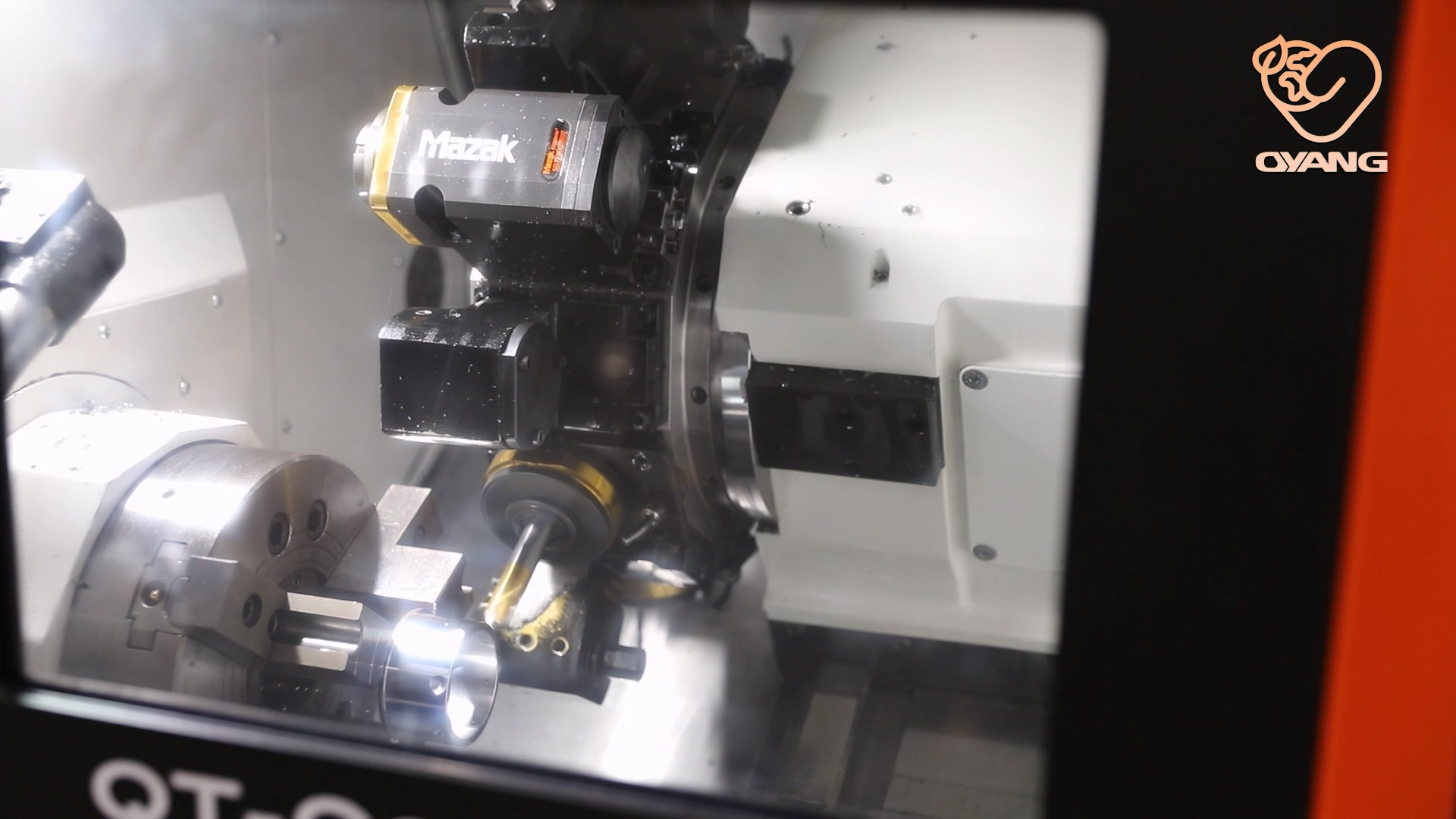
Figure 2: Heavy wall frames and doctor blade assemblies precision-milled on Japanese OKUMA CNC machining centers inside OYANG’s 130,000 m² production complex.
All structural side-frames, cylinder chucking mandrels, and drying air plenum assemblies are machined on Japanese MAZAK and OKUMA CNC centers to geometric tolerances of ≤ 0.015 mm. This structural rigidity prevents frame flexing and resonance vibration during continuous 400 m/min converting cycles.
Engineering Specifications: Download comprehensive machine layouts, drying nozzle air speeds, and power parameters in the OYANG Rotogravure Printing Machine Solution Brochure (PDF).
Live Operational Video: Observe dynamic tension control and high-speed registration: OYANG HONOR 4.0 Live Factory Operation Video.
Related Printing & Converting Systems
Frequently Asked Questions (FAQ)
Is rotogravure still used today?
Yes, rotogravure is widely used today and remains the primary printing technology for high-volume flexible packaging, multi-layer barrier pouches, aluminum pharmaceutical blister foils, and seamless decorative surfaces, representing a global market exceeding $31 billion USD.
Why is rotogravure still used instead of flexography or digital printing?
Rotogravure is preferred on runs exceeding 25,000 meters because it provides superior optical density, zero pinholing on barrier foils, seamless continuous repeating patterns, and hard-chromed cylinders that withstand millions of meters of continuous printing without dot degradation.
What is rotogravure printing used for most commonly?
Rotogravure printing is most commonly used for food packaging (retort pouches, snack bags, confectionery wrappers), shrink sleeves for beverage bottles, pharmaceutical blister packaging, cigarette carton wraps, and decorative PVC floorings and furniture papers.
What are some examples of gravure printing in daily life?
Common everyday examples include shiny potato chip packets, sterilizable pet food pouches, prescription medicine blister foil push-throughs, continuous woodgrain patterns on laminate flooring, and high-security currency and tax stamp printing.
Will digital printing or flexography replace rotogravure entirely?
No, digital and flexographic systems will not replace rotogravure in long-run industrial converting. While digital excels at short runs under 3,000 meters and flexo dominates breathable paper and corrugated bags, rotogravure remains mathematically and mechanically superior for million-meter barrier film contracts.