

Disadvantages of Rotogravure Printing: 5 Key Production Bottlenecks & Engineering Mitigations
The 5 Key Industrial Bottlenecks of Rotogravure Printing
While rotogravure stands unmatched for solid ink coverage, optical density, and continuous print durability across millions of meters, packaging converters must objectively calculate its mechanical and capital limitations before commissioning equipment:
1. Prohibitive Cylinder Tooling Costs (High CapEx per SKU)
Unlike elastomeric flexographic photopolymer plates or digital imaging engines, rotogravure image carriers are solid steel cylinders coated with electrolytic copper (100–300μm) and surface-hardened with hard chrome (8–12μm, 950–1050 Vickers). Electro-mechanical diamond stylus engraving or direct fiber laser ablation costs between $300 and $800+ USD per cylinder. For an 8 to 10-color flexible packaging job, initial tooling capital reaches $3,000 to $8,000 USD before a single meter of saleable film is converted.
2. Prolonged Pre-Press Lead Times & Artwork Inflexibility
The chemical de-chroming, copper plating, grinding, electromechanical cell engraving, polishing, and chrome plating cycle requires 5 to 12 business days per cylinder set. If a brand owner requests a minor typography change, nutritional facts revision, or regulatory barcode update, the entire hardened chrome/copper layer must be stripped and re-engraved. This lack of agility makes gravure unsuitable for fast-cycle seasonal campaigns or frequent SKU iterations.
3. Severe Start-Up Substrate and Solvent Waste on Legacy Presses
In traditional line-shaft gravure presses, mechanical backlash across longitudinal drive shafts, bevel gears, and differential gearboxes leads to registration hunting. Operators typically scrap 200 to 500 meters of expensive extensible film (such as 12μm PET, 20μm BOPP, or aluminum foil barrier laminates) simply dialing in dynamic register across 8 to 10 stations during line ramp-up. Furthermore, washing ink pans and doctor blade assemblies consumes 15 to 30 liters of solvent wash per unit.
4. Economic Infeasibility on Short-Run Orders (< 10,000 Linear Meters)
When amortizing $5,000 in cylinder tooling alongside 300 meters of setup scrap over an order of only 3,000 meters, the per-pack manufacturing cost spikes dramatically, rendering the converter uncompetitive against CI flexographic or digital converting presses. Rotogravure requires long continuous production runs (typically > 20,000 to 50,000 linear meters) to dilute tooling CapEx down to fractions of a cent per package.
5. Environmental & Safety Compliance Overheads (VOC Recovery & ATEX)
Traditional rotogravure relies heavily on low-viscosity solvent inks (ethyl acetate, MEK, toluene blends) running at fast drying velocities. Facilities must invest heavily in regenerative thermal oxidizers (RTO) or solvent carbon-adsorption recovery plants, explosion-proof ATEX-rated electrical infrastructure, and continuous LEL (Lower Explosive Limit) air monitoring loops, substantially increasing factory installation CapEx.
Process Limitation Benchmarks: Rotogravure vs. Flexographic vs. Digital
The following engineering matrix compares the operational limitations and economic break-even points across core flexible packaging printing topologies:
| Limitation Dimension | Industrial Rotogravure Press | Central Impression (CI) Flexo | Industrial Web Digital Press |
|---|---|---|---|
| Tooling Cost per 8-Color Job | $3,200 – $6,500 USD (Engraved cylinders) | $1,200 – $2,400 USD (Photopolymer elastomer plates) | $0 USD (Direct digital raster files) |
| Tooling Delivery Lead Time | 5 – 12 business days | 1 – 2 business days | Instant (Minutes) |
| Startup Substrate Waste | Legacy: 200–400m; ELS Servo: <50m | 80 – 150 meters | < 15 meters |
| Job Changeover Duration | 30 – 55 minutes (with cylinder cart trolleys) | 15 – 30 minutes (sleeve technology) | 2 – 5 minutes (file load) |
| Economic Break-Even Threshold | > 15,000 – 25,000 meters | 3,000 – 15,000 meters | 1 – 3,000 meters |
| Tooling Lifespan | 2,000,000 – 5,000,000+ meters | 300,000 – 600,000 meters | N/A |
For converters evaluating whether a project fits within flexographic roll printing or gravure converting, compare mechanical configurations in our comprehensive analysis on CI vs. Stack Flexo Printing Machines.
OYANG Engineering Practice: How ELS Servo Architecture Eliminates Mechanical Bottlenecks
To overcome the historical limitations of mechanical line-shaft gravure presses—specifically excessive registration scrap and extended changeovers—OYANG re-engineered the print transmission architecture on the HONOR 4.0 ELS Rotogravure Printing Machine.

Figure 1: OYANG HONOR 4.0 ELS Rotogravure Press equipped with direct-drive AC synchronous servo motors per station, reducing start-up scrap to <50 meters.
1. Electronic Line Shaft (ELS) Direct Drive vs. Mechanical Shaft
By eliminating long mechanical shafts and bevel gear couplings, each cylinder spindle is coupled directly to an AC synchronous permanent-magnet servo motor. Microsecond-responsive optical registration sensors continuously monitor printed marks, making micro-adjustments that restrict dynamic registration errors to within ±0.05 mm. Start-up substrate waste is reduced from 350+ meters down to under 50 meters, dramatically improving short-to-medium run profitability.
2. Automated Turret Non-Stop Splicing at 400 m/min
Stopping a high-speed press to change substrate rolls introduces temperature variations inside the drying hoods, leading to web distortion and ink viscosity instability. OYANG integrates dual-arm turret unwinds and rewinds with linear roll-to-roll zero-speed automatic splicing, executing high-speed web cuts and splices at full 400 m/min line velocity without interrupting ink transfer.
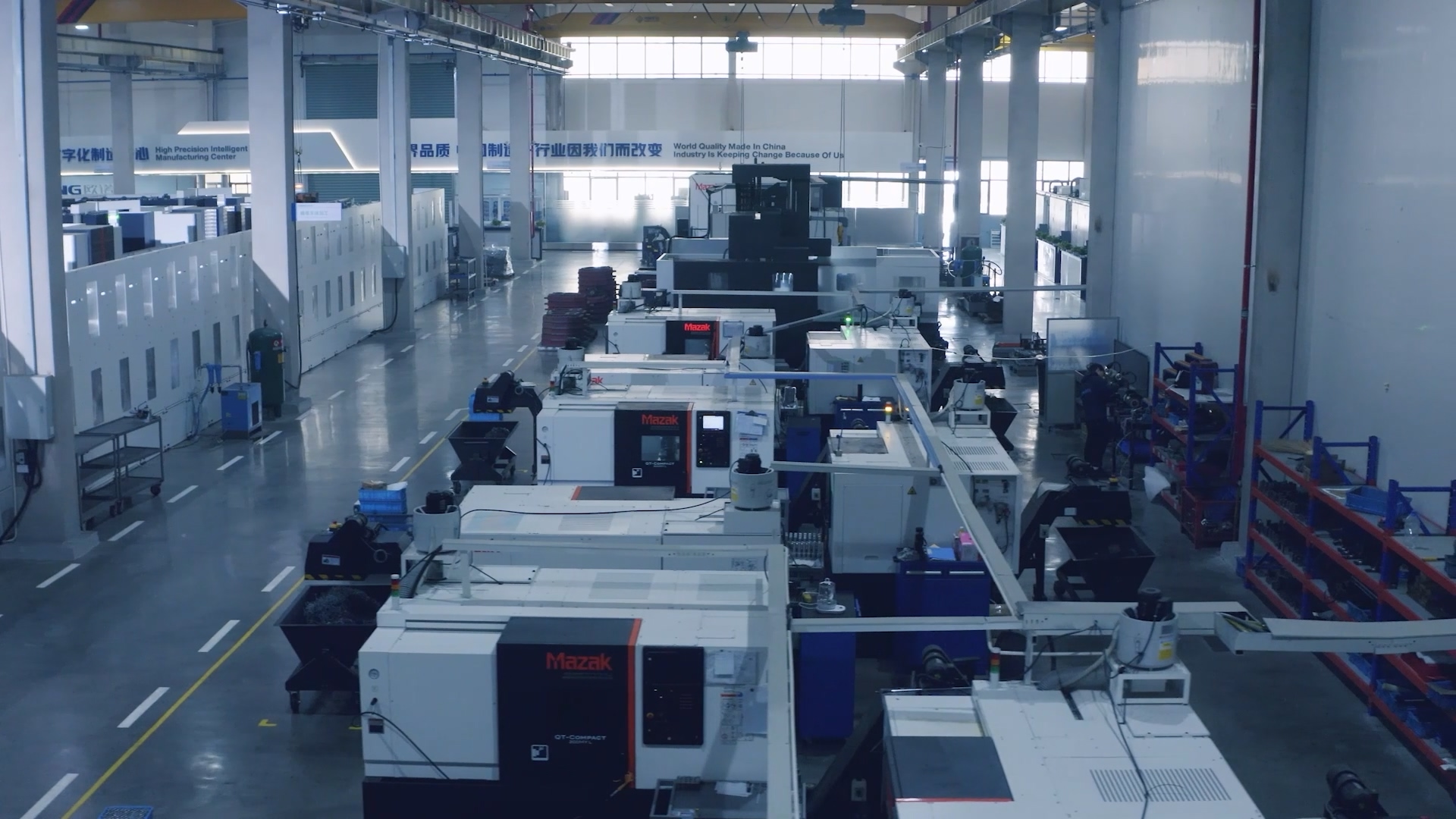
Figure 2: Solid structural side-frames and bearing assemblies machined on Japanese MAZAK multi-axis lines to ≤ 0.015mm geometric tolerances.
All heavy side-wall castings and locator guides are processed on Japanese MAZAK and OKUMA CNC flexible manufacturing systems in a single clamping setup to geometric tolerances of ≤ 0.015 mm. This structural rigidity prevents harmonic vibrations, ensures uniform doctor blade shearing pressure across a 1300 mm web width, and protects chrome cylinder surfaces from micro-scoring.
Engineering Specifications: Download comprehensive machine layouts, drying nozzle air speeds, and power parameters in the OYANG Rotogravure Printing Machine Solution Brochure (PDF).
Live Operational Video: Observe dynamic tension control and high-speed registration: OYANG HONOR 4.0 Live Factory Operation Video.
Related Printing & Converting Systems
Frequently Asked Questions (FAQ)
What are the disadvantages of rotogravure?
The main disadvantages of rotogravure are high initial cylinder engraving costs ($300 to $800+ USD per cylinder), long pre-press lead times (5 to 12 days), substantial startup waste during job registration, unprofitability on short runs under 10,000 meters, and costly VOC recovery systems required for solvent inks.
What are the disadvantages of rotogravure printing compared to flexography?
Compared to flexography, rotogravure has significantly higher tooling costs per job (often 2 to 3 times more expensive than photopolymer flexo plates), considerably longer turnaround times for cylinder engraving, and heavier changeover labor, making it far less economical for short and medium-run packaging orders.
What are the disadvantages of gravure printing for brand owners?
For brand owners, gravure printing severely restricts artwork agility because making revisions to nutritional facts, barcodes, or packaging graphics requires stripping and re-engraving expensive steel cylinders, which adds substantial delays and costs to product launch cycles.
How does Electronic Line Shaft (ELS) technology reduce rotogravure disadvantages?
ELS technology replaces mechanical drive shafts and gearboxes with independent AC synchronous servo motors on each station. This eliminates mechanical backlash, enables rapid automatic pre-registration, and slashes startup substrate waste from over 300 meters down to under 50 meters.
What is the minimum economical run length for rotogravure printing?
Due to high cylinder engraving tooling costs, the minimum economical run length for industrial rotogravure printing is generally between 15,000 and 25,000 linear meters. Any job below this threshold typically yields higher margins on CI flexographic or digital printing presses.