

Unlike commodity polyolefins (LDPE/HDPE), thermoplastic starch compounded with PBAT (polybutylene adipate terephthalate) exhibits extreme hygroscopic sensitivity, low extensional melt strength, and narrow thermal processing bands. Operating an industrial corn starch bag making machine requires calibrating upstream blown film extrusion and downstream bag conversion simultaneously: maintaining depressed barrel thermal profiles (125°C–155°C), configuring low-shear metering screws (L/D 28:1–32:1, compression ratio ≤ 2.2:1), and retrofitting bag sealing bars with closed-loop PID temperature regulation (±1°C) and plasma-bonded fluoropolymer coatings to eliminate starch caramelization, nozzle drag strings, and seam embrittlement.
Upstream Polymer Rheology: Blown Film Extrusion of Corn Starch & PBAT Compounds
Commercial bio-resins formulated for flexible carrier bags typically incorporate 30% to 45% destructured or granular corn starch cross-linked with PBAT and compatibilizers (such as maleic anhydride or citric acid derivatives). Processing this hybrid matrix on an integrated corn starch bag machine requires stringent moisture thresholds and controlled shear heating to prevent structural polymer chain degradation:
| Extrusion & Rheological Parameter | Conventional LDPE / LLDPE | Corn Starch + PBAT Compound (35% Starch) |
|---|---|---|
| Feedstock Moisture Critical Limit | ≤ 0.20% (2,000 ppm) | ≤ 0.05% (500 ppm) — Requires Desiccant Drying at 65°C for 4 hrs |
| Barrel Thermal Profile (Feed → Die) | 160°C → 195°C → 210°C | 125°C → 135°C → 145°C → 155°C (Depressed/Flat Profile) |
| Extruder Screw Geometry | High-shear barrier flight + Maddock mixer | Low-shear metering screw (Compression ratio 2.0:1 – 2.2:1) |
| Melt Extensional Viscosity / Bubble Tension | High; sustains stable bubble neck > 800 mm | Low; prone to neck sagging and localized gauge thinning |
| Cooling Air Supply & Blow-Up Ratio (BUR) | Ambient 20°C – 28°C; BUR 2.5:1 – 3.5:1 | Chilled air 12°C – 16°C; BUR restricted to 2.0:1 – 2.8:1 |
Preventing Hydrolytic Cleavage: The Moisture Baseline
Because natural starch molecules contain polar hydroxyl groups (-OH), raw pellets absorb atmospheric humidity rapidly. When introduced into an extruder barrel with moisture levels above 0.05% (500 ppm), the water instantly flashes into superheated steam within the compression zone. This initiates severe ester bond scission (hydrolysis) along the PBAT polymer backbone, reducing average molecular weight.
The resulting blown film develops localized surface pinholes, micro-bubbles, reduced tensile elongation, and low dart impact resistance when converted downstream on a corn starch bags manufacturing machine.
Bag Converting Mechanics: Hot Sealing Cold Cutting vs. Starch Gelatinization
Operating a bio bag machine on corn-based films reveals acute thermal bottlenecks during bottom sealing and handle punch cycles. Standard LDPE heat-seal bars cause two distinct operational failures on starch-filled webs:
- Thermoplastic Starch Charring & Stringing: When resistance copper sealing bars exceed 160°C, the starch plasticizer phase caramelizes and adheres to the bare metal surface. This deposits sticky charred residue on the blade, drags molten strings across consecutive bags, and causes blowout pinholes along bottom seams.
- Seam Delamination & Narrow Melting Band: Unlike broad-melting polyethylenes, PBAT/starch blends melt within a narrow thermal window (ΔT ≈ 8°C–12°C). Under-heating below 132°C prevents polymer interdiffusion, while overheating above 150°C induces heavy melt squeeze-out, resulting in sharp notched tears adjacent to the seal line.
Essential Hardware Retrofits for Bio Converting Lines
Configuring an industrial bag line for zero-stringing starch conversion requires three core mechanical and thermal retrofits:
- Microcomputer PID Closed-Loop Temperature Control: Replace standard bi-metal or high-hysteresis thermocouples (±5°C lag) with low-mass ceramic cartridge heaters regulated by dual PID controllers to sustain sealing face temperatures within ±1°C across 1,200 mm widths.
- Plasma-Sprayed Fluoropolymer Coatings: Coat sealing jaws and cold-cutting fly cutters with plasma-bonded fluoropolymers (PTFE/PFA) over nickel-ceramic bases to eliminate starch adhesion and manual scraping cycles during production.
- Low-Inertia Servo Tension Isolation: Because the tensile modulus of starch-filled film is 40%–60% lower than virgin polyolefins, downstream web tension must be isolated via micro-dancer feedback rolls operating under 5 N force to prevent stretching, print register wandering, and handle punch offset.
Thermal Sealing Flux & Mechanical Dwell Formula
Q = k × [(T_seal – T_film) ÷ Thickness] × t_dwell × P_nip
Engineering Parameters:
• k = Thermal conductivity of PBAT/starch composite (~0.18 W/m·K)
• T_seal = Controlled temperature setpoint (Optimal range: 138°C – 144°C)
• t_dwell = Servo-controlled dwell duration (Optimized between 120 ms and 180 ms)
• P_nip = Pneumatic cylinder sealing pressure (Regulated to 0.25 – 0.35 MPa)
Operational Benchmark: Balancing mechanical dwell time against sealing pressure allows converters to operate at 80 to 120 cycles per minute on supermarket t-shirt bags without film wrinkling or bottom seal delamination under load.
OYANG Engineering Practice: High-Speed Bio Bag Machinery
Converting lightweight, temperature-sensitive compostable films requires high frame alignment and vibration-free motion. Across OYANG’s 130,000 m² production facility, machine structural side plates, cutter guidance rails, and servo draw-roller journals are machined on Japanese MAZAK and OKUMA 5-axis CNC machining centers to geometric tolerances strictly within ≤ 0.015 mm.
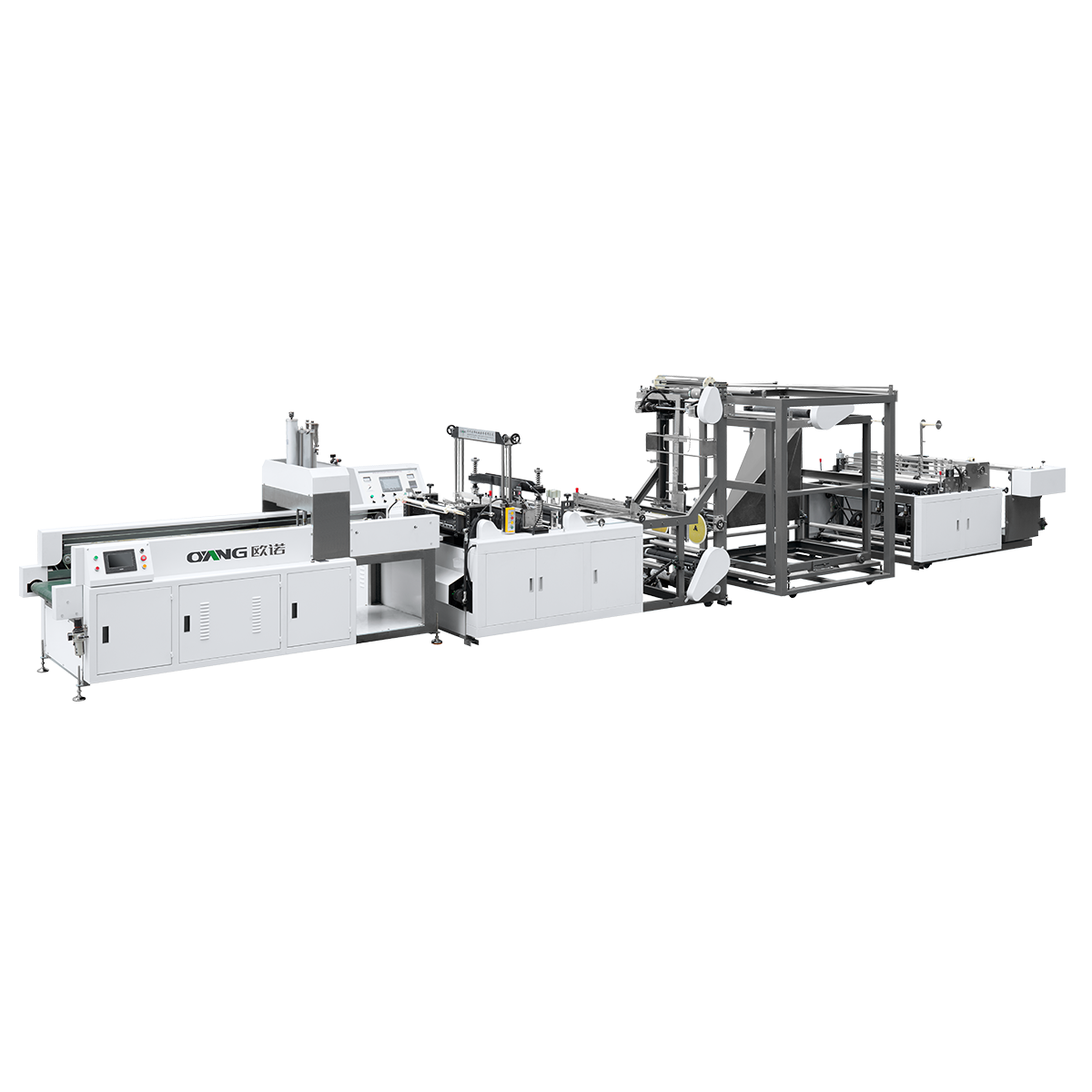
Figure 1: The CP-700/800 Series Automatic Bag Making Machine configured for bio-films, PBAT/starch blends, and eco packaging with servo draw rolls and integrated hydraulic punch units.
The CP-700/800 platform integrates anti-static neutralization bars, dual-arm hydraulic W-cut punchers, and rapid temperature recovery circuits, supporting continuous throughput up to 120–160 bags/min. When shifting full plant capacity from legacy polyolefins to alternative substrates, review our operational analysis on LD bag making machine retrofits vs. eco packaging asset reuse.
Video 1: Continuous production run of the OYANG CP series machine converting handle-cut carry bags with scrap-free automatic discharge and rapid indexing.
Related Technical Guides & Converting Resources
- → Compostable Bag Making Machine: Bio Carry Bag Selection: EN 13432 and ASTM D6400 compliance criteria, closed-loop tensioning, and high-speed bio bag converting line configurations.
- → Eco Friendly Bag Making Machine: PLA & Bio Converting Guide: Operational parameters for rigid polylactic acid (PLA) films, static dissipation, and thermal sealing windows.
- → LD Bag Making Machine vs. Eco Packaging Lines: Transition & Asset Salvage: Repurposing legacy blown film lines, chillers, and compressors for nonwoven and kraft paper converting.
Frequently Asked Questions (FAQ)
Why do corn starch biodegradable films stick to the sealing bar of a bag making machine?
Corn starch compounds contain polar natural starches and plasticizers that melt and caramelize when heated above 160°C. Standard bare copper or worn sealing bars lack anti-adhesion barriers, causing molten starch to adhere, drag strings, and burn onto subsequent bags. Resolving this issue requires installing microcomputer PID temperature control (holding tolerances within ±1°C between 135°C and 145°C) and applying plasma-sprayed fluoropolymer (PTFE) coatings to all hot-contact surfaces.
What are the moisture requirements for corn starch resin before blown film extrusion?
Corn starch and PBAT composite pellets must maintain a moisture content below 0.05% (500 ppm). Starch is naturally hygroscopic; introducing moist granules into high-temperature extruder barrels induces rapid hydrolytic degradation of the PBAT polymer chains. This drops melt viscosity, causes bubble popping, introduces surface gel defects, and lowers the tensile strength of the converted shopping bags.
Can a standard PE bag making machine run corn starch compostable materials directly?
Not without mechanical adjustments. Corn starch films have lower tensile modulus and elongation resistance than conventional PE, causing stretching and tracking drift under high nip roller tensions. Converted machines require low-friction micro-dancer tension systems (operating < 5 N), anti-static ion bars to prevent lightweight film cling, reduced sealing bar temperatures, and Teflon-coated sealing surfaces to ensure clean bottom seams.
What is the optimal extruder temperature profile for 30%–45% corn starch/PBAT compounds?
The optimal barrel profile is flat and depressed compared to polyethylene: Zone 1 (Feed) at 125°C–130°C, Zone 2 (Compression) at 135°C–140°C, Zone 3 (Metering) at 145°C–150°C, and Die Zones at 150°C–155°C. The melt temperature must not exceed 160°C to avert polymer degradation. The air ring should deliver chilled air at 12°C–16°C to lock bubble dimensions at a blow-up ratio between 2.0:1 and 2.8:1.