

Which Machine Is Used to Make Paper Bags? The Industrial History, Pulp vs. Converting Machinery, and Best Substrates
Industrial Origins: Which Country Is Credited with Inventing the Paper Bag Machine?
The United States is credited with inventing and mechanically perfecting the automated paper bag machine. During the Second Industrial Revolution, three American inventors established the foundational mechanics still utilized in modern roll-fed converting:
- 1852 – Francis Wolle (Bethlehem, Pennsylvania): Patented the first mechanized paper bag machine. Wolle’s apparatus slit and glued paper into envelope-style, flat pinch-bottom paper sacks, founding the Union Paper Bag Machine Company.
- 1868 – Margaret E. Knight (Springfield, Massachusetts): Engineered the historic wooden and iron rotary mechanism that automatically folded, cut, and pasted square flat bottoms. Knight’s flat-bottom design eliminated manual paste-work and laid the groundwork for modern commercial grocery sacks.
- 1883 – Charles Stilwell (Philadelphia, Pennsylvania): Patented the pleated side-gusset machine, creating the iconic Self-Opening Satchel (SOS). Stilwell’s design allowed bags to be shipped flat, pop open instantly with a snap of the wrist, and stand upright independently under packing benches.
Modern converters have evolved this mechanical-cam legacy into multi-axis bus-controlled servo architecture. For a step-by-step mechanical analysis of continuous forming, see our guide on how a paper bag machine works.
Engineering Nomenclature: Which Machine Is Used to Make Paper vs. Paper Bags?
Industrial buyers entering the sector frequently confuse primary papermaking machinery with secondary packaging converting equipment. Understanding their boundary conditions is critical for plant layout:
Which Machine Is Used to Make Paper?
Primary paper is produced on Fourdrinier Machines (or cylinder vat machines). These giant capital assets (costing $10M–$100M+) process wood pulp slurry (99% water, 1% fiber) across wire formers, press rolls, and heated drying cylinders.
Output: 1.5 to 3.0-ton continuous paper parent reels.
Which Machine Is Used to Make Paper Bags?
Bags are manufactured on Paper Bag Converting Machines (roll-fed or sheet-fed). These automated units take pre-slit kraft reels, guide the web under tension, fold side gussets, apply PVA glue, shear tubes, and press bottoms at speeds up to 220 bags/min.
Output: Finished, counted, and bundled carrier bags.
Profitability Tiers: Which Paper Bag Manufacturing Segment Is Most Profitable?
Industrial investors evaluating which manufacturing is most profitable must assess margin velocity, setup changeover times, and retail brand value. Bag manufacturing falls into three distinct commercial margin tiers:
| Manufacturing Segment | Target Machine Line | Typical Production Speeds | Gross Margin Range | Commercial Dynamic |
|---|---|---|---|---|
| Tier 1: Plain Bakery & V-Bottom Pouches | Pinch-Bottom Machine (OYANG 16C) | 250–450 bags/min | 18% – 25% | High-volume commodity; minimal customization, thin margin per unit. |
| Tier 2: Grocery & Takeaway SOS Bags with Handles | Roll-Fed Machine with Inline Handle (OYANG 16A / TECH-18) | 150–220 bags/min | 32% – 42% | Massive volume from supermarkets and QSR delivery; high automated cash flow. |
| Tier 3: Luxury Non-Crease Boutique Carriers | Sheet-Fed Box Bag Machine (Great 4.0 Supreme) | 50–90 bags/min | 40% – 55%+ | Premium boutique cosmetics, spirits, and jewelry; maximum pricing power. |
While commodity bakery bags yield high volume, Tier 2 (automated handle bags) and Tier 3 (non-crease luxury bags) deliver the highest net industrial returns. To review the underlying investment models, consult our complete blueprint on how to start a paper bag business.
Substrate Selection: Which Paper Is Best for Making Paper Bags?
Running converting equipment at 180 to 220 bags/min requires selecting paper reels with specific physical tensile characteristics. The best paper substrates include:
- 70–100 GSM Virgin Softwood Kraft (VNK): The global gold standard for carry bags. Softwood fibers (pine/spruce) provide long fiber interweaving with high Tensile Energy Absorption (TEA ≥ 110 J/m²), preventing web snapping during sudden machine acceleration.
- 80–120 GSM Bleached White Kraft (BWK): Best for multi-color promotional retail bags, offering high ISO whiteness (88%+) for sharp color reproduction with water-based flexographic inks.
- Extensible Sack Kraft (Micro-Creped): Required for heavy industrial dry-food sacks (10 to 25 kg) subjected to drop impacts.
To learn how basis weight impacts roll yield and bag unit cost, see our detailed calculation guide on how much does it cost to produce a paper bag.
Is There a Demand for Paper Bags? Global & Regional Outlook
Global demand for paper bags is driven by statutory plastic carrier bans in over 100 countries, the expansion of online quick-commerce food deliveries, and retail ESG mandates. The global market, currently valued between $5.2 billion and $5.6 billion USD, is expanding at a 4.8% to 5.4% CAGR, reaching over $7.8 billion by 2030.
In emerging markets like India and Southeast Asia, demand is compounding above 18% annually as retail chains shift entirely away from single-use synthetic polymers. To plan factory floor layouts and utility requirements for this demand, read our operational guide on how to start making paper bags.
OYANG Engineering Practice: Japanese CNC Precision Ensuring Dynamic Balance
High-speed paper converting subjects machine frames to intense cyclic shock loads. In lower-tier machinery, structural frame deflection causes knife tooth misregistration, uneven bottom paste application, and frequent paper breaks above 120 bags/min.
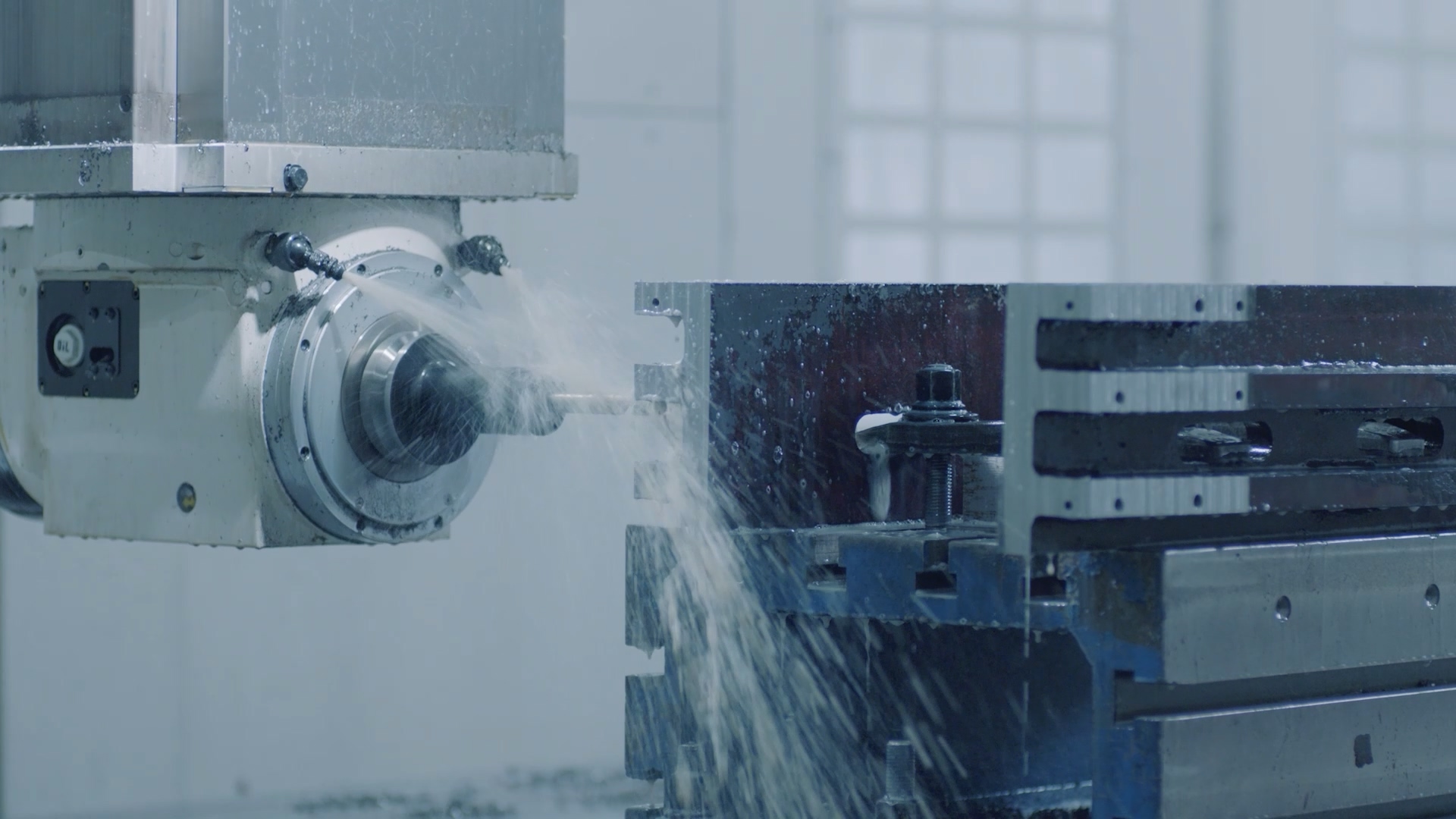
Figure 1: Japanese OKUMA multi-axis machining center milling structural wall panels and bearing flanges inside OYANG’s 130,000 m² production complex.
Inside OYANG’s manufacturing base, all primary machine wall panels, rotating knife shafts, and bottom folding cylinders are machined using Japanese MAZAK and OKUMA CNC multi-axis centers to tolerances of ≤ 0.015 mm. This structural rigidity, paired with multi-axis bus-controlled servo drives, allows machines like the TECH-18 Line to operate continuously at 180 to 220 bags/min while holding material waste below 1.2%.
Catalog Download: Explore complete machine dimensions, utility ratings, and specifications in the OYANG Paper Bag Machine Solution Brochure (PDF).
Video Demonstration: Watch automated size changeover and continuous high-speed converting on the TECH18 Automated Paper Bag Machine Operation Video.
Related Engineering Guides & Technical Resources
Frequently Asked Questions (FAQ)
Which country is credited with inventing the paper bag machine?
The United States is credited with inventing the paper bag machine. Francis Wolle patented the first mechanical machine in 1852, Margaret E. Knight invented the flat-bottom paper bag machine in 1868, and Charles Stilwell patented the self-opening square-bottom satchel (SOS) machine in 1883.
Which machine is used to make paper?
Raw paper is made using a Fourdrinier machine (or paper machine), a large industrial system that processes chemical pulp slurry through continuous wire forming, pressing, drying, and calendering to produce multi-ton kraft paper parent reels.
Which machine is used to make paper bags?
Paper bags are manufactured on paper bag converting machines, such as roll-fed square-bottom (SOS) machines, V-bottom sharp-bottom machines, or sheet-fed luxury non-crease bag making machines that fold, glue, cut, and bottom the bags.
Which paper is best for making paper bags?
The best paper for making paper bags is 70 to 120 GSM virgin natural kraft paper made from long-fiber softwood pulp, providing high Tensile Energy Absorption (TEA), strong burst resistance, and smooth feeding on high-speed converting lines.
Which paper bag manufacturing segment is most profitable?
The most profitable manufacturing segment is luxury sheet-fed non-crease paper bags (40% to 55% gross margin), followed closely by high-speed roll-fed square-bottom grocery bags with inline twisted handles (32% to 42% gross margin).
Is there a sustained commercial demand for paper bags?
Yes, global demand for paper bags is expanding at 4.8% to 5.4% annually, driven by statutory bans on single-use plastics, rapid growth in food delivery apps, and retail supermarket commitments to 100% recyclable, biodegradable packaging.