350x97.png)
350x97.png)
T-Shirt Non Woven Bag Making Machine: High-Speed W-Cut & U-Cut Conversion
A t shirt bag making machine (also recognized industrially as a non woven w cut bag machine or vest carrier bag maker) converts continuous polypropylene spunbond rollstock into high-volume grocery sacks through synchronized M-fold side gusseting, ultrasonic transverse bottom sealing, and handle cut-out punching. Purpose-built platforms like the OYANG CP700/800 series operate at continuous production speeds of 60 to 120 bags per minute, incorporating zero-waste edge-hemming kinematics that slash raw material trim loss below 1.2% to optimize profit margins in wholesale retail packaging.
Video: Continuous zero-waste edge folding, ultrasonic cross-sealing, and automatic handle punch out on the OYANG CP700/800 converting line.
The Economics of Supermarket Carry Bags: Scrap Rate vs Margins
Supermarket carry bags, fresh grocery sacks, and retail vest totes represent the largest continuous consumption sector within the non-woven packaging ecosystem. However, because unit wholesale prices are extremely competitive, profitability depends entirely on machine uptime and raw fabric conservation:
Conventional Trim Waste Issue
Standard converting lines slit and discard 15 to 25 mm of lateral edge flash during web guidance and triangular folding. Across a 100-ton monthly fabric converting plant, this scrap generates 6 to 8 tons of non-recoverable material waste.
OYANG Zero-Waste Hemming
The CP700/800 series utilizes active pneumatic guide shoes that fold the web’s natural outer edges inward without trimming. Roll widths are matched precisely to finished bag layouts, driving total edge scrap down to zero.
High-Cadence Ultrasonic Duty
Running lightweight 25 to 50 GSM fabrics at 120 cycles per minute requires millisecond-exact ultrasonic welding to prevent burning micro-holes while ensuring the bottom seal withstands grocery loads over 10 kg.
Material Economics: How Zero-Waste Folding Adds $31,500/Year in Gross Margin
Examining the bottom-line financial difference between standard converting setups and OYANG’s zero-waste folding architecture highlights substantial operational savings:
Material Scrap Cost Variance Calculation
- Monthly Polypropylene Consumption: 50,000 kg (50 Metric Tons)
- Raw Fabric Roll Purchase Cost: $1.50 USD / kg
- Conventional Slitting Flange Waste (5.5%): 2,750 kg scrap/month ($4,125 USD lost/month)
- OYANG CP Series Zero-Waste Waste Rate (≤1.2%): 600 kg scrap/month ($900 USD lost/month)
- Net Monthly Material Savings: $4,125 − $900 = $3,225 USD / month
- Net Annual Gross Margin Expansion: $3,225 × 12 = $38,700 USD / year
Engineering Takeaway: For high-volume commodity vest bags, eliminating web slitting trim pays off the entire capital machinery cost within 12 to 14 months of multi-shift production.
Handle Cutout Dynamics: Inline Hydraulic Punching vs Offline Group Punching
When configuring a supermarket carry bag making machine line, converters must choose between an integrated inline punching unit and an offline heavy-duty hydraulic press:
| Process Parameter | Inline Automated Punching (CP700 Line) | Offline Heavy Hydraulic Stacking (DSA-10T) |
|---|---|---|
| Production Flow | Fully continuous (Roll to finished W-cut bag) | Two-stage (Bag cutting → Manual stacking → Punch) |
| Converting Speed | 60 – 100 bags/min (Synchronized cycle) | Up to 120 bags/min on bag line + bulk punching |
| Stack Thickness per Stroke | 1 – 2 bags per mechanical punch cycle | 50 – 100 bags per hydraulic stroke (DSA-10T) |
| Die Cutter Longevity | High-speed tool steel; regular honing required | Heavy alloy progressive die; long service interval |
| Labor Requirement | 1 Operator for complete line operation | 1 Operator for bag line + 1 Operator for punching table |
| Best Application | Automated medium-to-large single-line operations | Ultra-high-volume bag plants running multi-line banks |
Kinematic Sequence: From Master Roll to Finished W-Cut Grocery Bag
Converting a flexible polypropylene web into a gusseted u cut bag making machine product involves four high-speed mechanical phases:
- Dual-Sided Gusset Folding (M-Fold): The primary web unwinds through tension control dancers into dual stainless-steel triangular forming shoes. These shoes tuck the sides inward to form the classic M-shaped side gusset without tearing or stretching thin non-woven fibers.
- Digital Photocell Tracking & Servo Indexing: For pre-printed webs, high-resolution optical eyes scan register eye-marks, synchronizing the servo feed rollers to hold cut-length tolerance strictly within ±0.5 mm.
- Transverse Ultrasonic Bottom Sealing: A 15 kHz high-power acoustic horn descends against a continuous diamond-patterned hardened anvil roll, fusing four to eight plies of non-woven material at the bottom seam in under 0.08 seconds.
- Handle Die Punching & Shearing: The integrated automatic t shirt bag punching machine unit cuts the curved U/W handle notch, cleanly separating handle scrap via pneumatic blow-off ejectors, while a high-speed flying knife cuts the bag mouth.
Why Japanese Precision CNC Machining Guarantees Punching Alignment
Operating an ultrasonic seamer and hydraulic punch at 120 cycles per minute generates continuous mechanical shock waves. If machine frames lack structural rigidity, punch tooling deflects, leaving uncut fabric threads and jamming the conveyor discharge.
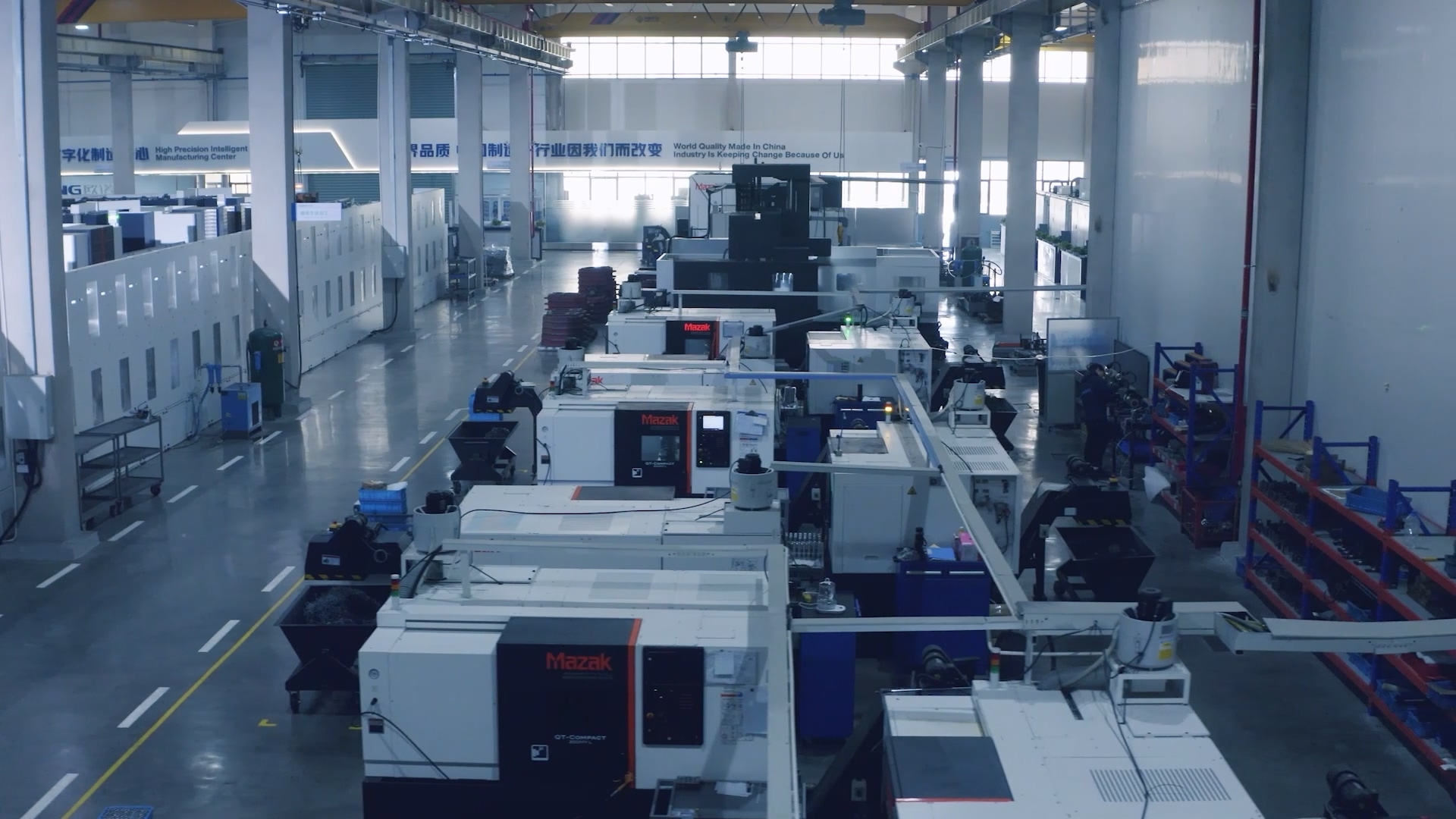
Heavy side frames, punch ram guides, and ultrasonic mounting bridges machined on Japanese MAZAK flexible CNC lines at OYANG.
All punch slider ways, crank shafts, and base chassis for OYANG CP series machines are machined on Japanese MAZAK and OKUMA 5-axis CNC machining centers. Planar machining tolerances of ≤ 0.015 mm ensure that the upper die aligns perfectly with the lower tungsten-carbide base plate, extending punch knife sharpness past 3 million cuts between sharpenings.
Recommended T-Shirt & W-Cut Converting Machinery

OYANG CP700/800 T-Shirt Bag Machine
The global workhorse for high-speed vest bag production. Delivers up to 120 bags/min with zero-waste edge hemming, automatic W-cut punch out, and multi-ply ultrasonic bottom sealing.
Explore CP700/800 Specs
Automatic T-Shirt Bag Punching Unit
Inline pneumatic-hydraulic punch attachment. Synchronizes directly with high-speed converting lines to stamp U-cut and W-cut grocery handles with automated waste ejection.
Explore Punching Specs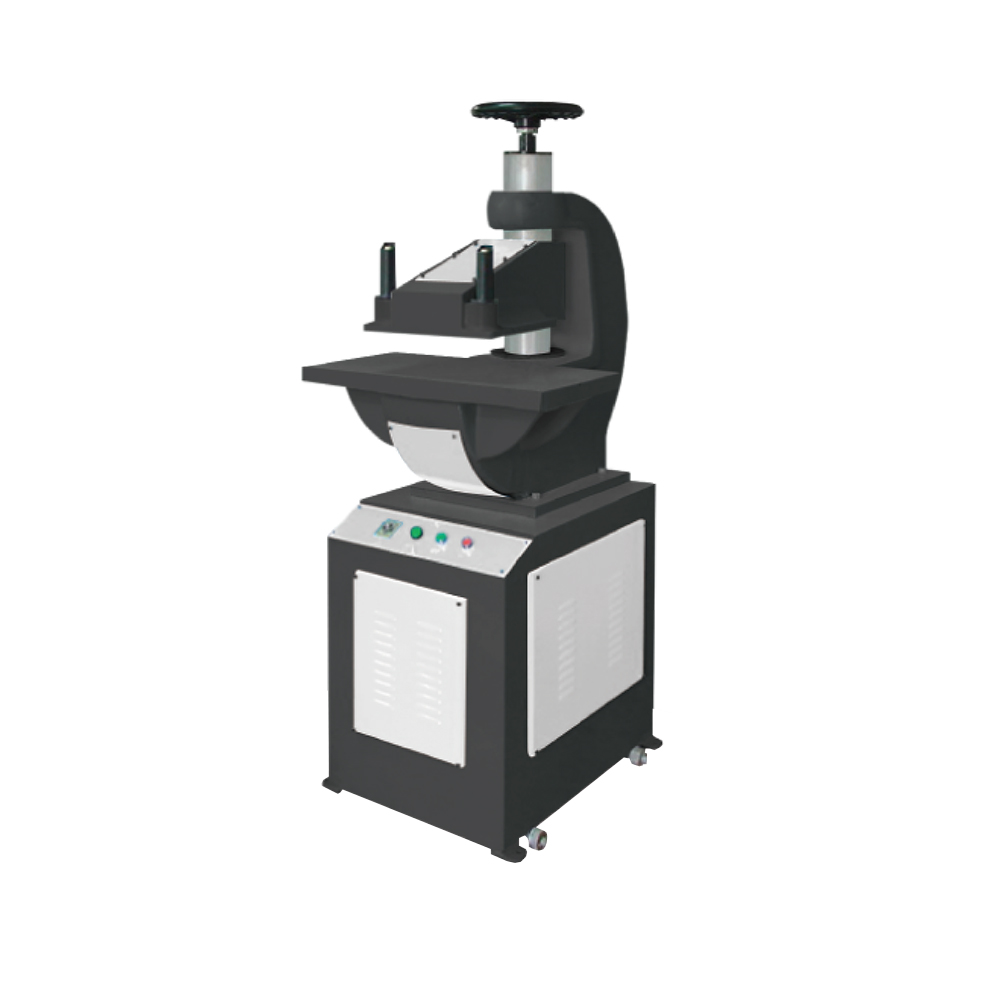
DSA-10T Heavy Hydraulic Punching Station
Heavy-duty offline hydraulic press delivering 10 tons of clamping force. Punches stacks of 50 to 100 bags per stroke for high-output manufacturing facilities.
Explore DSA-10T SpecsFrequently Asked Questions (FAQ)
What is a t shirt bag making machine?
A t shirt bag making machine is an automated converting line that transforms polypropylene non-woven rollstock into grocery vest carry bags with side gussets and cut-out handles (W-cut or U-cut) using ultrasonic welding and mechanical or hydraulic punch dies.
What is the difference between a W-cut and a U-cut non-woven bag?
A W-cut bag features an inward-folded top profile resembling the letter W, providing wider handle loops that distribute weight across the shoulders of the bag, whereas a U-cut bag features a rounded oval handle cutout commonly used for lighter retail and pharmacy carry items.
How does zero-waste edge hemming work on the CP700/800 series?
Zero-waste edge hemming uses precision mechanical folding shoes to fold the continuous outer edges of the fabric roll directly into the side gussets without slitting or trimming off excess material, reducing raw material waste from over 5% down to under 1.2%.
Should I choose inline punching or offline hydraulic punching for grocery bags?
Inline punching is ideal for fully automated plants seeking to eliminate manual handling with one operator running the entire line from roll to finished bag. Offline hydraulic punching (like the DSA-10T) is preferred for massive production hubs where high-speed converting lines discharge stacked flat bags to be punched in bulk stacks of 50 to 100 bags per stroke.
What is the maximum operating speed of the OYANG CP series machine?
The OYANG CP700/800 series operates at continuous production speeds between 60 and 120 bags per minute, depending on the substrate grammage (typically 25 to 60 GSM) and bag length dimensions.
Scale High-Volume Supermarket Packaging Production
Eliminate trim waste and achieve the lowest unit converting cost in the grocery carrier sector. Contact OYANG engineers to calculate your exact fabric yield per roll and explore CP series machinery options.