

Paper Bag Weight Calculation Guide: How Many Bags in 1 kg Kraft Paper & Material Yield Formulas
The Material Yield Equation: Engineering Formula for Plant Estimations
In paper bag manufacturing facilities, accurate production planning begins with substrate conversion calculations. Estimating bag counts simply from three-dimensional dimensions (Width × Gusset × Height) leads to severe inventory shortfalls because it overlooks seam overlaps, bottom folds, and cut margins. For plants evaluating total batch economics alongside raw roll yields, see our detailed engineering breakdown on how much does it cost to produce a paper bag to benchmark variable operating expenses against material yields.
The verified industrial formula to determine output yield per kilogram (Ykg) is defined as:
Where each engineering variable represents:
- Ykg (Bags per Kilogram): The net finished unit yield extracted from exactly 1 kg (1,000 grams) of parent paper roll stock.
-
Aunfolded (Total Unfolded Surface Area in m²): The true 2D flat paper blank area required to form the three-dimensional bag, including mechanical overlaps:For SOS Square-Bottom Bags:(Where W = Face Width in mm, G = Gusset Depth in mm, H = Bag Body Height in mm, Sglue = Seam Overlap [typically 15–20 mm], and Bfold = Bottom Closure Overlap [typically 15–25 mm]).
Aunfolded = [ (2 × W) + (2 × G) + Sglue ] × [ H + (0.5 × G) + Bfold ] / 1,000,000 - GSM (Grams per Square Meter): The actual basis weight of the paper substrate (typically 45–150 g/m²).
- Kwaste (Mechanical Scrap Coefficient): Material lost to web splicing, trimming, and tension adjustments. On precision multi-axis servo lines, Kwaste ≤ 0.012 (1.2%), while older mechanical lines operate at 0.035–0.050 (3.5%–5.0%).
Material Yield Reference Matrix: Bag Output per 1 kg Across Standard GSM Weights
The lookup table below outlines production yields across common commercial bag categories, calculated at an industrial scrap baseline of 1.5% using virgin and high-grade recycled kraft reels:
| Bag Type & Dimensions (Width × Gusset × Height) | Unfolded Blank Size (Roll Width × Cut Length) | Paper Basis Weight (GSM) | Weight Per Single Bag (g) | Finished Bags per 1 kg Paper | Bags per 1 Metric Ton (1,000 kg) |
|---|---|---|---|---|---|
|
V-Bottom Pharmacy Sack 150 × 40 × 220 mm | 400 × 240 mm (0.096 m²) | 50 gsm (Bleached Kraft) | 4.87 g | 202 – 205 bags | ~202,000 bags |
|
V-Bottom Bakery Bread Bag 200 × 60 × 320 mm | 540 × 340 mm (0.184 m²) | 60 gsm (Brown Kraft) | 11.20 g | 88 – 90 bags | ~88,000 bags |
|
SOS Food Delivery Bag (No Handle) 240 × 120 × 300 mm | 740 × 380 mm (0.281 m²) | 70 gsm (Virgin Kraft) | 19.97 g | 49 – 50 bags | ~49,500 bags |
|
SOS Supermarket Grocery Sack 280 × 150 × 360 mm | 880 × 455 mm (0.400 m²) | 80 gsm (Recycled Testliner) | 32.50 g | 30 – 31 bags | ~30,500 bags |
|
SOS Retail Shopping Bag (Handles) 320 × 140 × 420 mm | 940 × 510 mm (0.479 m²) | 120 gsm (Brown Kraft) | 58.35 g (Excluding handles) | 16 – 17 bags | ~16,800 bags |
|
Heavy Apparel / Department Store Bag 450 × 160 × 480 mm | 1,240 × 580 mm (0.719 m²) | 150 gsm (White Kraft) | 109.50 g (Excluding handles) | 9 – 9.2 bags | ~9,100 bags |
Mechanical Control: How High-Precision Converting Enforces < 1.2% Scrap Rates
Paper substrate comprises 65% to 75% of a bag factory’s variable operating expenses. In continuous converting, minor engineering inaccuracies cause catastrophic cumulative raw material losses. Operations engineers structuring a new production plant can review our comprehensive strategic roadmap on how to start a paper bag business to balance plant footprint, material storage, and equipment selection.
The Real-World Financial Impact of a 2.5% Scrap Difference
A high-speed converting facility processing 20 tons of kraft roll daily ($17,000 raw material input per day) loses $629,000 over 300 annual working days under a standard 3.7% scrap rate. By deploying advanced converting systems that limit scrap to ≤ 1.2%, daily material loss is restricted to $204,000—recovering $425,000 straight into bottom-line factory net profits annually.
Achieving this ≤ 1.2% benchmark requires eliminating mechanical causes of paper destruction:
- Ultrasonic Edge Position Control (EPC): Real-time high-speed edge tracking corrects web telescoping and uneven reel winding to within ± 0.2 mm, eliminating longitudinal edge tears.
- Closed-Loop Multi-Servo Tension Decoupling: Continuous electronic dancer feedback prevents web stretching or slackening during rapid acceleration (0 to 200 m/min in 18 seconds), completely preventing web breaks on lightweight 45–60 gsm papers.
- Precision Splicing Synchronization: Automatic reel-splicing mechanisms change parent rolls at speed without halting downstream tube-forming and bottom-pasting units.
OYANG Engineering Practice: CNC Machining That Maximizes Paper Substrate Yield
Material yield optimization relies directly on machine frame rigidity. If unwind brake mandrels or tube draw rollers suffer from angular runout, paper webs experience uneven cross-directional tension, leading to wrinkles and edge trim scrap.
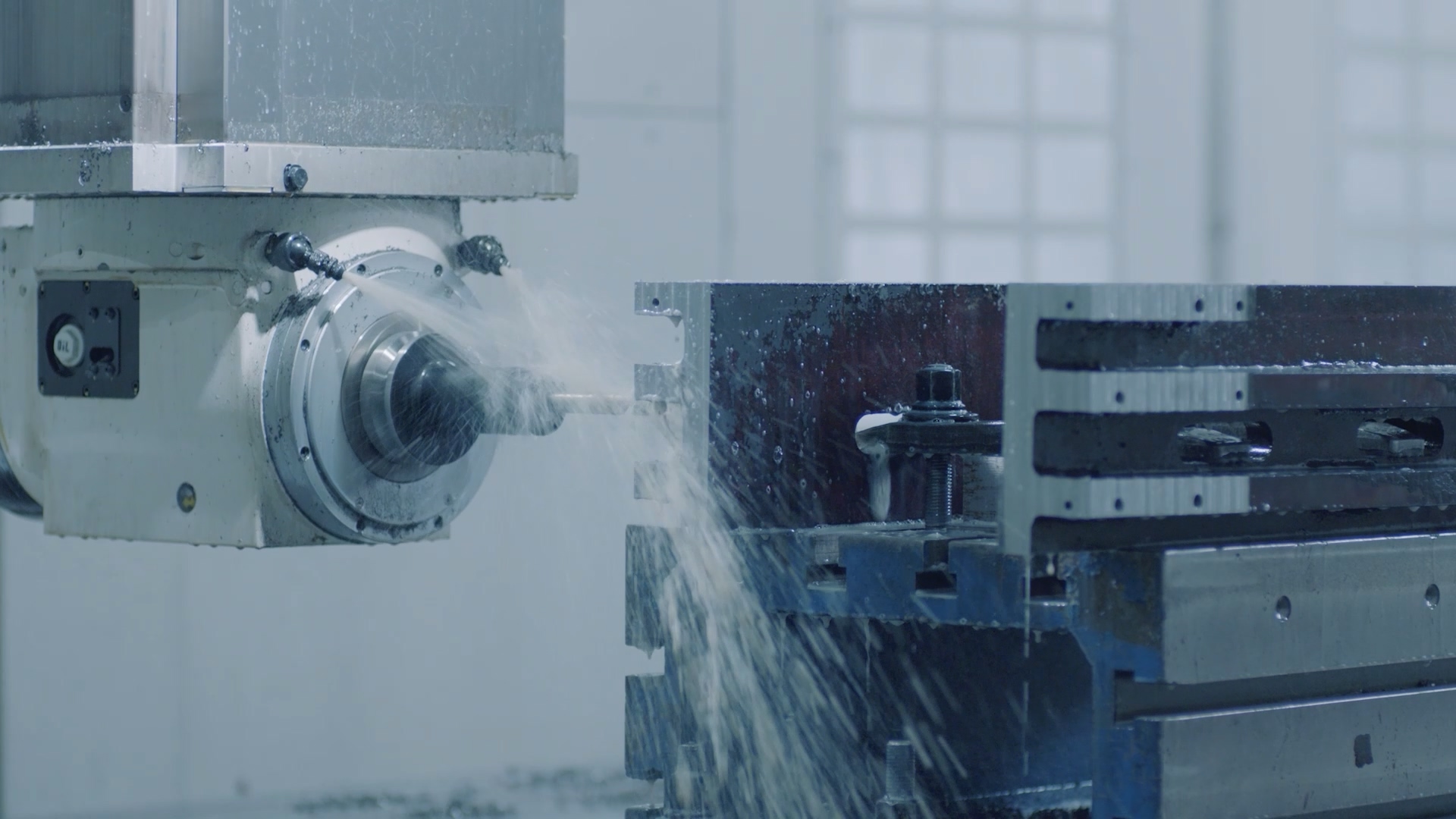
Figure 1: Japanese OKUMA precision machining centers finishing structural side-wall panels and mounting flanges to ≤ 0.015 mm tolerances inside OYANG’s 130,000 m² production complex.
At OYANG’s manufacturing base, all machine side frames, tension dancer rollers, and bottom folding cylinders are processed using Japanese MAZAK and OKUMA CNC machine tools to strict tolerances of ≤ 0.015 mm. This structural rigidity ensures stable web tracking and smooth paper feeding across high-speed systems like the SMART-17 High-Speed Paper Bag Line, keeping material scrap rates below 1.2%.
Engineering Brochure: Review complete roll dimension capacities, web widths, and paper thickness specifications in the OYANG Paper Bag Machine Solution Brochure (PDF).
Video Demonstration: Observe high-speed roll feeding and zero-waste forming in action on our SMART-17 High-Speed Paper Bag Machine Production Video.
Related Engineering Guides & Technical Resources
Frequently Asked Questions (FAQ)
How many paper bags are in 1 kg?
The number of paper bags produced from 1 kg of paper varies by bag surface area and paper GSM. For small V-bottom bakery bags (50 GSM), 1 kg yields approximately 85 to 200 bags depending on dimensions. For medium grocery SOS bags (70 to 80 GSM), 1 kg yields 30 to 50 bags. For large shopping bags with handles made from 120 GSM kraft paper, 1 kg yields 16 to 18 bags.
How do you calculate paper bag weight from dimensions?
To calculate paper bag weight, calculate the unfolded 2D paper blank area in square meters: [(2 × Face Width + 2 × Gusset + 20 mm seam) × (Height + 0.5 × Gusset + 20 mm bottom fold)] / 1,000,000. Multiply this flat area by the paper grammage (GSM). Add 1.5% for adhesive and scrap allowances, and an additional 8 to 15 grams if paper rope handles are attached.
How many paper bags can be produced from a 1-ton kraft paper roll?
A 1-metric ton (1,000 kg) roll of kraft paper produces approximately 85,000 to 90,000 small bakery bags (60 GSM), 48,000 to 50,000 medium food delivery SOS bags (70 GSM), or 16,000 to 17,000 large handle shopping bags (120 GSM), assuming modern automated converting lines with scrap rates under 1.5%.
What paper GSM is best for manufacturing shopping bags?
For lightweight grocery sacks without handles, 60 to 80 GSM natural or recycled kraft paper is optimal. For standard retail carrier bags with twisted or flat paper handles carrying 5 to 10 kg loads, 100 to 120 GSM kraft paper is standard. For luxury apparel and department store bags requiring high tear resistance, 130 to 160 GSM virgin kraft or coated white paper is recommended.
How do automatic bag making machines reduce raw material scrap?
Automated bag machines reduce material scrap through closed-loop servo tension regulation that eliminates web breaks during speed changes, ultrasonic edge-position sensors that maintain web tracking within ±0.2 mm, and dynamic rotary cutoff synchronization that prevents cut-length drift, holding total web waste below 1.2%.