

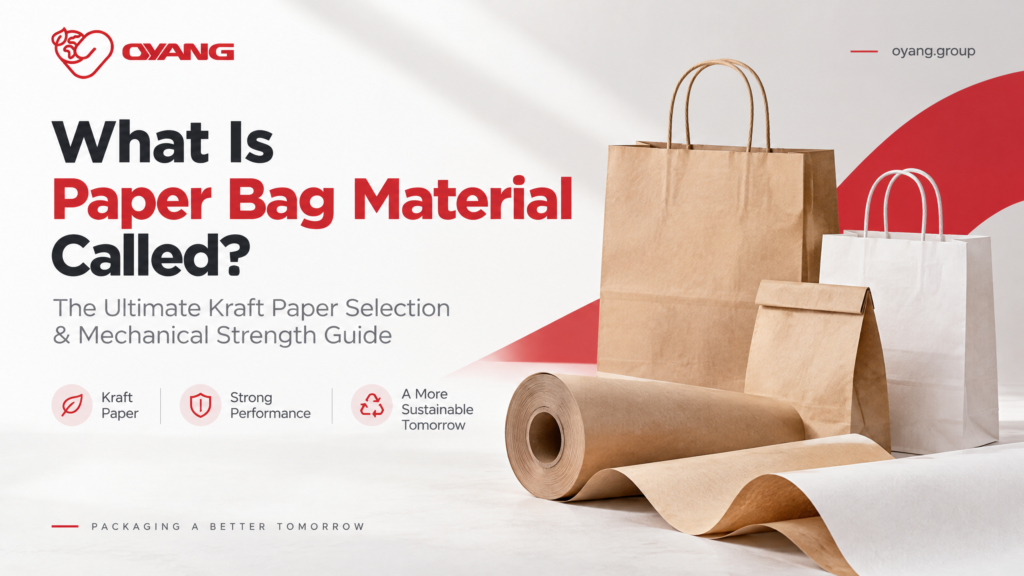
What Is Paper Bag Material Called? The Ultimate Kraft Paper Selection & Mechanical Strength Guide
Nomenclature & Chemistry: What Is the Paper Bag Technique?
When engineers refer to the paper bag technique, they encompass both upstream pulp chemistry and downstream converting mechanics. Chemically, raw kraft paper relies on the sulfate pulping process developed by Carl F. Dahl in 1879. Wood chips (predominantly softwood such as pine, spruce, and Douglas fir) are treated with a hot alkaline mixture of sodium hydroxide (NaOH) and sodium sulfide (Na2S) known as “white liquor.”
This chemical digestion breaks the ester bonds between cellulose and lignin without hydrolyzing the core cellulose microfibrils. Because softwood fibers average 2.5 to 4.0 mm in length (compared to hardwood fibers at 0.8 to 1.2 mm), the resulting paper web forms a dense, interwoven fibrous matrix. This interwoven structure gives kraft paper exceptional Tensile Energy Absorption (TEA) and tear resistance, properties essential for carrying mechanical loads of 5 to 15 kg without rupture.
What Kind of Paper Is Used for Paper Bags? The 4 Core Substrate Categories
Industrial paper bag manufacturing utilizes four distinct paper categories, each engineered for specific structural demands and converting speeds:
1. Virgin Natural Brown Kraft (VNK)
Composed of 100% unbleached virgin pulp. Features maximum tear propagation resistance and high moisture tolerance. The undisputed standard for supermarket self-opening satchel (SOS) bags, grocery sacks, and heavy retail carriers (60–120 GSM).
2. Bleached White Kraft Paper (BWK)
Chlorine-free or ECF bleached virgin fibers providing a high ISO brightness (85%–92%). Its micro-calendered, uniform surface enables vivid multi-color flexographic and rotogravure printing for luxury cosmetics, apparel brands, and pharmaceutical packaging (70–140 GSM).
3. Recycled Testliner / Agro-Kraft
Formed from 60%–100% recovered corrugated containers (OCC) and agricultural furnish. While highly economical and circular, the shorter, recycled fibers reduce TEA by 30%–40%, requiring tighter tension control on high-speed lines (50–90 GSM).
4. Extensible Sack Kraft (Clupak Process)
Mechanically micro-creped during paper manufacturing to provide 6%–10% stretch in the machine direction (MD). Essential for industrial valve bags, cement sacks, and multi-wall shipping sacks subjected to impact drops (70–100 GSM).
Mechanical Strength Benchmarks: What Is the Best Paper to Make Bags?
Determining what paper is best for paper bags requires evaluating three primary mechanical performance metrics: Bursting Index (resistance to internal pressure), Tensile Energy Absorption (drop shock resistance), and Folding Endurance (gusset crease integrity). To calculate exact bag blank cut sizes and yield per metric ton based on these paper grades, refer to our comprehensive paper bag production cost formula guide.
| Substrate Grade | Standard GSM Range | Tensile Strength MD (kN/m) | Bursting Index (kPa·m²/g) | TEA MD (J/m²) | Recommended Machine Applications |
|---|---|---|---|---|---|
| Virgin Kraft (VNK) | 60–100 gsm | 6.5 – 11.0 | 3.2 – 4.2 | 110 – 160 | High-speed roll-fed grocery & supermarket carry bags |
| Bleached White Kraft | 70–130 gsm | 5.8 – 9.5 | 2.8 – 3.6 | 90 – 130 | Fashion shopping bags, inline 4-color printed carriers |
| Recycled Testliner | 50–90 gsm | 3.8 – 6.2 | 1.8 – 2.4 | 55 – 85 | V-bottom bakery bags, dry takeaway food packaging |
| Extensible Sack Kraft | 70–100 gsm | 8.0 – 13.5 | 4.5 – 5.8 | 180 – 260 | Heavy-duty 10–25 kg grain, flour, and building material sacks |
Substrate Physics: What Is the Best Paper for DIY Bags vs. Automated Roll-Fed Converting?
Manual sample prototyping (often searched as what is the best paper for DIY bags) allows the use of heavy art paper, cardstock (180–250 GSM), or decorative wrapping paper because human hands can manually crease, position, and press stiff sheets with unlimited cycle time.
However, high-speed automated bag making machines running at 180 to 220 bags/min behave under strict mechanical physical laws. Loading rigid, unyielding paper stocks into continuous roll-fed converting formers triggers catastrophic machine jams:
- Fiber Flexibility & Score Crack Resistance: Industrial roll converting requires paper with balanced moisture content (6% to 8%). If paper drops below 5% RH, high-speed rotary scoring wheels slice through the surface fibers, fracturing the side gussets.
- Caliper Uniformity (≤ ± 3% Tolerance): If roll cross-profile thickness fluctuates, draw rollers slip on the thin side while crushing the thick side, inducing severe web skew.
- Surface Porosity (Gurley Seconds): Automated bottom-gluing wheels apply water-based PVA adhesive with dwell contact of less than 0.08 seconds. The paper surface must absorb water rapidly to build initial tack before the bag reaches the discharge table.
To eliminate unsightly fold marks and achieve luxury rigid presentations without manual folding, high-end converters deploy specialized sheet-fed equipment such as the Great 4.0 Sheet-Fed Non-Crease Paper Bag Machine. For full operational step-by-step guidance, read our tutorial on how to make a professional paper bag.
What Are the Latest Trends in Paper Bag Design & Barrier Coatings?
Driven by PFAS regulatory bans in North America and the EU Packaging and Packaging Waste Regulation (PPWR), standard polyethylene (PE) lamination is being phased out in favor of repulpable barrier solutions:
1. Water-Based Dispersion Coatings
Aqueous polymer dispersions applied inline to yield Cobb60 water-absorption values < 15 g/m² and KIT-level 8–10 oil resistance while remaining 100% recyclable in standard paper recovery mills.
2. Heat-Sealable Bio-Polymer Coatings
Extrusion-coated PLA (polylactic acid) or PBS layers (12–18 gsm) providing oxygen/grease barriers for food delivery bags. These substrates are processed on specialized machinery like our Extrusion Coating & Lamination Line.
3. Micro-Perforated Breathable Kraft
Hot needle or laser-perforated natural kraft designed for warm bakery products, releasing internal steam without degrading the bag’s bottom seam adhesive.
What Is the Process of Bag Manufacturing? The Complete Converting Sequence
Converting raw kraft paper rolls into finished bags requires six continuous mechanical stages. For plant managers calculating capital expenditures and facility footprints, explore our complete setup blueprint on how to start a paper bag manufacturing business:
Tension Decoupling
Ultrasonic EPC
PVA Seam Extrusion
Rotary Shear Blade
Scoring & Pasting
Figure 1: Continuous-motion roll converting workflow from raw kraft parent reels to bundled bags.
OYANG Engineering Practice: Servo Tension Algorithms That Tame Recycled Kraft
Recycled testliner and low-grade agro-kraft reels (frequently used in price-sensitive emerging markets) suffer from fiber length variations, causing web elasticity to fluctuate violently across a single 1,500 kg roll. On mechanical-brake converting machines, these sudden tension spikes cause web snapping, generating 5% to 8% scrap rates.

Figure 2: Industrial virgin and bleached kraft paper rolls engineered for high-speed conversion across OYANG paper bag machinery.
On systems such as the OYANG TECH-18 Line and SMART-17 High-Speed Line, OYANG solves this through closed-loop multi-servo dancer feedback. High-resolution optical encoders track roll diameter decay in real time, adjusting the unwind torque every 2 milliseconds to hold web tension within ± 1.5 N.
Furthermore, all machine side frames, knife cylinders, and bottoming drums are milled on Japanese MAZAK and OKUMA CNC centers to tolerances of ≤ 0.015 mm. This structural rigidity prevents roll deflection, allowing OYANG machines to process papers from 45 to 150 GSM seamlessly while maintaining material scrap rates below 1.2%.
Brochure Download: Access detailed roll capacity dimensions, former specifications, and web data in the OYANG Paper Bag Machine Solution Brochure (PDF).
Video Demonstration: Observe high-speed handling of lightweight kraft reels on the SMART-17 High-Speed Paper Bag Machine Production Video.
Related Engineering Guides & Technical Resources
Frequently Asked Questions (FAQ)
What is paper bag material called?
Paper bag material is called kraft paper, produced through the sulfate chemical pulping process. Depending on processing, it is categorized as virgin natural brown kraft, bleached white kraft, recycled testliner, or extensible sack kraft.
What kind of paper is used for paper bags?
Industrial paper bags use unbleached virgin kraft paper for heavy groceries, bleached white kraft for high-end retail printing, recycled testliner for cost-effective takeaway bags, and extensible sack paper with micro-creping for heavy industrial sacks.
What is the best paper to make bags for commercial retail?
The best paper for commercial retail bags is 100 to 120 GSM virgin kraft paper. It provides optimal tensile energy absorption, high burst resistance, smooth printability for flexo inks, and clean score-line integrity for handle application.
What is the best paper for DIY bags compared to machine converting?
For manual DIY bag prototyping, heavy 180 to 250 GSM coated art paper or cardstock works best because it can be scored and glued by hand. In contrast, automated roll-fed machines require flexible 50 to 140 GSM kraft rolls with controlled moisture content to prevent feed jamming.
What is the process of bag manufacturing in a converting plant?
The paper bag manufacturing process involves unwinding kraft reels under closed-loop tension control, printing the web inline, applying longitudinal seam adhesive, folding the paper into a tube, cutting the tube to length via rotary knife, and opening, gluing, and pressing the bag bottom.