350x97.png)
350x97.png)
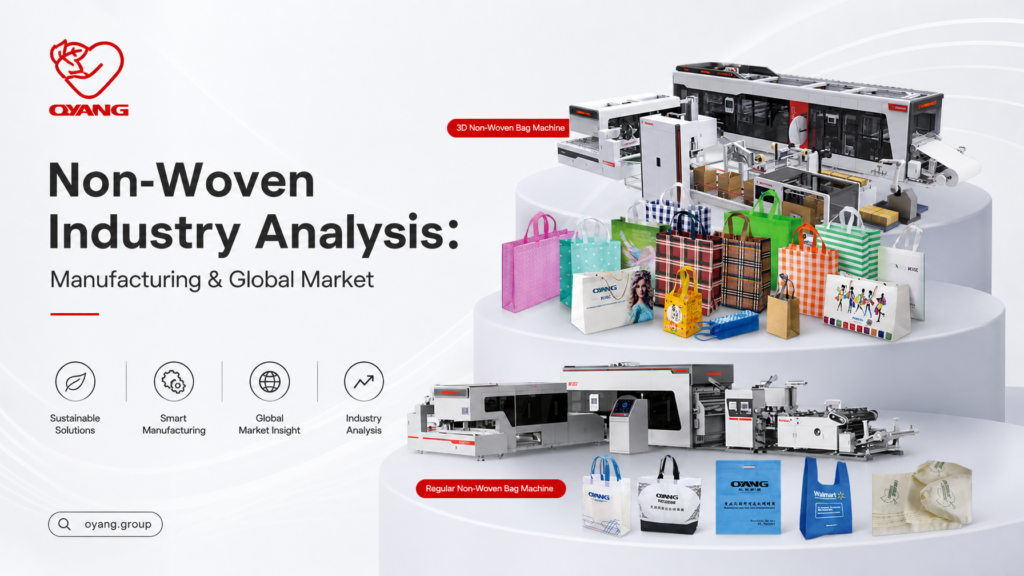
The Global Non-Woven Industry: Manufacturing Upstream, Technology & Market Dynamics
The non-woven industry encompasses the global manufacturing ecosystem dedicated to engineering engineered fibrous webs directly from thermoplastic polymers (primarily polypropylene and polyester) without traditional yarn spinning or weaving. Accelerating under statutory single-use plastic carrier bag bans across Europe, North America, India, and East Asia, the global non-woven market is expanding at a sustained Compound Annual Growth Rate (CAGR) of 6.5% to 7.2%. Packaging applications represent over 28% of total global spunbond tonnage, driven by retail migration toward 100% recyclable, reusable 3D shopping bags.
What Is the Non-Woven Industry?
When asking what is the non-woven industry, industrial economists define it as a capital-intensive sector that bridges petrochemical refining with flexible converting. Unlike conventional woven textiles that depend on mechanical warp-and-weft looms, non-woven manufacturing bypasses yarn preparation entirely. Polymers are melted, extruded into continuous filaments, aerodynamically dispersed into randomized or structured webs, and bonded using thermal heat, chemical binders, or high-pressure water entanglement.
The industry is segmented into four primary end-use verticals:
- Commercial Packaging & Carry Bags: Polypropylene (PP) spunbond substrates ranging from 30 to 120 GSM for retail shopping, agricultural seed sacks, and food delivery.
- Hygiene & Medical: Multilayer composite SMS (Spunbond-Meltblown-Spunbond) fabrics engineered for surgical masks, isolation gowns, baby diapers, and filtration media.
- Geotextiles & Civil Engineering: Needle-punched staple fiber fabrics used for road stabilization, drainage filtration, and erosion control.
- Automotive & Industrial: Acoustic interior insulation mats, headliners, and synthetic leather backing substrates.
How Is Non-Woven Fabric Manufactured? (The Upstream Spunbond Process)
Understanding how non-woven fabric is manufactured requires examining the metallurgic and aerodynamic extrusion sequence of a modern Spunbond (SB) production line. Transforming solid polypropylene resin chips into uniform fabric master rolls involves five synchronized thermal and mechanical steps:
Step 1 Raw Material Dosing & Extrusion Plasticization
Virgin isotactic polypropylene pellets (MFI 25–40 g/10min) are mixed with color masterbatches and UV stabilizers via gravimetric dosers. The blended resin enters an electrically heated single-screw extruder where it melts under controlled thermal gradients (210°C to 240°C) into a homogenous polymer melt.
Step 2 Metering & Spinneret Spinning
High-precision planetary gear pumps deliver molten polymer through micro-filtration screen changers into rectangular spinneret die assemblies. Each spinneret plate contains thousands of laser-drilled micro-orifices (0.4–0.6 mm diameter), extruding continuous molten polymer filament streams.
Step 3 Aerodynamic Quench Drafting & Attenuation
As filaments emerge, high-speed conditioned laminar air streams quench the liquid polymers into semi-crystalline states. Venturi-type pneumatic draft ducts accelerate the filaments to supersonic velocities (up to 3,500 m/min), stretching molecular chains to achieve high longitudinal tensile strength.
Step 4 Negative-Pressure Porous Belt Laying
The drafted filaments exit the drafting channel and are distributed randomly by aerodynamic deflector plates onto a continuous, vacuum-assisted porous wire mesh belt. Suction fans underneath pull the filaments down firmly, forming a uniform, isotropic non-woven web structure.
Step 5 Calender Thermal Bonding & Slit Winding
The unbonded filament web enters a heated two-roll calender consisting of an engraved pattern steel roll and a smooth counter-pressure roll operating at 135°C to 150°C. Thermal contact melts 15% to 22% of the contact points, imparting high dimensional tensile stability. The bonded web is trimmed, slit, and wound onto surface winders.
Explore OYANG’s dedicated upstream line: PP Spunbond Nonwoven Fabric Production Machine.
Who Is the Best Non-Woven Bag Manufacturer in India? (Market Landscape & Supply Chain Shift)
Following India’s nationwide enforcement of the Plastic Waste Management Amendment Rules—which banned single-use plastic films under 120 microns—the Indian subcontinent has become one of the fastest-growing consumption regions for non-woven packaging worldwide.
When evaluating who is the best non-woven bag manufacturer in India, industry procurement directors identify several prominent market leaders:
- Shish Industries Ltd (Gujarat): Renoved for large-scale industrial packaging, polypropylene multi-layer laminates, and export-grade carrier solutions.
- Shubham Flexible Packaging Solutions (Haryana): A dominant supplier of rotogravure-printed, multi-format retail packaging and branded shopping bags.
- Pinnacle Nonwoven & Regional Hubs (Tamil Nadu & Maharashtra): Supplying high-volume loop handle grocery bags and D-cut pharmacy carry packaging to tier-1 and tier-2 distribution chains.
The Equipment Divide: Semi-Automatic Legacy Lines vs Fully Automatic Converting
Despite high regional production volume, a substantial portion of Indian domestic non-woven manufacturing historically relied on semi-automatic converting lines combined with manual sewing or offline hydraulic handle punching. As competitive pressures rise and export orders increase, the Indian market is actively shifting from manual operations to fully automated, integrated Chinese machinery cells.
| Performance Metric | Semi-Automatic Indian / Regional Setup | OYANG Automated Converting Platform (TECH Series) |
|---|---|---|
| Production Velocity | 30 – 45 bags/min (Discontinuous) | 90 – 100 bags/min (Continuous) |
| Labor Requirement | 4 – 6 Operators (Handle placing, sewing, packing) | 1 Operator (Supervisory & roll staging) |
| Specification Changeover | 2 to 4 Hours (Manual mechanical repositioning) | 90 Seconds (Touchscreen one-key servo change) |
| Consumable Efficiency | Continuous tape adhesive overlap (High cost) | Patented indirect taping (Saves $16,800/year) |
| Handle Tensile Reliability | Variable manual stitch tension (< 80 N) | Ultrasonic digital bonding (> 150 N pull burst) |
Why Japanese Precision CNC Processing Dictates Machinery Lifespan
In high-speed converting plants running 24/7 multi-shift schedules, mechanical frame deflection is the root cause of ultrasonic failure and frequent web breaks. When running at 100 bags per minute, an eccentricity error of just 0.02 mm creates severe resonant vibration across high-speed rotary cutters.
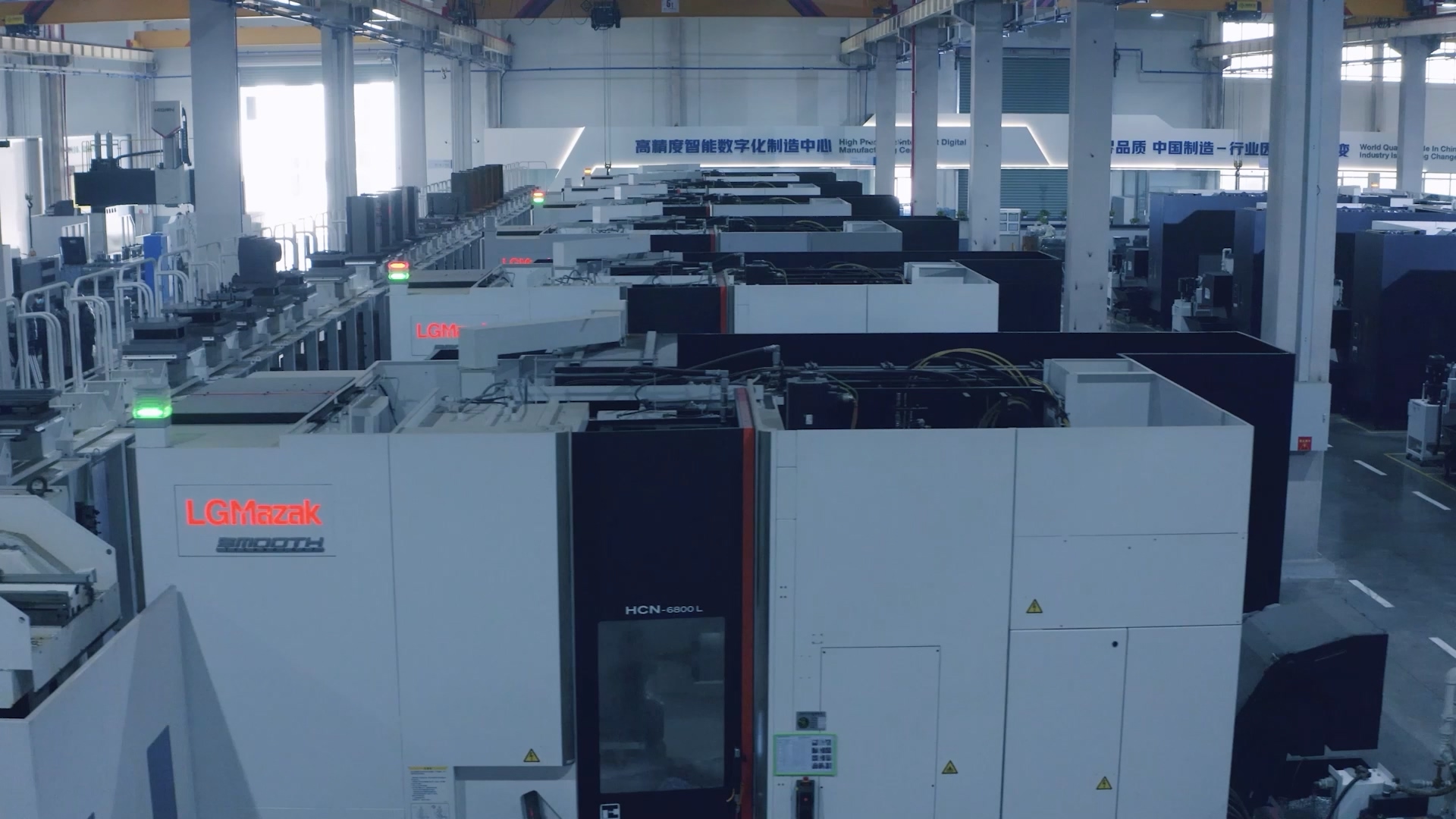
Precision structural processing on Japanese MAZAK flexible production lines inside OYANG’s 130,000㎡ smart manufacturing base.
To eliminate premature mechanical fatigue, OYANG machines all structural machine frames, eccentric shafts, and ultrasonic mounting plates on Japanese MAZAK and OKUMA 5-axis CNC machining centers. Holding planar tolerances within ≤ 0.015 mm guarantees dynamic mechanical stability, reduces material scrap strictly below 1.5%, and ensures an equipment design life exceeding 15 years.
Recommended Machinery for Complete Plant Integration
Converters modernizing operations or launching greenfield manufacturing facilities can establish a vertically integrated converting plant using OYANG’s proven machinery combinations:
- Upstream Web Production: PP Spunbond Nonwoven Fabric Making Machine — Generates virgin fabric rolls in widths from 1.6 m to 3.2 m.
- Downstream High-Speed Converting: TECH 23 Fully Automatic Nonwoven Box Bag Machine — Continuous 90–100 bags/min conversion with 90-second mold change.
- Slitting & Roll Preparation: Nonwoven Fabric Slitting Machine ONL-XE1800 — High-speed web slitting for handle loops and side rolls.
- Automated Packing Line: Automatic Bag Packing Line ONL-DSC300 — Integrated stacking, pressing, and strapping without manual intervention.
Frequently Asked Questions (FAQ)
What is the non-woven industry?
The non-woven industry is the global manufacturing sector focused on producing engineered fabrics directly from thermoplastic polymers without traditional yarn spinning or weaving, delivering substrates used in commercial eco-packaging, medical supplies, filtration, and geotextiles.
How is non-woven fabric manufactured?
Non-woven fabric is manufactured by melting polypropylene resin pellets, extruding molten filaments through spinnerets, attenuating the filaments with high-speed quench air, laying the fibers uniformly onto a moving vacuum wire belt, and thermally bonding the web via heated calender rolls.
Who is the best non-woven bag manufacturer in India?
Leading non-woven bag manufacturers in India include Shish Industries, Shubham Flexible Packaging, and established packaging hubs across Gujarat and Tamil Nadu. These industry leaders are increasingly upgrading from semi-automatic lines to Chinese fully automated converting systems to achieve production speeds of 100 bags per minute with minimal labor.
Upgrade Your Packaging Operations with Full-Chain Automation
Whether you are an established producer upgrading semi-automatic machinery or establishing a greenfield converting enterprise, OYANG Group delivers turn-key manufacturing solutions backed by ISO-certified engineering and worldwide on-site commissioning.