350x97.png)
350x97.png)
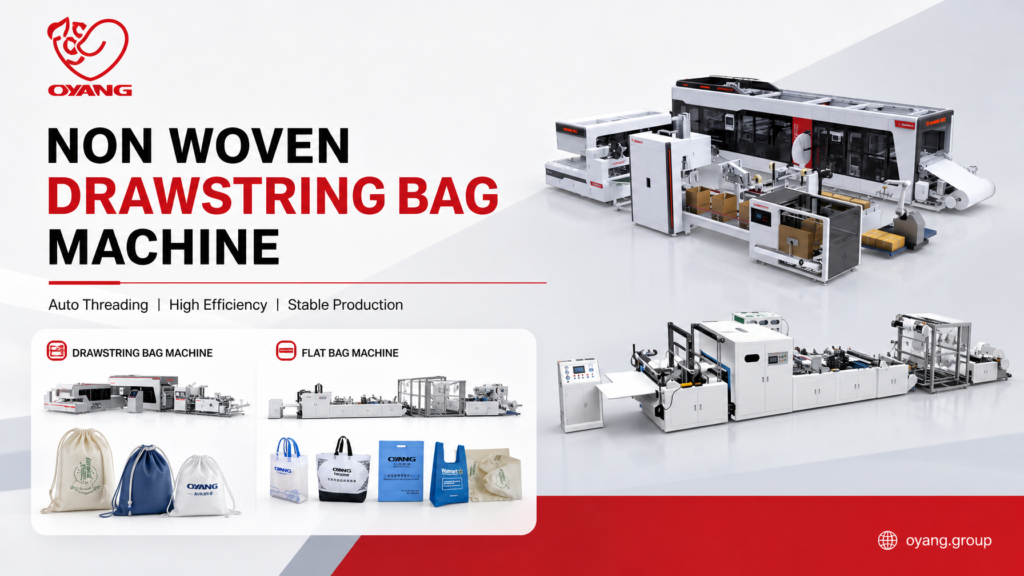
Non Woven Drawstring Bag Machine: Automatic Rope Threading & Ultrasonic Sealing
A dedicated non woven drawstring bag machine is an advanced industrial converting platform engineered to fabricate cinch-top pouches, footwear dust packaging, laundry bags, and sports backpacks directly from continuous polypropylene rollstock. Operating at verified manufacturing velocities of 70 to 90 pouches per minute, automated lines like the OYANG XC700/800 series integrate a continuous pneumatic rope threading non woven bag machine mechanism with dual-side ultrasonic seam fusion, eliminating post-press manual threading labor and reducing production costs by more than 75%.
The Labor Bottleneck: Manual Stringing vs Automated In-Line Threading
Footwear dust covers, hotel laundry sacks, and luxury gift pouches represent staple non-woven converting products. However, while traditional converting machines easily seal the bag body, threading drawstrings manually has historically constrained production:
- Severe Labor Dependency: An experienced operator manually inserting drawstrings with a threading needle averages only 120 to 180 bags per hour. A factory processing 50,000 drawstring bags daily requires a dedicated team of 25 to 30 manual workers solely for rope insertion.
- Inconsistent Cinch Tension: Manual knotting and cutting yield variable string lengths and uneven tension, resulting in customer rejections from global athletic and footwear brands.
- Knot Jamming on Semi-Auto Lines: Early-generation semi-automatic machines relied on mechanical fingers to push the rope through bag mouth channels, frequently knotting, fraying the string, and triggering machine shutdowns.
Kinematic Architecture: How Automatic Rope Threading Operates
The shoe bag making machine configuration on the OYANG XC series replaces manual labor with an integrated mechatronic threading module:
Step 1 Dual Continuous String Unwind & Tension Control
Continuous spools of cotton, polyester, or PP braided cord are positioned on low-friction rotary pay-off stands. Micro-stepping magnetic particle brakes maintain constant string tension, preventing cord slack or overstretching.
Step 2 Venturi Pneumatic Injection Threading
As the primary non-woven web is folded along its upper edge to create the drawstring tunnel (hem), high-velocity pneumatic guide nozzles create a localized Venturi airflow effect. This airflow blows the leading edge of the cords smoothly through both front and rear hem channels without mechanical friction.
Step 3 Bag Mouth Ultrasonic Channel Hemming
Continuous rotary ultrasonic seamers seal the lower border of the folded hem, creating a clean sleeve for the cord while preventing the acoustic horn from touching or damaging the interior drawstring.
Step 4 Cord Indexing, Ultrasonic Fusion & Guillotine Shearing
A servo gripper draws the exact programmed cord length (holding ±1.0 mm cut tolerance). At the bag’s bottom corners, dual ultrasonic sonotrodes spot-weld or knot-fuse the cord ends securely between the fabric plies before high-speed flying blades cleanly shear the cord.
Step 5 Transverse Dual-Side Sealing & Flying Cut
High-amplitude 20 kHz ultrasonic horns seal the lateral borders of the pouch, creating continuous, tear-resistant seams. An integrated rotary knife separates the finished cinched pouch onto the stacking table.
Financial Model: Eliminating Manual Threading on a 1,000,000 Bag Order
Evaluating the return on investment (ROI) of an automated drawstring bag making machine reveals dramatic operational cost reductions:
Labor Overhead Variance Analysis (1 Million Shoe Dust Bags)
- Production Target: 1,000,000 units (Standard 300 × 400 mm non-woven footwear pouch)
- Manual Stringing Speed: 150 bags / operator / hour (Net: 6,667 total labor hours required)
- Direct Manual Labor Expense: 6,667 hours × $6.00 USD/hr = $40,002 USD
- OYANG XC700 Automated Speed: 80 bags/min (4,800 bags/hr; only 208 machine hours required)
- Automated Machine Labor Overhead: 1 Machine operator (208 hours × $10.00/hr) = $2,080 USD
- Net Labor Cost Savings per Order: $40,002 − $2,080 = $37,922 USD
Conclusion: The labor savings achieved on just two large-scale brand packaging contracts cover the entire capital expenditure of the OYANG XC700 automatic drawstring conversion line.
Performance Matrix: Standalone Pouch Makers vs OYANG XC Series
| Engineering Parameter | Conventional Semi-Auto Setup | OYANG XC700/800 Dedicated String Line |
|---|---|---|
| Converting Velocity | 25 – 35 pouches/min (Manual feed) | 70 – 90 pouches/min (Continuous auto) |
| Rope Insertion Method | Manual thread needle / Foot-pedal push | Pneumatic Venturi airflow automated feed |
| Drawstring Style Support | Single pull cord only | Dual-pull cinch cord & single loop cord |
| Side Seam Tensile Strength | 60 – 90 N (Inconsistent heat bars) | > 140 N (Continuous 20 kHz ultrasonic fusion) |
| Fabric Grammage Range | Limited to 45 – 70 GSM | 30 – 100 GSM (PP Spunbond, RPET, Non-woven) |
| Required Line Operators | 4 – 8 Workers (Forming + Stringing) | 1 Operator for complete line management |
Japanese MAZAK & OKUMA CNC Manufacturing Guarantees Alignment
Operating high-speed pneumatic cord injectors and continuous ultrasonic edge-sealers at 80 cycles per minute creates recurring dynamic pressure cycles. If the structural framing flexes, the pneumatic guide tubes misalign with the hem channel, causing cord jams and machine stops.
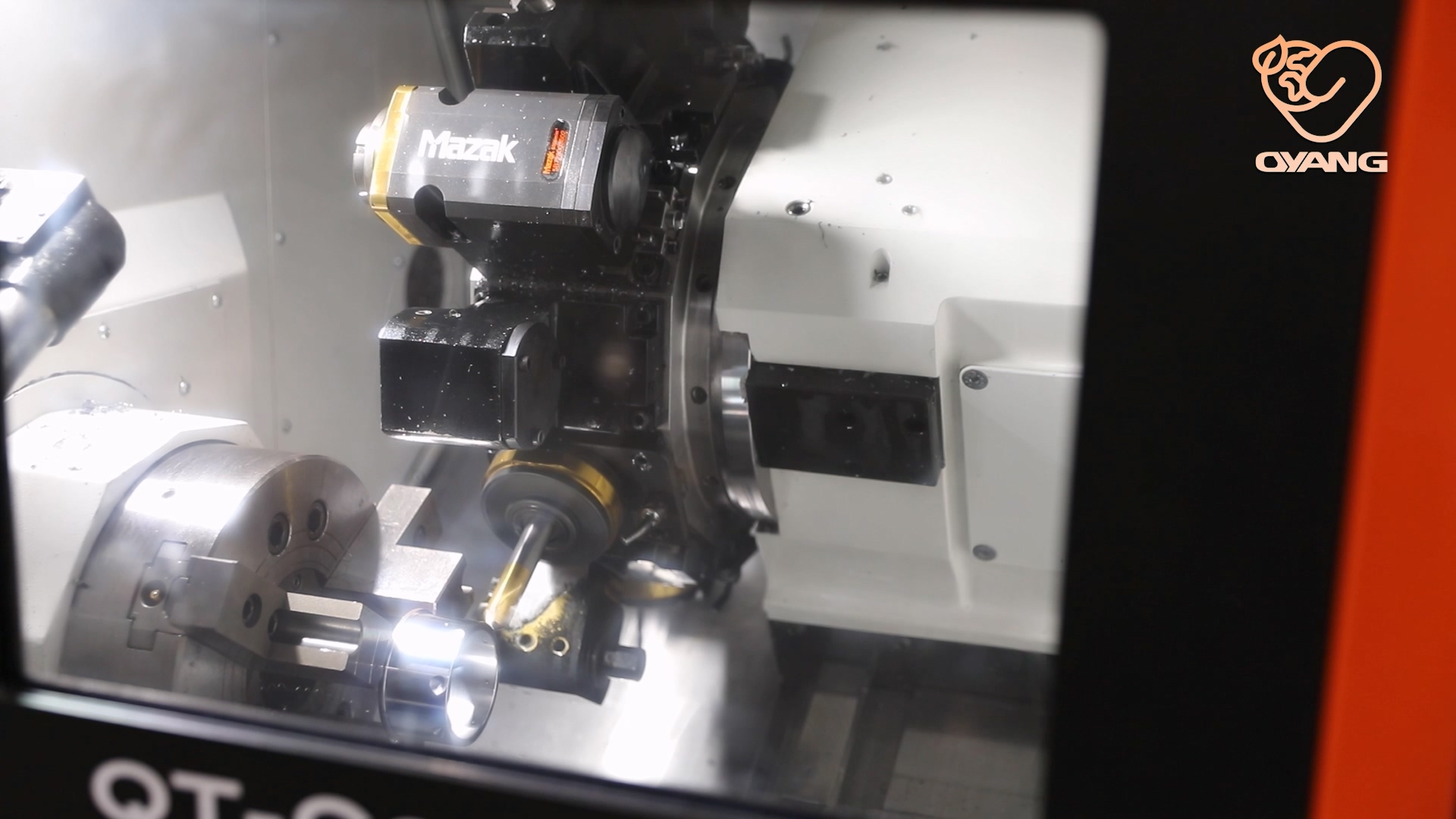
Threading guide blocks, horn anvils, and roller brackets processed to ≤ 0.015 mm tolerances on OKUMA CNC centers at OYANG.
All rope guide rails, ultrasonic anvil mountings, and pneumatic slide blocks are machined on Japanese MAZAK and OKUMA 5-axis CNC machining centers. Precision machining within ≤ 0.015 mm ensures frictionless cord passage, clean ultrasonic edge trimming, and continuous round-the-clock reliability.
Recommended Drawstring & Shoe Bag Machinery
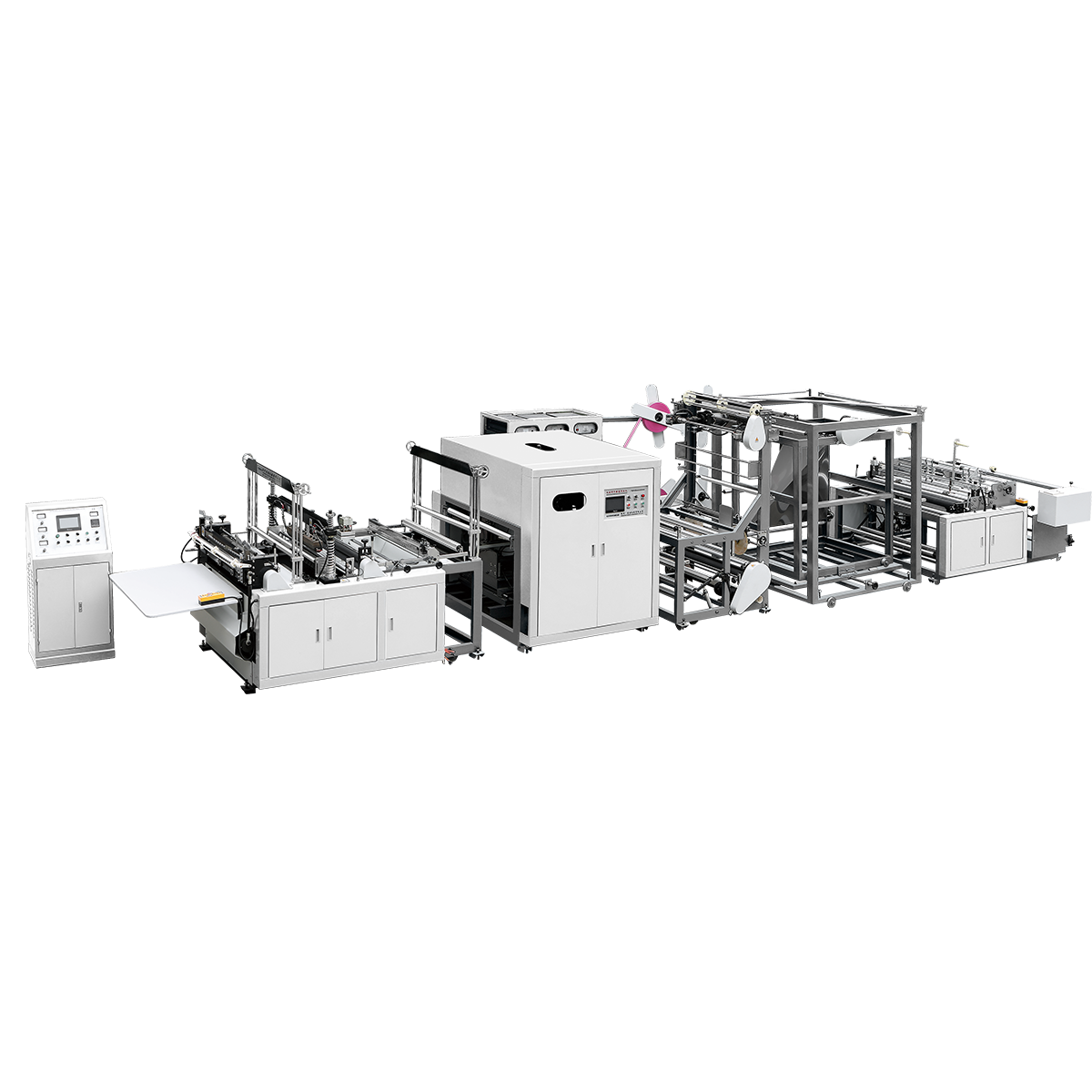
OYANG XC700/800 Automatic Drawstring Machine
The industry benchmark for drawstring bags and footwear dust packaging. Features automatic pneumatic rope threading, dual-side ultrasonic welding, and edge-position correction.
Explore XC Series Specs
XB700/800 Multi-Format Converting Line
Versatile production platform combining drawstring shoe pouch conversion with flat D-cut bags, bottom-gusset carry totes, and loop-handle bag production.
Explore XB Series Specs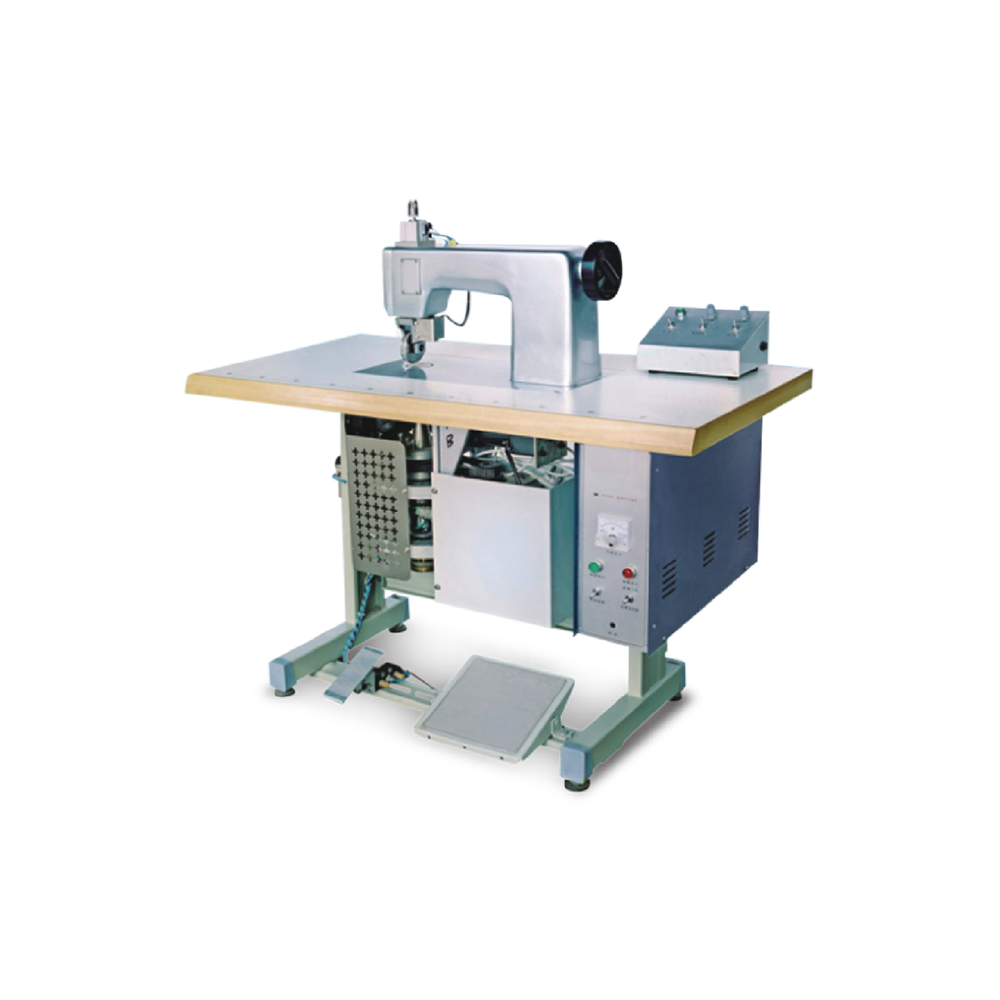
Ultrasonic Lace Auxiliary Sewing Machine
Precision standalone ultrasonic unit for custom embossing, decorative drawstring channel sealing, or manual finishing of boutique luxury gift bags.
Explore Lace Machine SpecsFrequently Asked Questions (FAQ)
What is a non woven drawstring bag machine?
A non woven drawstring bag machine is an automated industrial packaging line that converts non-woven fabric rolls into cinch-top bags by folding the top hem, automatically threading drawstrings using pneumatic air, and sealing the side seams with ultrasonic welding.
How does automatic rope threading work without jamming?
The OYANG XC series uses a pneumatic Venturi air-injection system that propels the cord through the folded fabric channel on a continuous cushion of air, completely eliminating the mechanical friction, snagging, and knotting common in push-finger mechanisms.
What is the typical output speed of an automatic shoe bag making machine?
An automated shoe bag making machine such as the OYANG XC700 operates at continuous production speeds of 70 to 90 pouches per minute, producing approximately 35,000 to 45,000 completed drawstring bags per single 8-hour shift.
Can the machine handle both single-pull and double-pull drawstring bags?
Yes, the XC series can be configured for either single-pull cinch cords (ideal for simple laundry and dust bags) or dual-pull opposing drawstrings (required for premium footwear pouches and athletic cinch backpacks).
What types of cord materials are compatible with the automatic threading unit?
The automatic threading mechanism accommodates various cord materials, including polypropylene braided cord, twisted cotton rope, polyester drawstrings, and flat ribbon tape ranging from 2 mm to 6 mm in diameter.
Automate Your Drawstring & Shoe Bag Manufacturing
Eliminate manual cord insertion and scale production to 90 pouches per minute. Contact OYANG packaging engineers to review your cord samples, request machine cycle videos, and receive an engineering quotation.