350x97.png)
350x97.png)
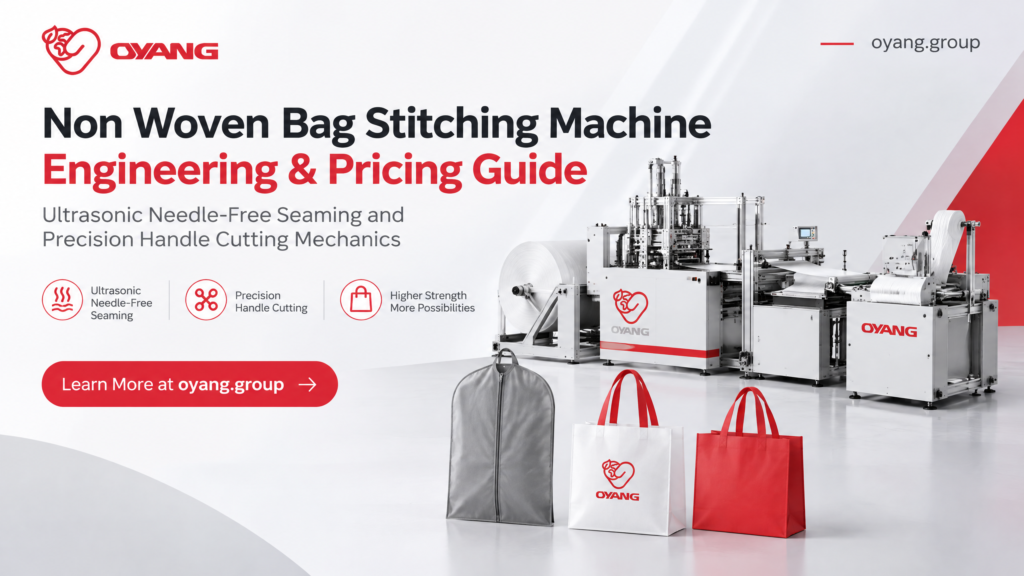
Non Woven Bag Stitching Machine Engineering & Pricing Guide: Ultrasonic Needle-Free Seaming and Precision Handle Cutting Mechanics
Packaging converters manufacturing garment suit covers, reusable grocery totes, and heavy-gauge shopping bags face a critical balance between seam shear strength, production labor overhead, and dimensional consistency. Operating a high-speed non woven bag stitching machine requires matching mechanical joining technologies to specific bag architectures: continuous 20 kHz ultrasonic rotary pattern wheels for threadless, hermetic seaming, or synchronized needle-stitch heads for reinforced three-dimensional bags. Paired with a servo-driven non woven bag handle cutting machine, factories eliminate manual ribbon length drift (≤ ± 0.5 mm) while scaling output across diverse investment tiers.
Joining Kinematics: Rotary Ultrasonic Stitching vs. Mechanical Thread Sewing
When processing spunbond polypropylene (PP) fabric (60 to 140 gsm), selecting the joining method directly impacts seam tensile retention, liquid resistance, and recurring consumable expenses:
| Engineering Parameter | Rotary Ultrasonic Stitching (Threadless) | Mechanical Needle Chain/Lockstitch |
|---|---|---|
| Joining Principle | 20 kHz high-frequency acoustic friction melts intermolecular fibers internally | Reciprocating steel needle punches thread loop through fabric plies |
| Consumable Requirements | Zero consumables (no needle, thread, bobbin, or adhesive) | High-tensile polyester or PP sewing thread; frequent needle replacement |
| Seam Liquid & Dust Resistance | Hermetic barrier seal; continuous molecular melt closure | Perforated needle holes allow powder/liquid sifting |
| Operating Speed (Manual/Semi) | Up to 35–40 meters/min continuous roll feed | 12–18 meters/min (restricted by needle friction heat) |
| Edge Trimming Capability | Simultaneous edge sealing and waste trimming via beveled anvil roller | Requires separate mechanical side-knife attachment prone to jamming |
Preventing Pinhole Tear-Out on High-Load Nonwoven Bags
When heavy grocery bags (carrying > 12 kg loads) are sewn using conventional mechanical needles, the piercing action cuts structural spunbond filaments. Under dynamic drop or lifting shock, mechanical stress concentrates around these puncture holes, creating a “postage stamp” perforation effect that causes seam failure.
Conversely, an ultrasonic non woven bag stitching machine utilizes localized acoustic energy focused by micro-pyramidal teeth on a pattern wheel (vacuum carburized to HRC 58–62). The mechanical vibration bonds the filament contact nodes without puncturing the web, maintaining seam tensile retention above 85% of virgin fabric strength under ASTM D5034 grab testing.
Equipment Investment Matrix: Non Woven Bag Stitching Machine Price & Tiers
Plant managers evaluating commercial non woven bag stitching machine price structures must weigh capital outlay against labor overhead and automation capabilities. The table below details equipment tiers, functional scopes, and expected production outputs:
| Equipment Automation Category | Commercial Price Tier (USD) | Acoustic/Drive Configuration | Rated Operating Output | Labor Intensity |
|---|---|---|---|---|
| Standalone Arm-Type Ultrasonic Sewing Unit | $1,200 – $2,800 | Analogue generator (1,500 W / 20 kHz); single motor drive | 10–20 meters/min (operator guided) | 1 operator per machine (100% manual feed) |
| Continuous Industrial Lace Stitching Machine | $3,500 – $7,500 | Digital auto-tuning generator (2,000 W / 20 kHz); dual motor speed control | Up to 40 meters/min (continuous seaming/trimming) | 1 operator per machine (semi-automated guidance) |
| Automated Handle Ribbon Cutting Station | $2,800 – $5,800 | Dedicated servo feeder + rotary high-speed shear knife | 100–140 cut straps/min (± 0.5 mm tolerance) | Unattended operation (roll-to-cut stack) |
| Fully Integrated Automatic Sewing & Cutting Line (XG1200) | $35,000 – $68,000+ | Multi-axis synchronized servo bus; inline stitching, handle attaching & cutting | 25–45 completed garment/suit bags/min | 1 operator per 2 production lines |
Handle Preparation Mechanics: Overcoming Length Variance with Dedicated Cutters
A recurring bottleneck in manual and semi-automatic bag converting is handle inconsistency. When operators measure and cut handle ribbons manually or use simple friction-fed mechanical slitters, continuous web drag causes dimensional variances of ± 5 mm to 10 mm. This causes finished shopping bags to hang unevenly when loaded.
A dedicated non woven bag handle cutting machine resolves this through closed-loop kinematic control:
Servo Feed & Shear Mechanism Sequence
- Optical Dancer Tension Relief: Continuous rolls of 25–35 mm nonwoven strap ribbon unwind across an ultra-low-friction dancer arm, isolating roll inertia and maintaining feed tension below 3 N.
- High-Resolution Servo Indexing: A precision servo pinch-roller indexes the ribbon to programmed lengths (typically 320 mm to 600 mm) with an accuracy of ± 0.5 mm.
- Carbide Rotary Scissor Cut: A pneumatic or cam-driven high-speed tungsten carbide shear blade cleanly cuts the ribbon across its width, eliminating edge fraying without generating melted plastic beads.
- Automated Stacking / Transfer: Cut straps are gathered in a motorized sorting trough or transferred directly to robotic placement arms on downstream ultrasonic attaching stations at speeds exceeding 120 cycles per minute.
OYANG Precision Converting Engineering: Built for Production Efficiency
Continuous high-speed stitching and precision cutting require rigid mechanical support. At OYANG’s 130,000 m² production complex, all sonotrode mounting bridges, cutter knife gantry beams, and sewing drive linkages are machined on Japanese MAZAK and OKUMA 5-axis CNC centers to tolerances within ≤ 0.015 mm. This geometric precision ensures parallel tool engagement, minimizes acoustic power loss, and extends tooling service life.
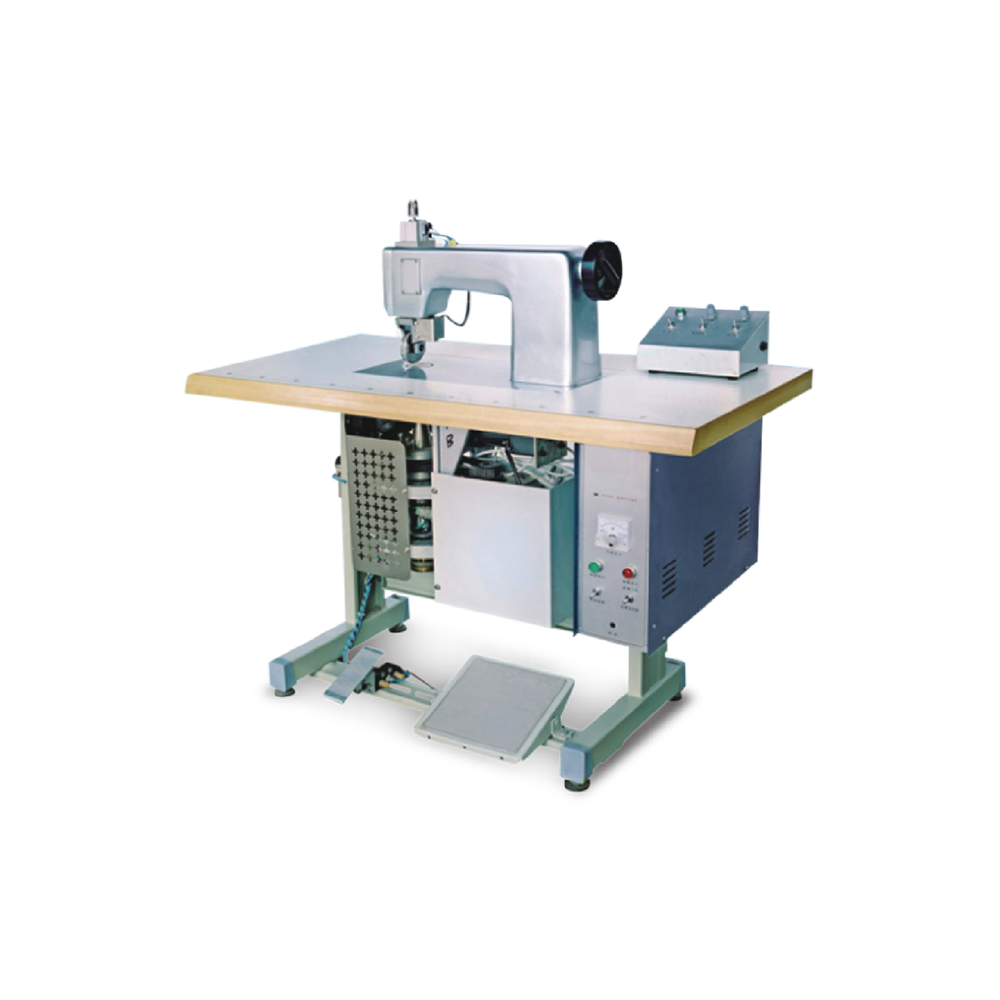
OYANG Industrial Ultrasonic Lace Sewing Machine
Designed for continuous nonwoven edge seaming, lacing, and automated edge trimming. Completely replaces conventional thread stitching. Equipped with an auto-tuning 20 kHz digital generator and vacuum-carburized alloy pattern rollers (HRC 58–62) delivering continuous seaming speeds up to 40 m/min.
- Continuous Speed: Stepless variable regulation from 0 to 40 meters/min
- Acoustic Package: 20 kHz / 2,000 W digital generator with dynamic resonance tracking
- Tooling Standard: Wear-resistant carburized Cr12MoV pattern rollers for decorative seams
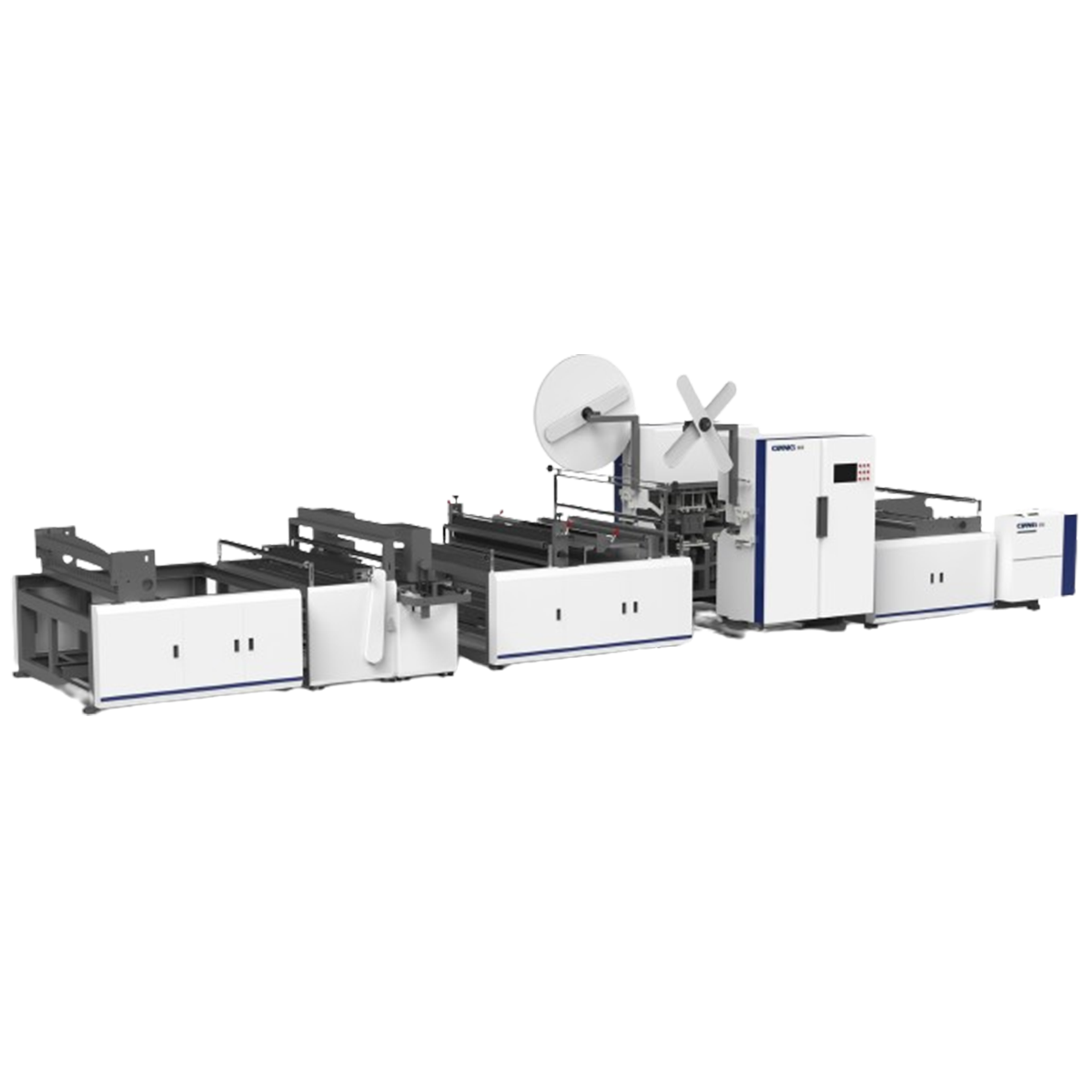
XG1200: Fully Automatic Converting Line with Inline Sewing & Cutting
The turnkey automated solution for suit covers, garment bags, and reinforced nonwoven carriers. Integrates automated web unwinding, inline sewing, ultrasonic handle attaching, and servo-driven cross-cutting into a single synchronized production flow.
- Production Output: 25–45 finished garment bags/min (1 operator per 2 lines)
- Drive Platform: Multi-axis synchronized servo motion bus for high cutting accuracy
- Combined Process: Seamlessly pairs mechanical sewing with ultrasonic handle welding
Factory Verification & Technical Catalogs
Review live production demonstrations and technical brochures from our manufacturing campus:
Frequently Asked Questions (FAQ)
What is the difference between an ultrasonic non woven bag stitching machine and a standard sewing machine?
An ultrasonic non woven bag stitching machine uses 20 kHz acoustic vibrations and a patterned anvil roller to bond synthetic thermoplastic fibers together without needles, threads, or consumables. This eliminates needle puncture holes, prevents fluid leakage, and removes the risk of broken thread ends. Standard mechanical sewing machines punch physical threads through the fabric, creating perforations that can weaken the substrate under heavy dynamic loads.
What is the commercial price range for a non woven bag stitching machine?
Prices range from $1,200 to $2,800 for manual benchtop ultrasonic arm units used for sampling or small batch runs. Industrial rotary ultrasonic lace stitching machines with dual motor drives cost between $3,500 and $7,500. Fully automated inline systems (such as the OYANG XG1200) that combine high-speed sewing, handle attachment, and cross-cutting onto a unified servo bus range from $35,000 to over $68,000 depending on optional attachments.
How does a non woven bag handle cutting machine maintain uniform strap lengths?
The machine uses a dedicated servo motor paired with optical sensors to index continuous nonwoven ribbon to programmed dimensions before cutting with a high-speed rotary shear blade. This closed-loop motion control maintains strap length tolerances within ±0.5 mm, eliminating the uneven handle heights common with manual cutting.
What nonwoven fabric weights are suitable for ultrasonic stitching machines?
Ultrasonic stitching works effectively on spunbond polypropylene fabrics ranging from 30 gsm up to 140 gsm, as well as laminated nonwovens (PP + PE film or OPP foil). When bonding multi-layer folded hems exceeding 150 gsm total thickness, machines require a 2,000 W to 2,600 W high-power generator and a hardened titanium sonotrode horn to ensure uniform acoustic penetration across all layers.
Upgrade Your Bag Stitching & Handle Cutting Bottlenecks
Consult with OYANG’s converting tooling engineers. Submit your fabric specifications, target seam designs, and daily output requirements to receive an equipment configuration audit and customized machinery quotation.