350x97.png)
350x97.png)
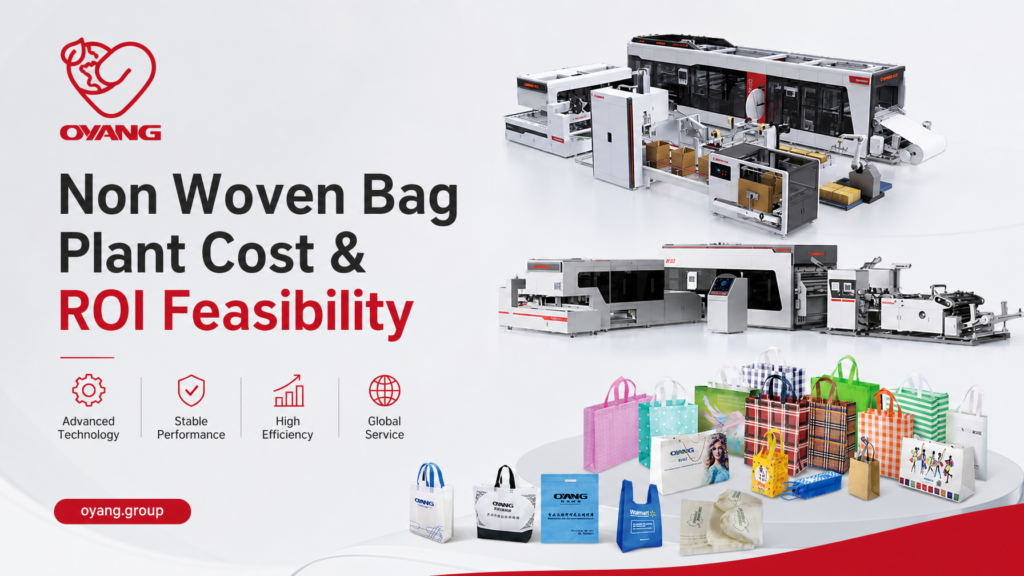
Non Woven Bag Manufacturing Plant Cost, Budget & Feasibility Report
A comprehensive non woven bag manufacturing plant cost analysis encompasses capital equipment expenditure (CAPEX), workshop infrastructure preparation, raw material working capital, and operational overhead (OPEX). Establishing a modern, fully automated converting plant requires an initial total investment ranging between $85,000 and $180,000 USD for a single high-speed production line. By achieving a verified conversion yield of approximately 28,500 finished 3D box bags per metric ton of 70 GSM polypropylene fabric, efficient production lines achieve net manufacturing margins of 18% to 26%, delivering a complete capital payback period within 6 to 10 months of commercial commissioning.
Machine, auxiliary air, power & initial raw material stock
Standard 70 GSM 3D box bag (320 × 280 × 140 mm)
Based on 2-shift production at 80 bags/min velocity
After direct labor, power, rent, and machine depreciation
Video: Complete factory floor automation layout, material flow, and continuous high-speed box bag converting at OYANG smart manufacturing base.
Factory Infrastructure Requirements: Space, Power, and Pneumatics
Before acquiring converting machinery, investors must prepare their plant floor to meet specific dimensional and utility standards to ensure uninterrupted multi-shift operation:
| Infrastructure Metric | Starter Converting Unit (1 Line) | Industrial Converting Plant (2–3 Lines) |
|---|---|---|
| Minimum Workshop Floor Space | 250 – 350 m² (12m × 25m bay) | 800 – 1,200 m² (Includes staging & finished goods) |
| Clear Ceiling Height | ≥ 3.8 meters (Permits crane roll loading) | ≥ 4.5 meters (Allows multi-tier pallet racking) |
| Dedicated Transformer Capacity | 45 – 60 kVA (3-Phase, 380V / 220V, 50/60Hz) | 150 – 200 kVA (Supplies lines, printing, & HVAC) |
| Rotary Screw Air Compressor | 11 kW / 15 HP (1.5 m³/min at 0.8–1.0 MPa) | 22 kW / 30 HP with refrigerated dryer & 1.0 m³ tank |
| Floor Foundation Flatness | ±5 mm / 10 m (Heavy reinforced concrete) | ≤ ±3 mm / 10 m (Epoxy anti-static industrial screed) |
Raw Material Yield Calculation: Output per Metric Ton of Fabric
The primary variable governing profitability in a non woven bag business plan is the physical conversion efficiency of spunbond polypropylene (PP) rollstock.
Baseline Practical Engineering Calculation:
- Target Bag Format: Standard 3D Box Bag (Width 320 mm × Height 280 mm × Gusset 140 mm)
- Finished Bag Fabric Area: ~0.468 m² (Including body, bottom folds, and handles)
- Fabric Grammage (GSM): 70 g/m² (0.070 kg/m²)
- Theoretical Net Bag Weight: 0.468 m² × 70 g/m² = 32.76 grams
- Process Scrap & Start-Up Trim: 6.8% (Ultrasonic corner punch, handle die cutoff, startup roll tail)
- Gross Fabric Required per Bag: 32.76 g × 1.068 = 34.98 grams
Commercial Valuation: At a wholesale price of $0.115 USD per finished custom-printed shopping bag, 1 metric ton of converted fabric generates $3,277.50 USD in gross revenue against a raw fabric roll cost of approximately $1,550 USD ($1.55/kg).
Detailed Capital Expenditure Breakdown (Turnkey Starter Plant)
The following itemized budget outlines the financial capital required to launch a competitive, fully automated 3D box bag manufacturing facility:
| Budget Component | Item Specification | Estimated Cost (USD) |
|---|---|---|
| Primary Converting Machine | OYANG 16S / SMART 19 (60–80 BPM Box & Flat Bag Maker) | $52,000 – $78,000 |
| In-Line Printing Equipment | OYANG YTB 2/4-Color High-Speed Stack Flexo Printer | $18,000 – $28,000 |
| Auxiliary Compressed Air System | 11 kW Variable Frequency Screw Compressor + Air Dryer | $4,500 – $6,500 |
| Electrical & Workshop Installation | Distribution panel, 3-phase cabling, ductwork, lighting | $3,500 – $6,000 |
| Initial Raw Material Inventory | 15 Metric Tons Spunbond PP Fabric + Printing Inks + Tape | $24,000 – $28,000 |
| Freight, Customs & Commissioning | Ocean container transport, engineer on-site setup & training | $6,000 – $9,500 |
| Initial Operating Cash Reserve | 2 Months working capital (Payroll, facility lease, utilities) | $12,000 – $18,000 |
| Total Project Setup Budget | Complete Turnkey Commercial Production Cell | $120,000 – $174,000 USD |
Unit Economics: Single Bag Financial P&L Analysis
Understanding individual bag unit economics confirms the rapid amortization velocity of automated packaging machinery:
| Cost Component | Unit Cost (USD) | Percentage of Total |
|---|---|---|
| Raw Fabric Material (35g PP Spunbond at $1.55/kg) | $0.0543 | 60.3% |
| Water-Based Flexo Inks & Printing Plates | $0.0075 | 8.3% |
| Hot-Melt Adhesive Tape / Glue (Side Bonding) | $0.0035 | 3.9% |
| Direct Electric Power (Line, Air & Chiller: $0.15/kWh) | $0.0028 | 3.1% |
| Direct Operating Labor (1 Machine Operator + 1 Packager) | $0.0042 | 4.7% |
| Facility Rent & Administrative Overhead | $0.0038 | 4.2% |
| Equipment Depreciation (5-Year Straight-Line Depreciation) | $0.0032 | 3.6% |
| Total Unit Cost of Goods Sold (COGS) | $0.0793 USD | 100.0% |
| Average Factory Wholesale Selling Price | $0.1080 USD | — |
| Net Profit Margin per Bag | $0.0287 USD (26.6% Net Margin) | — |
Payback Period Model: Amortization Within 6 to 10 Months
Operating an automated line delivering 80 bags per minute over standard two-shift schedules produces compelling cash-flow velocity:
- Daily Net Output: 72,000 bags (18 operating hours/day × 80 BPM × 83.3% OEE)
- Daily Net Operational Profit: 72,000 bags × $0.0287 net profit = $2,066.40 USD / day
- Monthly Operational Profit (25 Days): $2,066.40 × 25 = $51,660 USD / month
- Adjusted Net Profit (50% Capacity Utilization Scenario): $25,830 USD / month
Even when operating at a conservative 50% capacity during market ramp-up, the cumulative net profit covers an initial total investment of $150,000 USD within 5.8 to 7.2 operational months.
Japanese MAZAK & OKUMA CNC Manufacturing Guarantees Low Depreciation
The accuracy of your payback schedule depends heavily on machine reliability. Low-cost machinery prone to frequent breakdowns erodes profit margins through unplanned downtime, scrap spikes, and costly replacement parts.
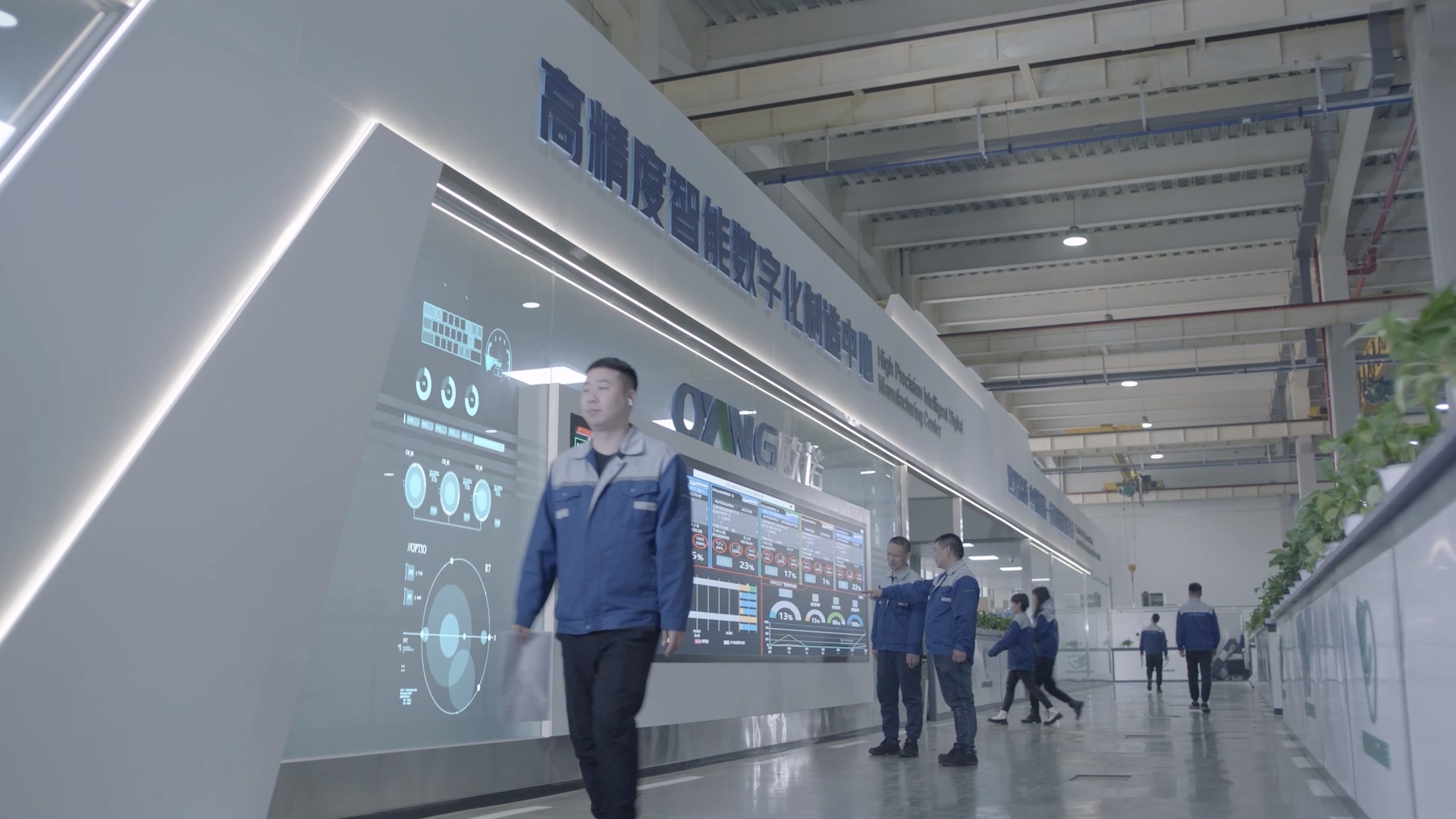
Digital flexible manufacturing workshop at OYANG equipped with Japanese MAZAK CNC systems.
Every core frame, cam drive, and roller assembly produced at OYANG is machined on Japanese MAZAK and OKUMA 5-axis CNC machining centers. Holding planar tolerances within ≤ 0.015 mm ensures mechanical harmonics remain balanced, enabling round-the-clock converting at maximum design velocity and extending operational service life past 12 years.
Recommended Plant Machinery Configurations

OYANG 16S Turnkey Plant Solution
The optimal machine for new converting ventures. Delivers 60–80 bags/min, dual-mode 3D/flat conversion, low 18 kW power draw, and rapid capital recovery.
Explore OYANG 16S Specs
TECH-23 High-Volume Line
Engineered for high-volume converters. Delivers 90–100 bags/min, 90-second motorized mold changeovers, and high material efficiency.
Explore TECH-23 Specs
YTB Series Stack Flexo Printer
High-efficiency inline/offline 2/4/6-color roll-to-roll printing station using eco-friendly water-based inks for retail brand packaging.
Explore YTB Flexo SpecsFrequently Asked Questions (FAQ)
How much does it cost to set up a non woven bag manufacturing plant?
Setting up a standard fully automated non woven bag manufacturing plant typically requires an investment between $85,000 and $180,000 USD, which includes the automatic bag forming machine, flexo printing line, rotary screw air compressor, plant electrical installation, and initial raw material rollstock inventory.
How many bags can be produced from 1 metric ton of non woven fabric?
Using standard 70 GSM spunbond polypropylene fabric, 1 metric ton (1,000 kg) yields approximately 28,500 finished 3D box bags measuring 320 mm by 280 mm by 140 mm, factoring in a standard 6.8% process scrap and startup trimming margin.
What is the average profit margin in the non woven bag business?
The net profit margin in non woven bag manufacturing generally ranges from 18% to 26% after deducting raw material fabric costs, printing inks, hot-melt adhesive, electrical utility expenses, factory labor, and equipment depreciation.
What are the factory electrical power requirements for a bag converting plant?
A single automated converting line requires a connected electrical capacity of approximately 45 to 60 kVA (380V, 3-Phase, 50/60 Hz) to power the bag making machine (18–25 kW), auxiliary screw air compressor (11 kW), and ancillary workshop equipment.
How long does it take to recover the total investment on a bag making plant?
Operating a fully automatic box bag line at standard production capacities of 50,000 to 70,000 bags daily allows converters to recover their entire capital investment within 6 to 10 months under multi-shift operation.
Launch Your Non Woven Bag Manufacturing Enterprise
Receive a tailored financial feasibility report, machine layout drawing, and utility consumption schedule designed specifically for your target market. Contact OYANG’s factory planning specialists today.