

How Much Does a Paper Bag Making Machine Cost? Complete Pricing, TCO & Machine Selection Guide
Why Such Wide Price Divergence? The 4 Core Mechanical Cost Drivers
When comparing equipment proposals, capital expenditures (CapEx) can differ by over $150,000 between machines producing identical bag sizes. The structural cost divergence stems from internal motion topologies, control engineering, and sub-component lifespans:
- 1. Servo-Axis Density & Bus Topology (Line Shaft vs. ELS): Low-cost machinery relies on a central AC motor driving cumbersome mechanical line shafts, bevel gears, and chains. These components suffer from mechanical backlash, requiring continuous maintenance and lengthy manual changeovers (2 to 4 hours). High-end converters utilize bus-synchronized multi-axis servo networks (e.g., Japanese Yaskawa or Siemens SIMOTION motion controllers) with up to 14 independent servo axes, reducing changeovers to under 2 minutes via recipe recall.
- 2. Handle Forming & Inline Fold-In Mechanisms: A standard machine producing plain SOS grocery sacks utilizes simple mechanical rotating knives. Adding an inline twisted or flat paper rope handle-making station with automatic patch pasting and dynamic hot-melt spraying increases equipment valuation by $35,000 to $70,000 due to high-speed dual-web synchronization requirements.
- 3. Dynamic Adhesive Application Systems: Traditional gravity-fed dip wheels generate adhesive splattering above 120 m/min, requiring regular manual cleanup. Advanced machines integrate pressurized closed extrusion systems or servo-synchronized precision cold glue applicators that meter adhesive film thickness within ± 0.1 mm, saving up to 25% in glue consumption annually.
- 4. Inline Multi-Color Flexographic Printing Integration: Integrating an inline 2-to-4 color flexographic printing unit directly onto the unwinding section adds $25,000 to $65,000 to the line’s CapEx, but eliminates secondary off-line printing labor, rewinding scrap, and shop floor footprint.
Industrial Machinery Pricing & Selection Matrix
The following matrix illustrates representative configurations, speeds, servo allocations, and verified commercial investment tiers across the OYANG converting machinery portfolio:
| Machine Model & Architecture | Automation Degree & Motion Tech | Operating Speed (Output) | Primary Commercial Applications | CapEx Budget Range (USD) |
|---|---|---|---|---|
| OYANG 16B Semi-Automatic | Roll-fed SOS without handles, mechanical shaft drive | 80–150 bags/min | Bakery goods, pharmacy sacks, takeaway fast food | $38,000 – $68,000 |
| OYANG 16A Full Auto | Roll-fed with inline twisted/flat paper handle assembly | 120–180 bags/min | Supermarket carrier sacks, apparel & retail shopping | $110,000 – $185,000 |
| SMART-17 High-Speed Line | Full servo control, single/double cup option, high-speed bottoming | 180–220 bags/min | Continuous high-volume commercial food & retail supply | $175,000 – $245,000 |
| TECH-18 Rapid Changeover | Multi-axis digital servo bus, 2-minute automated size change | 180–220 bags/min | Agile on-demand orders, short/medium multi-SKU runs | $210,000 – $295,000 |
| Great 4.0 Supreme Non-Crease | Sheet-fed offset converted paper, zero bottom crease line | 50–80 bags/min | Luxury cosmetics, jewelry, premium designer retail | $260,000 – $420,000+ |
Why You Cannot “Build Your Own” Paper Bag Machine: The ≤ 0.015 mm Tolerance Barrier
Industrial buyers frequently ask whether smaller machine shops can custom-build or clone a paper bag making line to reduce CapEx. From a mechanical engineering standpoint, this approach consistently fails within 3 to 6 months of continuous operation due to structural physics:
The Mechanical Resonance Disaster at 180+ Bags/Min
A high-speed roll-fed machine exerts violent dynamic loads as rotary blades cut multi-ply 120 gsm kraft paper up to 3.5 times per second. If side-frame wall plates and rotary cutter shafts exhibit geometric deviations greater than 0.03 mm, harmonic vibrations rapidly multiply. This causes immediate bearing race pitting, knife chipping, paper web tear, and continuous bottom paste misalignment.
Commercial paper converting machinery requires precision manufacturing infrastructure that small fabrication shops cannot replicate:
- Mono-Block CNC Milling: Structural side panels must be machined in a single clamping setup on Japanese 5-axis MAZAK or OKUMA horizontal machining centers, guaranteeing parallel bore alignments within ≤ 0.015 mm.
- Dynamic Cylinder Balancing: All high-speed bottom-forming drums, draw rollers, and cutter mandrels must undergo ISO 1940 Grade G2.5 dynamic balancing to prevent centrifugal deflection under continuous line speeds.
- Bus-Level Electronic Synchronism: Achieving 0.1 mm cutoff accuracy across shifting reel tensions requires EtherCAT or PROFINET bus cycle response times under 1 millisecond. DIY and budget retrofits relying on analog stepping circuits fail to prevent web stretch creep.
Evaluating Total Cost of Ownership (TCO): CapEx vs. OpEx Over 5 Years
Calculating equipment economics based solely on invoice purchase price is a catastrophic procurement oversight. In commercial converting, purchase price represents only 15%–20% of the machine’s 5-year Total Cost of Ownership. The remaining 80% is governed by raw material waste, maintenance downtime, and energy efficiency:
Consider the economic impact of machine reliability over a 5-year production cycle (operating 20 hours/day, 300 days/year):
- The Real Price of a “Cheap” Machine ($65,000 CapEx): Operates at 110 bags/min with an OEE of 68% and an average scrap rate of 4.5%. Over 5 years, excessive paper waste consumes over $320,000 in lost kraft substrate, while emergency mechanical maintenance causes 1,200 hours of unrecoverable production downtime.
- The Economics of a Precision High-Speed Machine ($185,000 CapEx): Operates at 180–220 bags/min with an OEE of ≥ 88% and scrap restricted to ≤ 1.2%. The material savings alone ($230,000+ recovered) offset the higher CapEx within 26 months of operation, while doubling gross revenue capacity per square meter of floor space.
OYANG Engineering Practice: Standardized CNC Quality Across a 130,000 m² Production Base
At OYANG’s intelligent equipment manufacturing base in Wenzhou, China, packaging machinery is produced according to stringent industrial machining standards. Critical structural components are processed using fully automated flexible production lines equipped with Japanese MAZAK and OKUMA CNC systems:
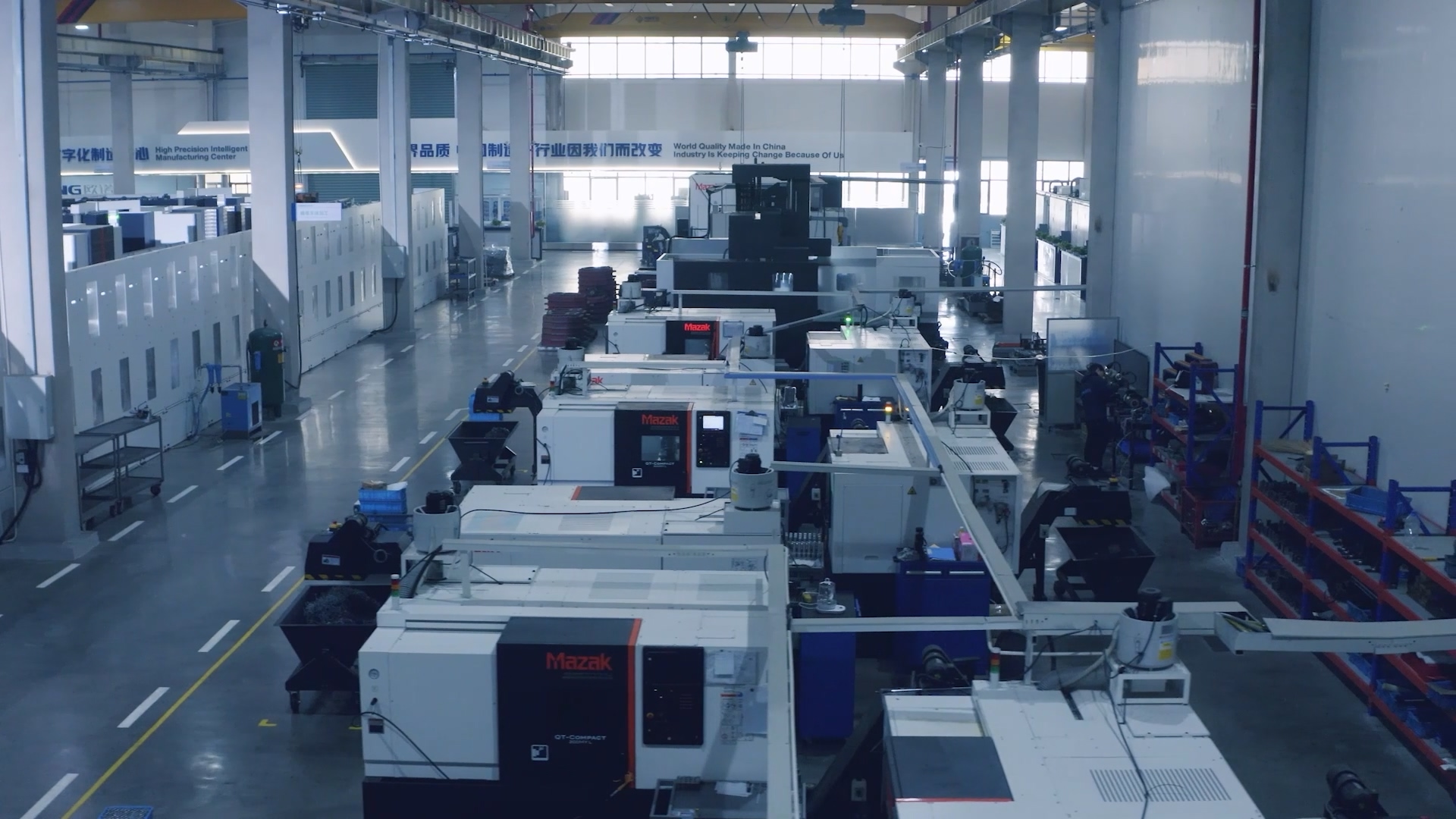
Figure 1: Japanese MAZAK flexible automated manufacturing lines inside OYANG’s 130,000 m² production complex.
By maintaining total in-house control over gear cutting, side-panel milling, heat treatment, and dynamic balancing, OYANG guarantees that every roll-fed SOS and sheet-fed machine exhibits structural frame deflection of ≤ 0.015 mm during maximum-speed operation. This standard eliminates premature wear and guarantees that client facilities achieve their targeted ROI schedules.
Technical Specs Download: Review exact motor wattages, air demands, and line dimensions in the OYANG Paper Bag Machine Solution Brochure (PDF).
Video Tour: Inspect the high-precision CNC manufacturing facility on YouTube: OYANG Precision Machining, R&D, and Paper Bag Machine Production Video.
Related Engineering Guides & Technical Resources
Frequently Asked Questions (FAQ)
How much does a paper bag making machine cost?
An industrial paper bag making machine costs between $38,000 and $75,000 for entry-level semi-automatic roll-fed units, $110,000 to $220,000 for fully automatic square-bottom (SOS) lines with handle makers, and $240,000 to $450,000+ for high-speed multi-servo automated lines or luxury sheet-fed systems. Total pricing depends on line speed, servo-axis topology, handle assembly automation, and inline printing units.
How much does paper bag making machine cost for small businesses?
For small businesses and early-stage plants, a semi-automatic roll-fed square-bottom paper bag machine costs between $38,000 and $68,000. These lines operate at 80 to 120 bags per minute and produce grocery, bakery, and food delivery bags without handles, offering an accessible CapEx entry point before scaling into fully automated handle lines.
How much is paper bag machine with twisted handle applicators?
A fully automatic roll-fed square-bottom paper bag machine with inline twisted handle making and pasting units costs between $110,000 and $195,000. These systems automatically form paper rope handles from craft reels, attach patch reinforcements with hot-melt glue, and deliver finished shopping bags at speeds of 130 to 180 units per minute.
Why does a paper bag making machine price vary significantly between suppliers?
Price differences reflect mechanical motion architecture, structural machining tolerances, and sub-component brands. High-end machines utilize electronic line shaft (ELS) bus systems with 8 to 14 independent Japanese or European servo motors, automated pneumatic reel lifters, dynamic hot-melt glue systems, and heavy side frames machined on 5-axis CNC centers to tolerances under 0.015 mm, whereas low-cost machines rely on mechanical drive shafts, chains, and cast frames prone to vibration.
Can a plant build its own paper bag machine to save costs?
Attempting to self-build or fabricate a paper bag making machine is technically unfeasible for commercial production. Commercial bag machines require CNC horizontal boring lines to machine heavy steel wall plates to flatness tolerances of 0.015 mm, ISO G2.5 dynamically balanced cutoff cylinders, and millisecond-level multi-axis electronic motion synchronization to prevent severe vibration, web snapping, and glue leakage at production speeds.