350x97.png)
350x97.png)
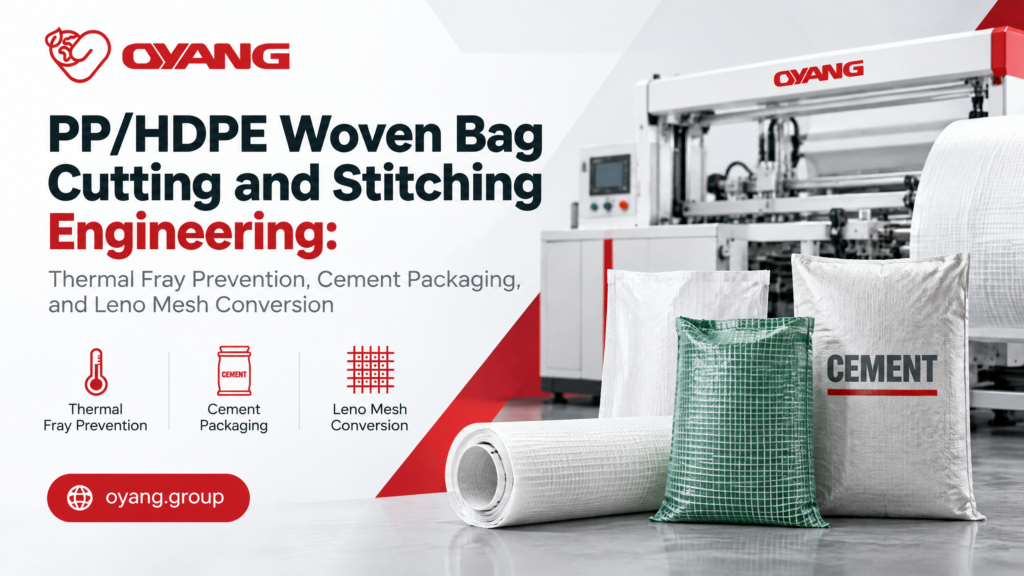
PP/HDPE Woven Bag Cutting and Stitching Engineering: Thermal Fray Prevention, Cement Packaging, and Leno Mesh Conversion
Converting heavy-duty industrial polypropylene (PP) and high-density polyethylene (HDPE) tubular fabric requires addressing high tensile unoriented tapes, abrasive particulate loads, and thread fraying. In high-speed bag cutting and stitching lines, conventional mechanical cutting shears cause flat tape delamination and edge unraveling. Whether configuring a high-tonnage cement bag cutting machine with micro-perforation and dust-proof folded chainstitch seams, an hdpe bag cutting machine for chemical liners, or a low-tension leno bag cutting machine for loose mesh produce packaging, plant performance hinges on thermal severance calibration (320°C–380°C) and synchronized servo-driven mechanical feeding.
Cutting Kinematics: 350°C Thermal Hot Cutting vs. Cold Shear on Woven Webs
Tubular woven fabrics are composed of oriented split-film warp and weft tapes (typically 600 to 1,200 Denier). Cutting these structures without unraveling requires selecting the proper severance mechanism based on whether the fabric is uncoated, BOPP-laminated, or configured with an internal liner:
| Severance Parameter | Alloy Thermal Hot Knife (Non-Laminated Woven) | Mechanical Rotary Cold Shear (BOPP Laminated) |
|---|---|---|
| Blade Operating Temperature | 320°C – 380°C (Continuous PID Heating) | Ambient 20°C – 35°C (Zero External Thermal Input) |
| Severance Mechanism | Simultaneous radiant melt-severing & filament hem welding | High-velocity rotary blade scissor-action point shear |
| Edge Seal Morphology | Fused polymer bead along mouth; zero fiber fraying | Clean geometric cut; relies on extrusion coating to lock weft |
| Fabric Suitability | Standard PP/HDPE woven sack fabric, fertilizer sacks, Leno mesh | PP woven bags laminated with printed BOPP/PET film layers |
| Fume Extraction Protocol | Demands synchronized forced-air negative pressure exhaust | Standard passive static-neutralization ionization bars |
Preventing Mouth Sticking on Thermal Cutters
A frequent challenge when running an unlaminated hdpe bag cutting machine is mouth sticking. When the thermal knife slices through both plies of tubular fabric at 350°C, excessive molten polymer can bridge across the cut line, sealing the bag mouth shut.
To prevent this, industrial cutting units utilize an active mechanical fabric separator bar and an air-blast wedge directly behind the guillotine stroke. The internal blade parting wedge mechanically spreads the top and bottom plies while a cold compressed air jet solidifies the fused bead edges within 30 milliseconds, ensuring clean opening at filling plants.
Heavy-Duty Cement Bag Conversion: Needle Micro-Perforation and Double-Fold Stitching
Packaging fine abrasive powders like Ordinary Portland Cement (OPC) or dry-mix mortar presents two competing engineering demands: permitting rapid air de-aeration during pressurized impeller packaging without causing fine powder sifting during transport. Converting bags for these products requires specialized machine configurations:
Engineering Sequence on a High-Speed Cement Bag Line
- Dynamic Roller Micro-Perforation: Upstream needle punch pin-rollers create micro-pores (typically 50–100 holes/cm², pin diameter 0.8–1.2 mm) through the laminated film. This provides the air permeability necessary for high-speed filling spouts without compromising bag burst strength.
- Pneumatic Double-Fold Hemming (25 mm–35 mm): The bottom edge enters a progressive folding scroll that executes a single or double fold. A double fold traps raw flat tapes inside the hem, preventing weave unraveling under dynamic 50 kg drop impacts.
- Heavy-Duty Chainstitch Sewing Head: A synchronized industrial sewing head (such as Newlong DS-9 or Union Special equivalents) drives a double-thread chainstitch (ISO Type 401) through the multi-layer bottom fold. Chainstitching provides elastic elongation, flexing under drop forces rather than shearing like a rigid lockstitch.
- Crepe Paper & Anti-Sifting Polycord Infeed: To prevent cement powder sifting through needle puncture holes, a continuous crepe paper tape (50–60 mm width) folds over the bottom hem while a bulky soft polycord thread is stitched directly over the needle path, plugging the holes.
Leno Mesh Web Handling: Tension Isolation & Drawstring Insertion
Processing tubular Leno fabric for agricultural produce packaging (such as onions, potatoes, and citrus) poses distinct mechanical challenges on a leno bag cutting machine:
Overcoming High Elastic Web Distortion
Unlike dense flat-tape fabrics, Leno weave relies on paired warp tapes crossing over each other around weft insertions. This creates an open mesh structure with low lateral stiffness and high longitudinal elasticity. Standard high-tension nip rollers stretch the mesh unevenly, causing dimensional distortion and feeding jams.
- Micro-Tension Servo Feeding (< 8 N): Low-inertia carbon dancer arms with ultra-sensitive load cells isolate the unwind stand, preventing web stretch during start-stop cycling.
- In-Line Drawstring Threading: Automated pneumatic guide needles insert continuous polypropylene monofilament drawstrings through the open mesh weave at the bag mouth prior to cross-cutting.
- Thermal Knife Edge Welding: A high-temperature concave nickel-chromium blade melts through the open Leno strands at 380°C, bonding the cross-over nodes along the cut edge to prevent the mesh from pulling apart during transport.
OYANG Precision Converting Engineering: Built for Structural Durability
Heavy-duty cutting and sewing lines endure substantial harmonic vibration from reciprocating needle bars, thermal knife cylinders, and high-frequency pull rollers. At OYANG’s 130,000 m² manufacturing base, all machine structural wall frames, cutter mounting beams, and rotary drive plates are machined on Japanese MAZAK and OKUMA 5-axis CNC centers to tolerances within ≤ 0.015 mm. This rigid structural alignment prevents knife deflection, reduces gear backlash, and extends equipment operational life.
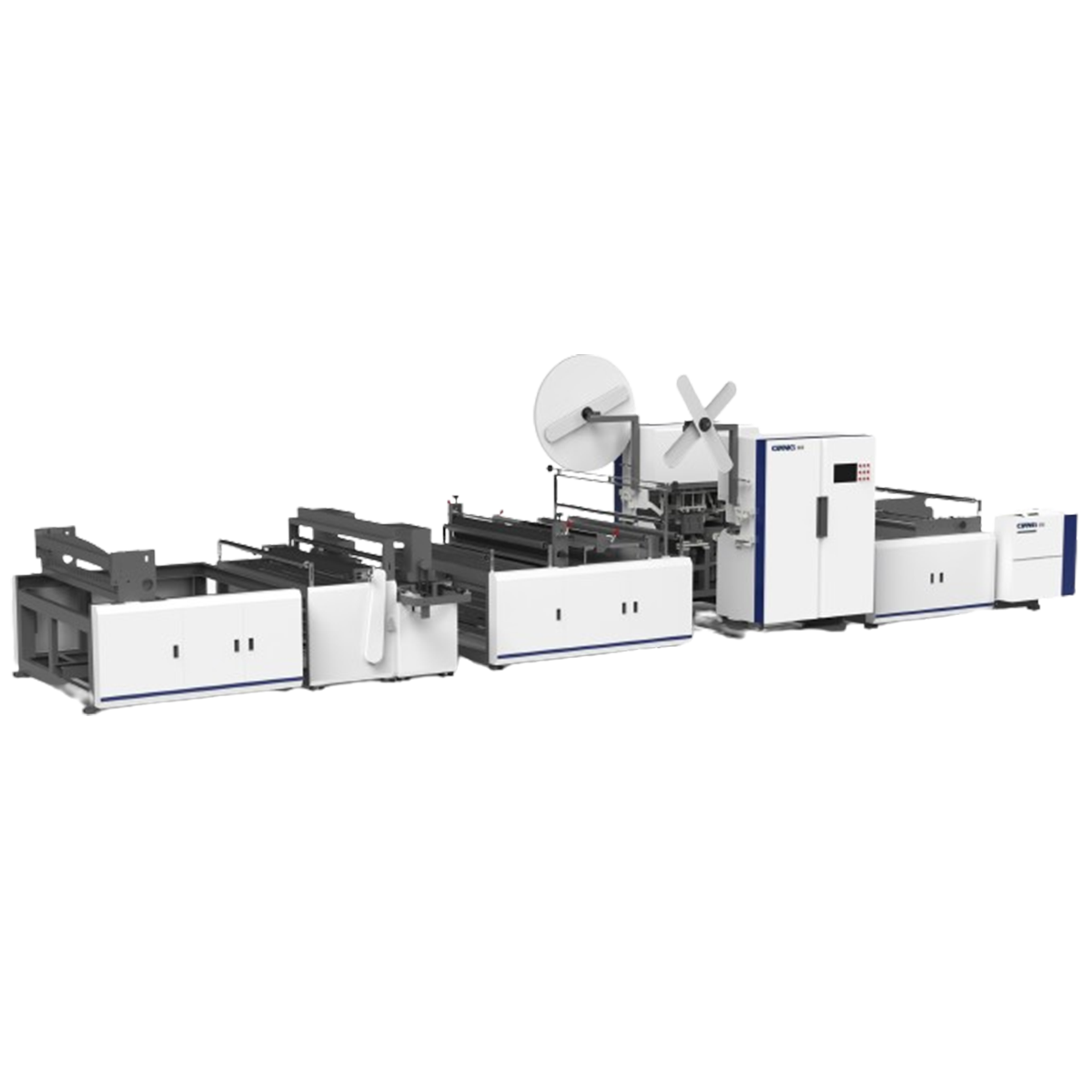
XG1200: Heavy-Duty Converting Line with Inline Stitching & Thermal Cutting
Engineered for continuous conversion of heavy-gauge nonwoven, woven, and laminated fabric bags. Combines high-speed automated sewing heads with cross-cutting tooling, loop handle attachment, and automated stacking on a synchronized motion bus.
- Converting Output: 25–45 bags/min continuous converting
- Drive Architecture: Multi-axis bus-synchronized servo feeding and cutting
- Cutting Mechanism: Combined thermal fusion knife and mechanical shear tooling
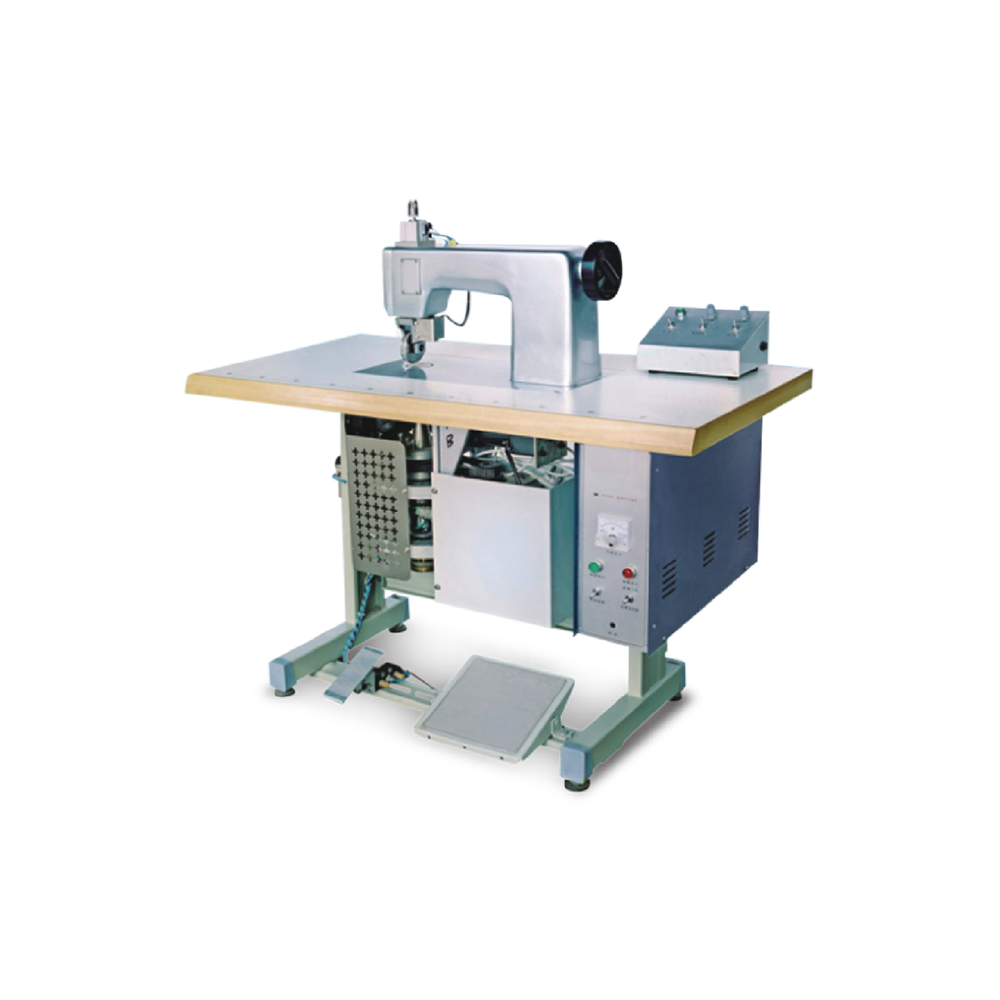
Continuous Ultrasonic Hemming & Sewing Machine
For clean synthetic bag applications requiring thread-free, hermetic seam closure. Features a 20 kHz acoustic stack paired with a carburized alloy steel pattern roller (HRC 58–62), executing continuous needle-free sealing and trimming up to 40 m/min.
- Operating Velocity: Stepless speed control from 0 to 40 meters/min
- Acoustic Package: 20 kHz auto-tracking digital generator
- Tooling Standard: Wear-resistant vacuum-carburized pattern anvils
Engineering Resources & Production Demonstrations
Review live production demonstrations and operational brochures from our manufacturing campus:
Frequently Asked Questions (FAQ)
Why does unlaminated woven PP fabric require thermal hot cutting instead of cold shear cutting?
Unlaminated PP woven fabrics consist of interwoven extruded flat tapes. When severed with a mechanical cold shear blade, the cut ends lack bonding and immediately fray and pull apart under tension. A thermal hot knife operating between 320°C and 380°C melts the polymer tapes at the point of severance, fusing warp and weft fibers into a continuous, sealed edge bead that prevents unraveling during filling and transit.
How does a cement bag cutting machine prevent powder leakage through needle stitch holes?
To prevent fine powders from sifting through needle puncture holes under transport vibrations, automated cement converting lines integrate two anti-sifting mechanisms: an adhesive crepe paper tape folded over the double-folded hem, and a bulky filler cord (polycord) stitched directly along the needle perforation line. The cord expands inside the punctures, creating a mechanical gasket that seals the stitch line.
What web tension controls are necessary when running a leno bag cutting machine?
Tubular Leno mesh has low lateral stability and high longitudinal elongation. Fixed mechanical nip rolls easily stretch the mesh out of square, causing feed jams. A specialized Leno converting machine utilizes low-inertia servo draw rolls guided by dancer-arm potentiometers that isolate web tension below 8 N. This maintains dimensional stability as the mesh advances through drawstring insertion, thermal cutting, and bottom hemming stations.
What stitch type is recommended for bottom hemming on heavy-duty HDPE woven sacks?
The ISO Type 401 double-thread chainstitch is standard for heavy-duty woven sacks. Unlike a rigid lockstitch (ISO 301), which can snap when fabric elongates under dynamic shock loads, a chainstitch features an interlocking loop design that flexes with the woven substrate during dynamic drop impacts, maintaining seam integrity on 25 kg to 50 kg payloads.
Upgrade Your Woven & Heavy-Duty Bag Converting Line
Consult with OYANG’s heavy-packaging engineering team. Submit your fabric construction (Den